
















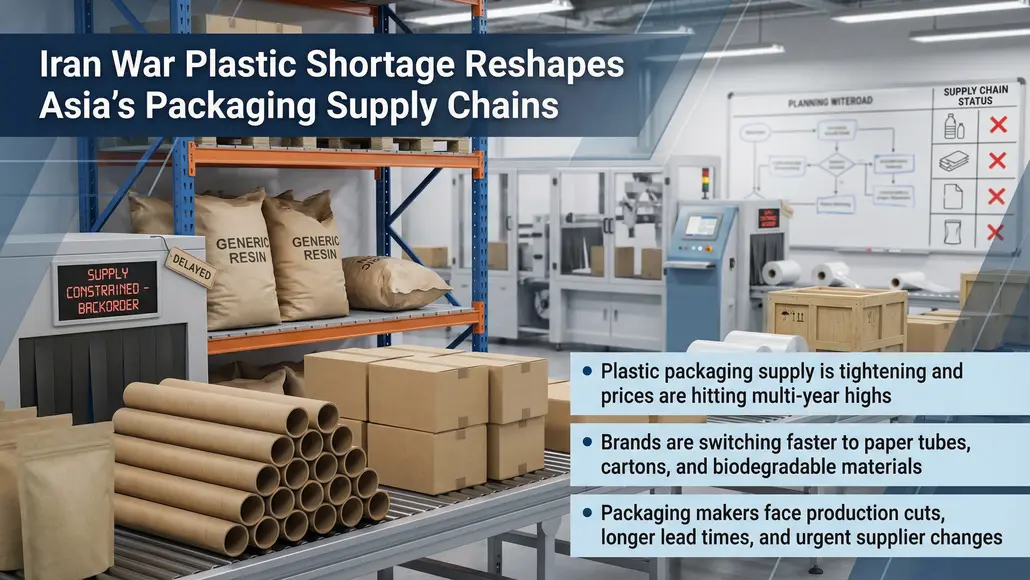
The ongoing Iran war and consequent plastic shortage is beginning to reshape packaging supply chains across Asia, as disruptions to petrochemical flows tighten the availability of raw materials used in single-use plastics. The conflict has pushed plastic prices to roughly four-year highs, prompting manufacturers and consumer goods companies to reassess their material strategies. In response, alternative packaging providers particularly those offering paper-based solutions are witnessing a sharp rise in demand across key regional markets.
South Korea-based Yonwoo, which produces packaging for the cosmetics industry, has reported a threefold increase in inquiries for its eco-friendly paper tubes and pouches. The company attributes this surge to supply constraints linked to the Iran war plastic shortage, which has limited access to essential oil-derived feedstocks. “Interest initially came from companies focused on sustainability … but if the plastics issue gets prolonged we expect demand to further increase,” said Kim Min-sang, a senior manager at parent Kolmar Korea. The firm supplies major global brands such as L’Oreal and has seen growing demand for packaging formats that significantly reduce plastic content.
Across Asia, structural dependence on plastic remains significant, with the region accounting for nearly one-third of global plastic consumption as of 2022, according to OECD data. This reliance is now being tested as supply bottlenecks emerge. Japan, one of the world’s leading consumers of plastic per capita, is already experiencing strain. Retailers and wholesalers have warned of potential shortages in essential packaging materials such as trays and bags, raising concerns over continuity in product distribution.
- Japanese manufacturers including Mitsubishi Chemical and Sanipak have announced price increases of about 30% for certain plastic-based products
- Malaysian dairy producer Farm Fresh has temporarily transitioned to paper-based milk cartons due to limited plastic availability
- Taiwan-based Lastic is seeing renewed interest in its bamboo-based biodegradable materials as global buyers revisit alternatives
- South Korea’s Gaone International has reduced production output to 10–20% of normal levels while seeking new suppliers
While some companies are adapting quickly, others face operational constraints. Transitioning to new materials requires testing and certification, creating delays in production cycles. Gaone International, a packaging supplier for face masks, has warned clients of extended delivery timelines of up to eight weeks, with revenue expected to decline. “I hope things return to normal as soon as possible,” said sales team manager Han Kyung-hun, adding that recovery could still take months even if the conflict ends immediately.

