




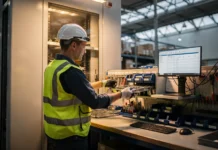











Volpak, a Coesia company and a long-established leader in HFFS solutions for flexible packaging, has carried out a major Lean logistics transformation at its famed Barcelona plant, wrapping up six months of work to overhaul how materials move through the facility. The project brings Lean principles, automation, and data-led redesign under one roof and is considered one of the most significant logistics upgrades in the company’s history. At the center is a fully automated warehouse tied directly to a group of autonomous mobile robots (AMRs), along with a reworked layout built to match material flow to real production needs and create a continuous material flow across the plant.
Demand for flexible pouches has surged, driven by convenience, sustainability, and their fit with fast-paced lifestyles, and that rise has pushed Volpak’s output higher. The increase also meant far more parts circulating inside the plant, putting pressure not only on available space but also on the workforce. The team had to figure out how to handle heavier movement without changing the physical footprint or compromising flexibility or quality. That pressure led Volpak to move from a long-used “push” to a “pull” model, where nothing moves unless production calls for it. The shift began two years earlier when AMRs first started carrying selected components from the warehouse to assembly lines, and the latest step links a fully automated warehouse with three AMRs to keep parts arriving exactly when needed and maintain seamless, just-in-time delivery of materials.
The Barcelona plant spans two levels, which complicates any expansion and forces a rethink of how to move materials cleanly from one area to the next. Vertical conveyors, dense storage blocks, and multi-level transport routes now keep goods flowing between the warehouse, inspection, and assembly areas without stopping, supporting the continuous material-flow system. Every inbound item and production order is routed through conveyors and buffer points that reduce travel time and help keep the plant running in sequence.
Ahead of the redesign, Volpak reviewed more than 40,000 SKUs and sorted every one into A-B-C groups based on how often they move. The “A” parts, responsible for 80% of plant movements, were shifted to the most active storage zones, while slower items were placed deeper in the racks. The new automated storage system adds more than 50% to the site’s capacity and enables Volpak to grow its Stock Keeping Units (SKUs) portfolio. AMRs now handle boxes directly within the racking structure itself, allowing the company to maintain high throughput in a relatively tight space.
The logistics upgrade is tied to Volpak’s broader Lean Transformation work. Assembly areas had already been restructured, and Just-in-Time practices introduced. Now, with the intralogistics changes in place, the plant prepares material in one-piece-flow kits, delivering full sets of parts to each order to reduce waiting and ease handling. The overhaul was designed and executed by Volpak’s own teams, supported by Coesia’s engineering and digital expertise. The resulting system is scalable across other Coesia sites and shows how a multi-level, space-restricted facility can still reach Industry 4.0-ready performance. It also points to the role the Barcelona plant is expected to play in Coesia’s long-term operational roadmap, serving as a reference model for future developments across the Group.