























The evolution of food packaging has reached a transformative milestone with the development of active intelligent packaging systems that fundamentally change how food products are protected, monitored, and managed throughout the supply chain. These sophisticated technologies represent a paradigm shift from passive containment to dynamic interaction with food products and their environment, creating unprecedented opportunities to enhance food safety, extend shelf life, and improve overall product quality. Active intelligent packaging systems combine materials science innovations with advanced sensor technologies to create packaging that actively participates in food preservation while providing real-time information about product condition and safety.
The integration of active and intelligent technologies addresses multiple challenges simultaneously, from preventing microbial contamination and oxidation to providing early warning of quality degradation and safety issues. These systems operate continuously throughout the product lifecycle, adapting their protective mechanisms based on changing conditions while communicating critical information to consumers, retailers, and supply chain partners. This comprehensive approach to food protection represents one of the most significant advances in food safety technology in recent decades.
The strategic implementation of active intelligent packaging creates measurable improvements in food safety outcomes while reducing waste and improving economic efficiency throughout the food supply chain. These benefits extend from enhanced consumer confidence and reduced foodborne illness risks to improved inventory management and reduced product losses due to premature spoilage or safety concerns.
How Active Packaging Maintains Freshness
Active packaging systems employ sophisticated mechanisms to extend food shelf life and maintain quality by actively intervening in degradation processes that affect food products. These technologies go beyond traditional barrier protection to include materials and components that release beneficial compounds or absorb harmful substances, creating optimized environments for food preservation.
Oxygen scavenging systems represent one of the most widely implemented active packaging technologies, removing oxygen from sealed packages to prevent oxidation reactions that cause rancidity, color changes, and nutritional degradation. These systems can include iron-based sachets, polymer films with embedded oxygen scavengers, or coating systems that actively consume oxygen throughout the product’s shelf life. The effectiveness of oxygen scavenging proves particularly valuable for products containing fats, oils, and other oxygen-sensitive compounds.
Antimicrobial release systems provide continuous protection against bacterial, fungal, and viral contamination through controlled release of antimicrobial compounds. These systems can incorporate natural antimicrobial agents such as essential oils, plant extracts, or organic acids that provide effective protection without affecting food taste or nutritional content. Advanced release mechanisms ensure optimal concentration levels throughout the product’s intended shelf life while preventing overdosing that might affect product characteristics.
Moisture regulation systems actively manage humidity levels within packages to prevent both dehydration and excess moisture that can promote microbial growth or cause texture degradation. These systems include moisture absorbers for products sensitive to humidity and moisture-permeable materials that allow controlled exchange with the environment. Proper moisture management proves critical for maintaining texture, preventing mold growth, and preserving product appearance throughout storage.
Carbon dioxide generation systems create modified atmospheres within packages by releasing carbon dioxide to inhibit bacterial growth and extend shelf life. These systems prove particularly effective for fresh produce, meat products, and baked goods where controlled CO2 levels can significantly slow degradation processes. The ability to generate protective atmospheres without external gas injection makes these systems practical for a wide range of applications.
Ethylene absorption systems control ripening processes in fresh produce by removing ethylene gas that accelerates maturation and senescence. These active systems can extend the shelf life of fruits and vegetables significantly while maintaining quality characteristics that consumers expect. Integration with other active systems creates comprehensive protection that addresses multiple degradation pathways simultaneously.
Intelligent Packaging for Quality Control
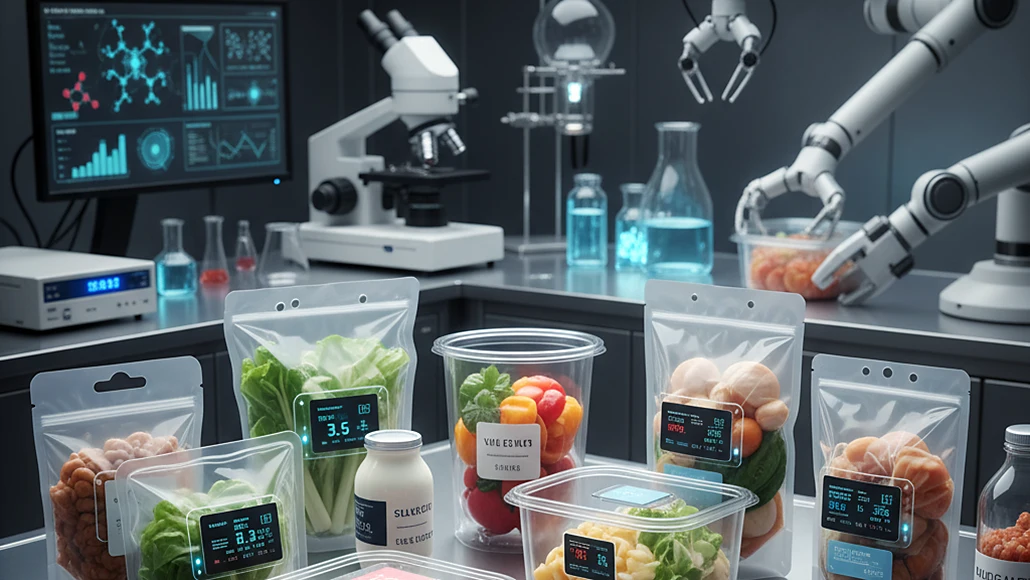
Intelligent packaging systems provide real-time information about food quality, safety, and condition through embedded sensors, indicators, and communication technologies. These systems transform traditional packaging into information platforms that enable better decision-making by consumers, retailers, and supply chain partners while improving food safety outcomes.
Freshness indicators provide clear visual signals about product quality through color changes or other easily interpreted displays. These indicators respond to specific quality parameters such as pH changes, bacterial metabolites, or volatile compounds that indicate spoilage. Advanced indicators can account for cumulative exposure effects and temperature history to provide more accurate assessments than simple expiration dates.
Temperature monitoring systems track thermal exposure throughout the product’s journey from production to consumption, providing critical information about cold chain integrity and product safety. These systems can include simple color-changing indicators, digital displays, or sophisticated sensors that communicate with smartphones or supply chain management systems. Comprehensive temperature tracking enables identification of temperature abuse events that might compromise food safety.
pH indication systems monitor acidity changes that can signal bacterial growth or chemical degradation in food products. These indicators prove particularly valuable for perishable products where pH changes provide early warning of safety issues or quality degradation. Visual pH indicators enable quick assessment of product condition without requiring laboratory testing or specialized equipment.
Gas sensor systems detect specific compounds that indicate spoilage, contamination, or quality changes in packaged foods. These sensors can identify hydrogen sulfide, ammonia, organic acids, or other volatile compounds that serve as indicators of product condition. Advanced sensor systems can differentiate between different types of spoilage and provide specific information about the nature and extent of quality changes.
Time-temperature integration systems provide cumulative assessment of thermal exposure effects on product quality and safety. These systems account for the fact that food degradation depends on both temperature and time, providing more accurate predictions of remaining shelf life than simple temperature monitoring alone. Integration with inventory management systems enables optimized rotation and pricing strategies.
Pathogen detection systems identify specific harmful microorganisms that pose food safety risks, providing early warning of contamination issues. These systems can include immunological detection methods, genetic markers, or biochemical indicators that signal the presence of dangerous pathogens. Rapid detection capabilities enable immediate response to safety issues before products reach consumers.
Impact on Food Safety Standards
The implementation of active intelligent packaging systems creates significant improvements in food safety outcomes through enhanced protection mechanisms, better monitoring capabilities, and improved traceability throughout the supply chain. These improvements contribute to reduced foodborne illness risks while improving consumer confidence in food safety.
Hazard Analysis Critical Control Point enhancement occurs when intelligent packaging systems provide continuous monitoring of critical control points throughout food processing and distribution. These systems can automatically alert managers when conditions exceed safe parameters, enabling immediate corrective actions that prevent safety issues. Integration with quality management systems creates comprehensive documentation of safety performance throughout the supply chain.
Pathogen prevention capabilities of active packaging systems reduce contamination risks through antimicrobial protection and barrier enhancement technologies. These systems provide multiple layers of protection that work synergistically to prevent harmful microorganisms from reaching dangerous levels. Continuous protection throughout the product lifecycle proves more effective than single-point treatments applied during processing.
Traceability improvements through intelligent packaging enable rapid identification and isolation of contaminated products when safety issues occur. Digital tracking systems combined with quality monitoring create detailed histories that facilitate quick response to safety incidents while minimizing the scope of recalls or other corrective actions. Enhanced traceability capabilities prove essential for modern food safety management.
Regulatory compliance improvements result from comprehensive documentation and monitoring capabilities provided by intelligent packaging systems. These systems can automatically generate records required by food safety regulations while providing objective evidence of compliance with safety standards. Automated documentation reduces compliance costs while improving accuracy and completeness of safety records.
Consumer education capabilities of intelligent packaging enable better understanding of food safety principles and proper handling practices. Interactive packaging that provides information about storage requirements, safety indicators, and consumption guidance helps consumers make informed decisions that improve food safety outcomes. Educational content integrated with packaging creates opportunities for continuous consumer education about food safety practices.
Future Developments in Packaging Technology
The continued evolution of active intelligent packaging promises even more sophisticated capabilities that will further enhance food safety while creating new opportunities for improved quality management and waste reduction. Emerging technologies and approaches will address current limitations while expanding the range of applications suitable for advanced packaging systems.
Nanotechnology integration will enable more precise control of active packaging functions through nanoscale materials and delivery systems. Nanoencapsulation of active compounds will provide better control over release rates and targeting of specific degradation mechanisms. Nanosensors will enable detection of quality changes at molecular levels with unprecedented sensitivity and specificity.
Artificial intelligence integration will create packaging systems that learn from experience and optimize their performance based on real-world conditions. Machine learning algorithms will analyze historical data to predict optimal release rates, sensor calibration, and response thresholds for different products and applications. AI-powered systems will adapt their behavior based on changing conditions and performance feedback.
Biodegradable active systems will combine food safety benefits with environmental sustainability through packaging materials that decompose naturally while providing active protection. Research into plant-based antimicrobial systems and compostable sensor technologies creates opportunities for packaging that enhances food safety without creating environmental concerns.
Blockchain integration will create transparent, immutable records of food safety performance throughout the supply chain. Smart packaging that communicates with blockchain networks will provide comprehensive traceability and accountability for food safety management while enabling new business models based on guaranteed safety performance.
Personalized packaging systems will adapt their function based on individual consumer preferences, dietary requirements, or health conditions. Smart packaging that communicates with personal devices will provide customized information and recommendations while adjusting protective mechanisms based on intended use patterns and storage conditions.
Extended reality integration will transform how consumers interact with intelligent packaging, providing immersive experiences that enhance food safety education and decision-making. Augmented reality applications will overlay safety information, handling instructions, and quality indicators onto physical packaging, creating intuitive interfaces that improve consumer understanding of food safety principles.