

























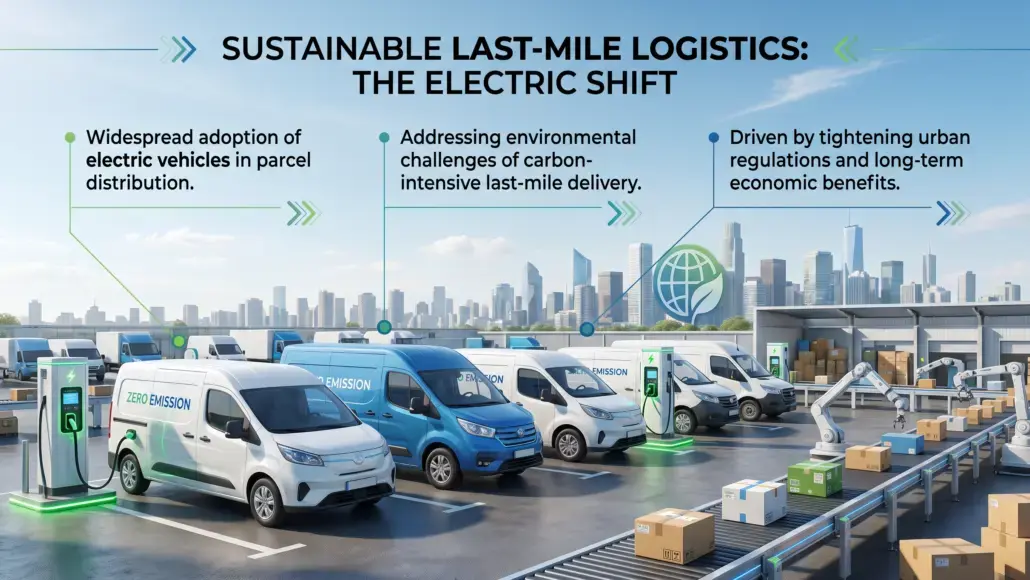

The transition to sustainable logistics is currently being spearheaded by the widespread adoption of electric vehicles within the parcel distribution network. Companies are increasingly deploying battery-powered delivery fleets to address the environmental challenges associated with last mile logistics, which has historically been the most carbon intensive stage of the packaging supply chain. This shift is driven by a combination of tightening urban emission regulations and the long term economic benefits of reducing reliance on fossil fuels. As battery technology continues to improve, the range and payload capacity of electric delivery vans have reached levels that make them a practical replacement for traditional internal combustion engine vehicles. The integration of these clean energy solutions is not just a corporate social responsibility initiative, but a strategic imperative for businesses looking to future proof their operations against rising fuel costs and potential carbon taxes. By investing in battery-powered delivery fleets, logistics providers are taking a significant step toward achieving net zero emissions while simultaneously improving the efficiency and reliability of their delivery services.
Electrification Trends in Last Mile Packaging Distribution
The move toward electrification in the packaging sector is most visible in urban environments, where the density of deliveries makes electric vehicles particularly effective. Last mile distribution involves frequent stops and starts, a cycle that is highly inefficient for diesel engines but ideal for electric motors, which can recover energy through regenerative braking. This operational characteristic makes battery-powered delivery fleets a superior choice for city routes, where they can operate quietly and without emitting tailpipe pollutants. The reduction in noise pollution is an additional benefit for residential areas, allowing for more flexible delivery windows, including early morning and late evening slots that were previously restricted. These trends are supported by the rapid development of specialized electric delivery vehicles that are designed from the ground up to meet the specific needs of parcel couriers, featuring low floors for easy access and optimized cargo spaces.
Additionally, the data generated by electric fleets provides managers with granular insights into energy consumption and vehicle performance. This information is used to refine route planning and to identify opportunities for further efficiency gains, such as optimizing the sequence of stops to minimize energy drain. The total cost of ownership for electric vehicles is also becoming more competitive, as lower maintenance requirements and the decreasing cost of electricity relative to diesel offset the higher initial purchase price. As more charging points are installed at distribution hubs and throughout urban centers, the operational barriers to full scale electrification are steadily being removed. The transition to battery-powered delivery fleets is therefore gathering momentum, with many of the world’s largest logistics companies committing to fully electric fleets within the next decade.
Infrastructure Requirements for Large Scale Charging Hubs
Scaling up a fleet of electric delivery vehicles requires a significant investment in charging infrastructure at the distribution hub level. Facilities must be equipped with high capacity power supplies to ensure that an entire fleet can be charged overnight, a task that requires careful planning and coordination with local utility providers. Many packaging centers are now integrating smart charging systems that can balance the electrical load across the facility, ensuring that charging does not exceed the available power capacity or lead to high peak demand charges. These systems can prioritize vehicles based on their scheduled departure times, ensuring that the first vans out in the morning are always fully charged. The development of onsite energy storage, using large scale batteries or even second life vehicle batteries, is another strategy being used to manage energy demand and provide a buffer against grid instability.
In addition to electrical capacity, the physical layout of the distribution hub must be adapted to accommodate charging stations. This involves the installation of ruggedized charging units that can withstand the daily wear and tear of a busy loading dock environment. The placement of these units is critical for maintaining an efficient workflow, as drivers need to be able to plug in and unplug their vehicles quickly as they move through the loading process. Some facilities are also exploring the use of automated charging solutions, such as robotic arms or underfloor pads, to further streamline the operation. The wider adoption of autonomous packaging handling is also helping distribution hubs streamline automated processes and improve parcel movement efficiency. The transition to battery-powered delivery fleets thus necessitates a holistic redesign of the distribution facility, transforming it from a simple transit point into a sophisticated energy management center. This infrastructure investment is a long term commitment that provides the essential foundation for a sustainable and resilient logistics network.
Impact on Operational Costs and Carbon Accounting
The economic rationale for adopting battery-powered delivery fleets is increasingly centered on the reduction of long term operational costs. Electric vehicles have significantly fewer moving parts than internal combustion engines, leading to lower maintenance expenses and less time spent in the repair shop. There are no oil changes, exhaust systems, or complex transmissions to maintain, and the wear on brakes is greatly reduced due to regenerative braking systems. These savings add up over the life of the vehicle, providing a strong financial incentive for logistics companies to make the switch. The volatility of diesel prices is another risk that can be mitigated by moving to electric power, as electricity costs are generally more stable and can be further controlled through the use of onsite renewable energy sources like solar panels.
From a carbon accounting perspective, the use of battery-powered delivery fleets allows companies to drastically reduce their Scope 1 emissions, which are the direct emissions from their own operations. This is a critical metric for businesses that are required to report their environmental impact to stakeholders and regulators. As the electrical grid itself becomes greener through the integration of more wind and solar power, the carbon footprint of electric delivery vehicles continues to shrink. Some forward thinking logistics providers are already using 100% renewable energy to power their fleets, achieving true zero emission delivery. This level of environmental performance is becoming a competitive advantage in the B2B sector, as corporate clients increasingly look for sustainable partners to help them meet their own green targets. The ability to offer “carbon neutral” delivery is a powerful value proposition in a market where environmental sustainability is a top priority for consumers and businesses alike.
Optimizing Route Efficiency for Electric Delivery Cycles
Maximizing the efficiency of battery-powered delivery fleets requires a specialized approach to route planning that takes into account the unique characteristics of electric vehicles. Range anxiety, once a significant concern for electric vehicle operators, is being addressed through sophisticated telematics and route optimization software. These tools analyze factors such as terrain, weather conditions, and payload weight to provide accurate range estimates for every vehicle in the fleet. By integrating this data into the daily dispatch process, managers can ensure that every van has sufficient charge to complete its assigned route, even in challenging conditions. The software can also identify opportunities for mid day top up charging if a vehicle is expected to cover a particularly long distance, using public charging networks or strategically located hub sites.
The intelligence of these routing systems also allows for the dynamic adjustment of deliveries in response to real time traffic data. By avoiding congested areas, electric vehicles can conserve energy and maintain their delivery schedules more effectively. The quiet operation of electric vans also opens up new possibilities for night time deliveries in urban centers, which can further reduce traffic congestion and improve overall efficiency. The coordination between the vehicle and the distribution hub is managed through cloud based platforms, ensuring that both drivers and dispatchers have access to the same information. This level of connectivity is essential for managing a large scale fleet of electric vehicles, providing the visibility and control required to optimize every aspect of the delivery cycle. As the technology continues to evolve, we can expect to see even greater integration between vehicle telematics and warehouse management systems, leading to a truly seamless and efficient distribution network.
Sustainability Benchmarks for Modern Logistics Providers
Setting clear sustainability benchmarks is a vital part of the transition to battery-powered delivery fleets, as it allows companies to track their progress and communicate their achievements to the wider industry. These benchmarks often include targets for the percentage of the fleet that is electric, the total reduction in carbon emissions, and the amount of renewable energy used for charging. By establishing these goals, logistics providers can create a roadmap for their transition to a low carbon future, ensuring that all parts of the organization are aligned toward the same objective. The use of third party certifications and reporting frameworks adds credibility to these efforts, providing assurance to clients and investors that the company’s sustainability claims are backed by rigorous data.
The move toward battery-powered delivery fleets is also fostering innovation in the wider packaging and logistics ecosystem. We are seeing the development of new vehicle types, such as electric cargo bikes and micro vans, that are designed to complement larger electric trucks in a multi modal distribution strategy. These smaller vehicles are particularly effective for navigating narrow city streets and pedestrian zones, providing a flexible and efficient solution for the final leg of the delivery process. The collaboration between vehicle manufacturers, energy providers, and logistics companies is driving a rapid acceleration in the development and deployment of these technologies, creating a more sustainable and resilient future for the global packaging sector. The commitment to electrification is a clear signal that the industry is ready to lead the way in the fight against climate change, proving that economic growth and environmental protection can go hand in hand. As the global logistics network continues to expand, the importance of battery-powered delivery fleets as a tool for reducing emissions and improving efficiency will only continue to grow.