



















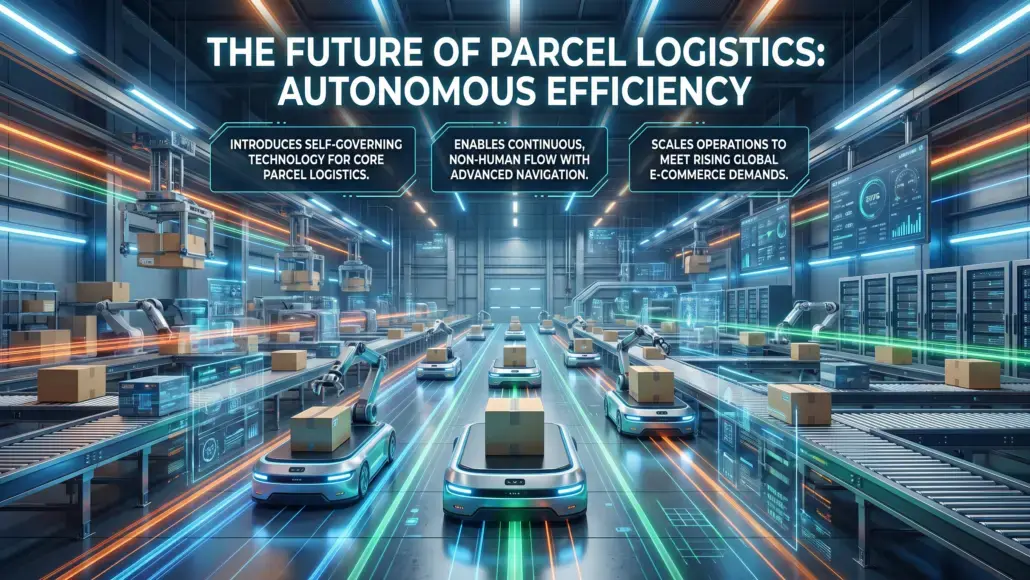

Autonomous packaging handling systems are fundamentally altering the operational dynamics of modern distribution centers by introducing self-governing technology into the core of parcel logistics. These systems utilize advanced navigation algorithms and sensor arrays to manage the movement of goods without direct human intervention, allowing for a continuous flow of items through complex sorting environments. As global e-commerce volumes continue to rise, the pressure on traditional manual handling methods has reached a critical threshold, necessitating a shift toward decentralized and intelligent transport solutions. The implementation of autonomous packaging handling allows facilities to bypass the physical constraints of fixed conveyor belts, offering a flexible architecture that can be reconfigured in real time to meet fluctuating demand. By integrating mobile platforms that communicate with a central warehouse management system, operators can achieve a level of precision in parcel routing that was previously unattainable, ensuring that each package reaches its intended destination with minimal latency.
The Integration of Self Governing Systems in Sorting Facilities
The deployment of autonomous packaging handling technology within sorting facilities represents a significant departure from linear processing models. These systems rely on a network of autonomous mobile robots that coordinate their movements to transport parcels between induction points and shipping lanes. Unlike traditional sorters that require extensive physical infrastructure, these mobile units operate on open floor plans, utilizing LiDAR and computer vision to move around obstacles and other machinery. This spatial flexibility is vital for packaging centers that must adapt to seasonal peaks, as additional units can be introduced to the fleet without requiring structural modifications to the building. The intelligence embedded within these platforms allows them to calculate the most efficient path for every individual parcel, taking into account traffic congestion and the priority status of the delivery. This granular control over movement reduces the likelihood of bottlenecks, particularly during high volume periods where traditional systems often struggle to maintain throughput speeds. Additionally, the ability of these systems to perform self-diagnostics ensures that mechanical issues are identified before they cause operational disruptions, maintaining a consistent pace of distribution throughout the work shift.
The transition to autonomous packaging handling also addresses the growing labor shortages that have plagued the logistics sector for several years. By automating the repetitive and physically demanding tasks of moving heavy parcels across large distances, companies can redirect their human workforce toward more complex roles such as system supervision and quality control. This shift not only improves overall facility productivity but also enhances worker safety by reducing the need for manual lifting and repetitive motion. The data collected by these autonomous units provides managers with unprecedented visibility into the flow of goods, allowing for the identification of inefficiencies that may have remained hidden in a manual environment. These insights are used to refine sorting logic and optimize the placement of high frequency items within the facility, further shortening the time from induction to dispatch. As the technology matures, the cost of entry for autonomous packaging handling continues to decrease, making it a viable option for medium sized enterprises looking to compete with larger industry players.
Optimizing Sortation Flow Through Intelligent Mobile Platforms
Intelligent mobile platforms are the backbone of modern autonomous packaging handling, providing the physical means to execute complex sorting instructions with high degrees of accuracy. These platforms are equipped with sophisticated drive systems that allow for omnidirectional movement, enabling them to operate in tight spaces and execute precise maneuvers at induction stations. The communication protocols used by these robots are designed to facilitate high speed data exchange, ensuring that routing decisions are made in milliseconds. This rapid response time is essential for maintaining the momentum of the distribution chain, as even minor delays in parcel processing can accumulate into significant delivery backlogs. The integration of these platforms with cloud based control systems allows for the synchronization of entire fleets, ensuring that robots work in harmony rather than as isolated units. This collective intelligence enables the system to dynamically adjust to changes in the packaging environment, such as the sudden arrival of a large shipment or the closure of a specific shipping lane for maintenance. Data-driven packaging operations can further strengthen these systems by using real-time insights to optimize parcel movement, identify bottlenecks, and improve overall processing efficiency.
The impact of autonomous packaging handling on parcel distribution efficiency is most evident in the reduction of sorting errors. Human error in manual sorting can lead to misrouted packages, resulting in costly redeliveries and diminished customer satisfaction. Autonomous systems, by contrast, utilize barcode and RFID scanning to verify the identity and destination of every parcel before it is moved. This constant verification process ensures that the right package is always on the right platform, headed toward the right exit gate. The precision of these systems also allows for higher density sorting, as robots can operate in closer proximity than human workers or large scale mechanical sorters. This increased density translates to a smaller facility footprint, allowing packaging companies to maximize the utility of their existing real estate. The energy efficiency of these mobile platforms is another critical factor, as they are typically powered by high capacity lithium batteries that can be charged during natural lulls in operation, ensuring that the system remains active twenty four hours a day without the need for extensive downtime.
Scaling Operational Capacity With Minimal Manual Intervention
Scaling a distribution operation has traditionally required a proportional increase in headcount and physical space, but autonomous packaging handling changes this equation by allowing for modular expansion. When a facility needs to increase its throughput, it can simply add more autonomous units to its existing fleet, a process that is significantly faster and less expensive than installing new conveyor lines. This scalability is a core advantage for companies operating in the fast paced packaging sector, where market conditions can change rapidly. The software governing these autonomous systems is designed to accommodate new units automatically, integrating them into the existing workflow without the need for extensive reprogramming. This plug and play capability ensures that facilities can respond to growth opportunities with agility, maintaining their competitive edge in a crowded marketplace. The reduction in manual intervention also means that the cost per parcel processed remains stable even as volumes increase, providing a clear path to long term profitability.
Additionally, autonomous packaging handling systems are inherently more resilient than their mechanical counterparts. In a traditional sorting center, a failure in a single section of a conveyor belt can bring the entire operation to a standstill. In an autonomous environment, if a single robot experiences a malfunction, the rest of the fleet can simply move around it, ensuring that the flow of parcels continues uninterrupted. This decentralized approach to logistics management minimizes the risk of catastrophic downtime, which is essential for meeting the strict service level agreements that define the modern packaging industry. The reliability of these systems is backed by rigorous testing and the use of industrial grade components, ensuring that they can withstand the rigors of continuous operation in demanding warehouse conditions. By reducing the frequency and impact of equipment failures, autonomous packaging handling provides a stable foundation for global parcel distribution networks.
Reducing Latency in High Volume Logistics Hubs
Latency is the enemy of efficiency in parcel distribution, and autonomous packaging handling is specifically engineered to eliminate the friction points that slow down the movement of goods. By using real time data to anticipate the arrival of parcels at different points in the facility, these systems can position robots in advance, ensuring that there is no waiting time at induction stations. The elimination of these micro delays results in a significant increase in overall system speed, allowing for faster turnaround times from the moment a package enters the building to the moment it is loaded onto a delivery vehicle. The high speed sorting capabilities of autonomous platforms are particularly effective for managing small, lightweight parcels that are common in e-commerce, as these items can be moved quickly and safely by compact robotic units. This specialization allows facilities to process a wider variety of package types simultaneously, increasing the versatility of the distribution hub.
The reduction of latency also has a positive effect on the environmental footprint of the packaging operation. By optimizing the paths taken by parcels and reducing the need for excessive idling or redundant movements, autonomous packaging handling minimizes the total energy consumption of the facility. The precision of the routing also means that delivery vehicles can be loaded more efficiently, reducing the number of trips required to transport goods to their final destinations. This holistic approach to efficiency improvement demonstrates the value of autonomous technology as a tool for both economic and environmental sustainability. As the industry moves toward more transparent and accountable supply chains, the ability to track the movement of every parcel through an autonomous system provides a level of traceability that is highly valued by both businesses and consumers. The data generated by these systems can be used to provide real time updates on parcel status, enhancing the overall transparency of the distribution process.
The Long Term Impact on Global Packaging Supply Chains
The long term adoption of autonomous packaging handling is set to redefine the global standards for parcel distribution, creating a more interconnected and responsive supply chain. As more facilities transition to autonomous models, the ability to share data across different nodes in the network will lead to even greater optimizations in the flow of goods. Regional hubs will be able to coordinate their activities with local delivery centers, ensuring that parcels are moved through the system with maximum efficiency at every stage. This level of integration will support the growth of same day and next day delivery services, which are becoming the baseline expectation for consumers worldwide. The evolution of autonomous packaging handling will also likely lead to the development of new packaging formats that are optimized for robotic handling, further reducing the complexity of the sorting process.
The rise of autonomous packaging handling represents a pivotal moment for the packaging industry, offering a solution to the challenges of volume growth, labor scarcity, and operational complexity. By using the power of self governing technology, companies can build distribution networks that are not only more efficient but also more resilient and sustainable. The ongoing investment in this field suggests that the future of logistics will be defined by intelligent machines working in concert to ensure that every parcel is delivered safely and swiftly. As the technology continues to advance, the boundaries of what is possible in parcel distribution will expand, leading to a new era of productivity and innovation in the packaging sector. The strategic importance of autonomous packaging handling cannot be overstated, as it provides the essential infrastructure for the modern digital economy. Companies that embrace these technologies today will be well positioned to lead the industry in the decades to come, setting the pace for global logistics excellence.