






















Key Takeaways:
- Connecting presses, finishing equipment, and logistics systems to a central MIS platform enables real-time visibility of job status and capacity.
- OEE dashboards and analytics reveal chronic bottlenecks, hidden downtime, and waste drivers that are not obvious from manual reports.
- Data-driven scheduling engines improve job sequencing to reduce changeovers, plate or cylinder swaps, and ink wash-ups.
- Cloud-based systems allow managers to monitor performance across multiple sites and shifts, supporting standardized best practices.
- Data from sensors and logs supports predictive maintenance strategies that stabilize throughput and reduce surprise stoppages.
The modern packaging print shop is evolving from a craft-oriented operation into a data-driven manufacturing environment. As run lengths fragment and SKUs proliferate, converters can no longer rely solely on experience-based scheduling and retrospective reporting. Instead, they are turning to integrated data infrastructures that capture what is happening on presses and finishing lines in real time. These data-driven packaging print shop environments use analytics and cloud-based MIS platforms to optimize throughput, reduce waste, and improve overall equipment effectiveness (OEE).
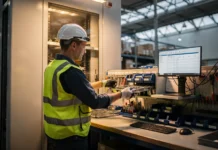
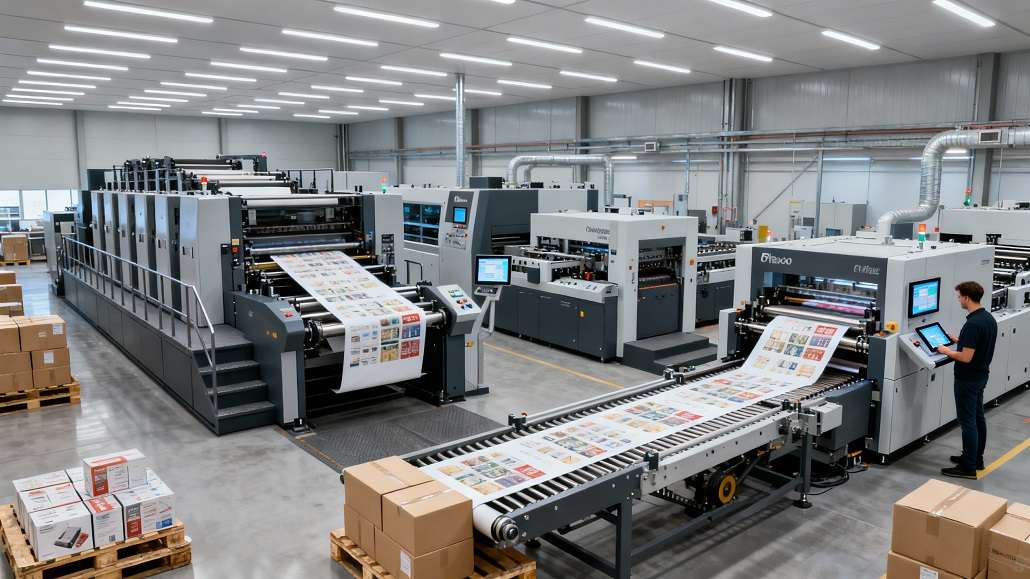
At the heart of this transformation is connectivity. Presses, coaters, die‑cutters, folder‑glu ers, and ancillary systems are increasingly equipped with sensors and communication interfaces that send status and production data to centralized systems. Job start and stop times, make‑ready durations, run speeds, waste sheets, and quality interruptions can all be recorded automatically instead of relying on manual entry. This continuous data stream feeds management information systems (MIS) that track every job as it moves through estimating, prepress, printing, finishing, and shipping.
Real-time dashboards translate these raw data into actionable insights. Production managers can see which jobs are currently running, which are in queue, and which machines are under‑utilized or blocked by upstream delays. OEE metrics combining availability, performance, and quality are presented for each key asset, both for the current shift and over historical timeframes. Spikes in downtime, below‑target speeds, or increased spoilage become immediately visible, prompting targeted investigation rather than generalized troubleshooting.
Scheduling benefits significantly from this level of visibility. Traditional scheduling often used fixed rules such as grouping jobs by substrate or format to reduce changeovers, but lacked accurate, current capacity information. With real-time data, advanced scheduling engines can consider actual job characteristics, estimated run times, and up‑to‑the‑minute machine availability when sequencing work. They can also factor in constraints like drying time, required inspection, and downstream finishing dependencies, generating schedules that reflect the real capabilities and limitations of the plant.
For example, a data-driven packaging print shop might have several flexo and digital presses feeding a shared die‑cutting and gluing department. If the die‑cutters are nearing capacity, the scheduler can shift certain jobs to presses whose output aligns better with available finishing windows, or re‑sequence work to ensure that finishing lines are continuously supplied without overloading any single asset. This orchestration reduces idle time, prevents backlog buildup, and maintains more consistent throughput across the entire production chain.
Data collection also clarifies where improvement efforts will have the greatest impact. By analyzing historical performance, plants can identify chronic bottlenecks perhaps a specific die‑cutter with frequent unplanned stops or a gluer that consistently runs below nameplate speed. Drill‑down capabilities allow teams to see correlations between certain job types, substrates, or operators and performance deviations. Continuous improvement initiatives can then be focused on root causes rather than symptoms, making better use of engineering and maintenance resources.
Waste reduction is another area where analytics deliver concrete benefits. By correlating spoilage events with specific job parameters, shift patterns, or equipment states, converters can uncover patterns that may not be obvious in day‑to‑day operations. For instance, data might show that certain complex designs consistently require more setup sheets than estimated, or that particular color combinations are prone to registration issues on specific substrates. Armed with this knowledge, prepress workflows can be adjusted, standard operating procedures refined, or training targeted to address these recurring issues.
Predictive maintenance is a further extension of data-driven operations. Instead of reacting to breakdowns or relying on fixed-interval maintenance schedules, plants can leverage sensor data such as vibration, temperature, and run hours to predict when components are likely to fail. Machine learning models trained on historical failure patterns can flag subtle changes in behavior that precede stoppages, allowing maintenance to be scheduled during planned downtime. This approach reduces surprise outages and contributes to more stable, predictable throughput.
Cloud-based MIS and analytics platforms are especially impactful for converters operating multiple sites or shifts. Centralized systems enable managers to compare performance between plants, identify which locations are surpassing benchmarks, and replicate best practices across the network. Standardized KPI definitions such as what constitutes waste or how changeover time is measured ensure that comparisons are meaningful rather than distorted by local measurement differences. Over time, this fosters a culture where decisions are grounded in shared data rather than anecdotal experience.
Digitized workflow management also improves collaboration across functional teams. Sales can see real‑time production status and communicate realistic delivery commitments to customers. Customer service teams can access job histories and performance logs when investigating complaints or queries. Prepress and production departments can coordinate more effectively when new jobs enter the system, using shared dashboards to plan approvals, proofing, and press trials. This cross-functional visibility reduces miscommunication and supports faster, more informed decision‑making.
Implementing a data-driven packaging print shop does require careful change management. Operators and supervisors may initially view increased data collection with skepticism, especially if they fear it will be used primarily for blame rather than improvement. Successful implementations emphasize transparency and shared goals, positioning data as a tool for making work easier, reducing firefighting, and stabilizing schedules. Involving frontline teams in defining useful metrics and dashboards increases buy‑in and ensures that outputs are meaningful to those who use them daily.
Technical integration can be complex as well. Legacy equipment may lack modern connectivity, requiring retrofit solutions or manual data capture mechanisms. Different vendors’ machines may use varying protocols, necessitating middleware or standardized interfaces to feed a unified MIS. Over time, however, these integration efforts pay off by providing a unified view of operations that would otherwise remain fragmented across separate systems and spreadsheets.
As packaging markets continue to demand shorter lead times, higher customization, and tighter cost control, data-driven operations will become a differentiator between converters that thrive and those that struggle. Plants that fully leverage production data will be able to quote more confidently, schedule more realistically, and deliver more reliably. They will also be better positioned to adopt advanced technologies such as AI‑based scheduling, digital twins, and closed-loop process control, which all depend on robust data foundations. In that sense, becoming a data-driven print shop is not only about improving today’s throughput it is about building the operational intelligence required for the next generation of packaging workflows.