
















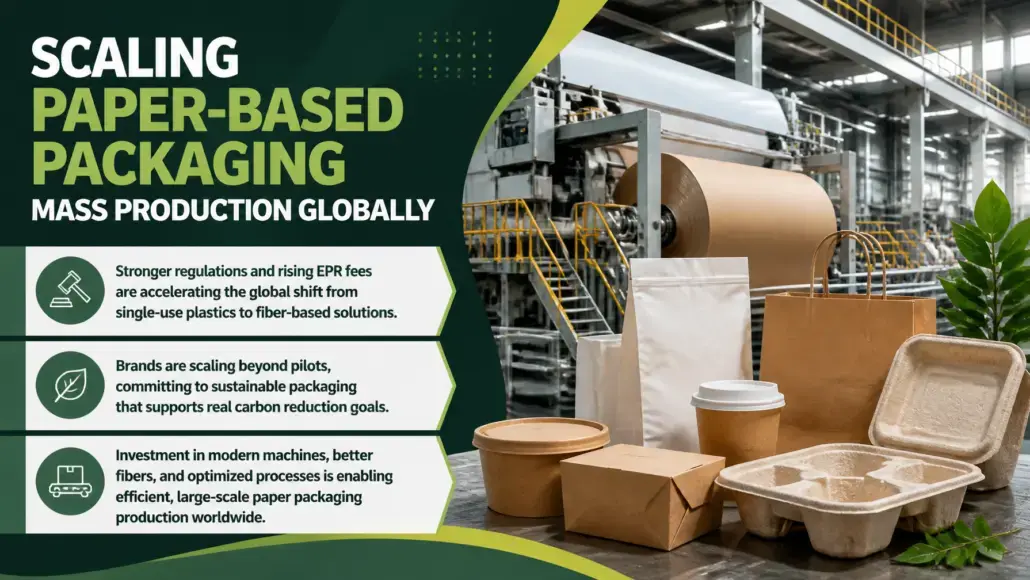
For years, fiber alternatives to single-use plastics occupied a narrow, predictable position across consumer goods: promotional pilot runs, niche eco-brand launches, and regional trials designed to gauge consumer sentiment rather than challenge industrial packaging equipment. That experimental phase has largely passed. Driven by statutory frameworks such as the European Union Packaging and Packaging Waste Regulation, escalating extended producer responsibility fees, and corporate carbon-accounting mandates, paper-based packaging has evolved into an urgent technical priority across dry foods, frozen goods, household goods, and personal care segments.
Scaling renewable fiber substrates to meet the massive production volumes long commanded by synthetic polyolefins is an exacting industrial engineering undertaking. Converters, equipment builders, and consumer brands face mechanical, chemical, and economic limitations that cannot be resolved by substituting a roll of polymer film with standard paper. Industrializing fiber substrates requires fundamental re-engineering of web tension control, thermal dynamics, barrier chemistry, converting speeds, and secondary packaging architecture.
The Inflection Point: Transitioning from Pilot Projects to Commercial Scale
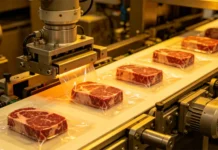
The gap between laboratory proof-of-concept and high-speed industrial converting is substantial. A prototype package fabricated from coated kraft paper may perform reliably during intermittent, low-speed pilot runs of a few thousand units. However, when that same substrate is threaded onto continuous form-fill-seal platforms operating at commercial output rates, minor material inconsistencies quickly trigger severe mechanical disruption.
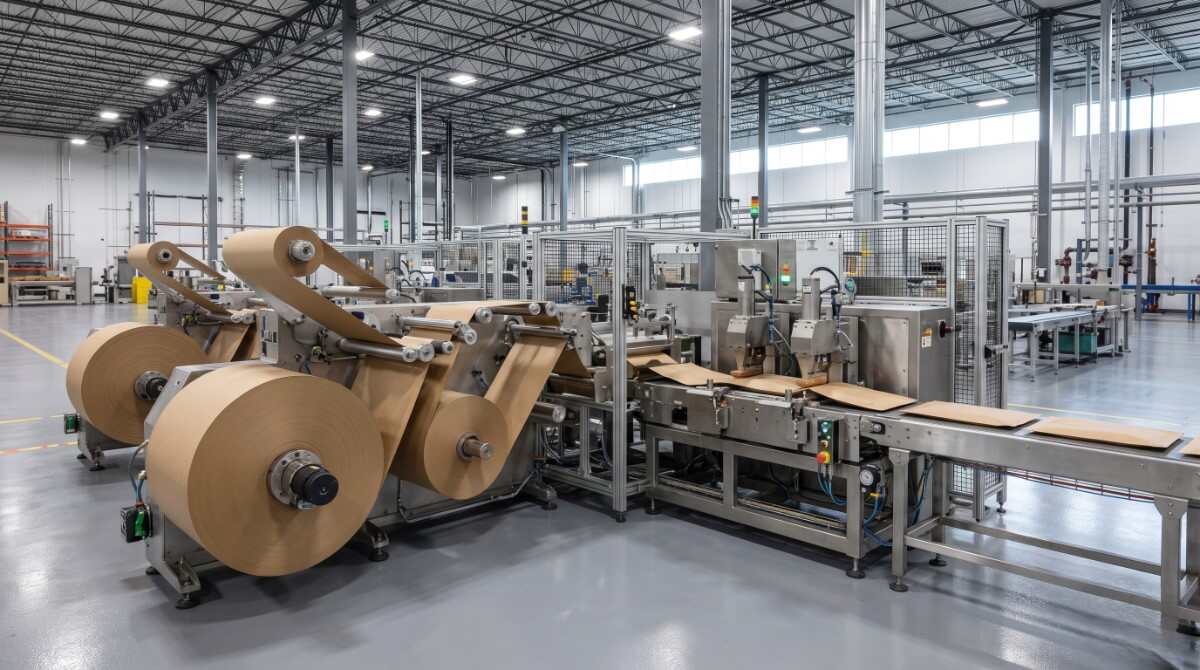
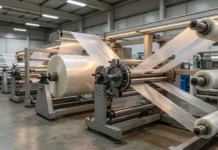
Achieving successful mass production of paper-based packaging demands an unprecedented level of physical consistency from primary paper mills. Historically, papermaking tolerances accommodated wide variations in caliper, grammage, ambient moisture content, and tensile stretch. These fluctuations are tolerable in publication printing or secondary corrugated box manufacturing, where downstream machinery absorbs slight material anomalies. On automated packaging lines, however, variations across the web width or roll length cause uneven tension distribution, registration drift, and structural tears at critical processing junctions.
Paper mills serving this sector are adapting by investing in dedicated machines optimized for flexible packaging grades. These specialized lines employ continuous online monitoring to regulate basis weight, fiber alignment, and moisture content with surgical precision. Ensuring uniform mechanical properties from the outer layers down to the inner core of each parent roll allows converters to run fiber substrates through automated packaging equipment without constant manual recalibration.
Overcoming Material and Functional Barrier Hurdles
Polymer films came to dominate consumer goods packaging primarily because of their structural versatility. A coextruded film structure can simultaneously deliver moisture protection, oxygen isolation, hermetic sealing, and mechanical flexibility within a thin cross-section. Pure cellulosic fiber, by contrast, is porous and inherently hydrophilic. Without intervention, untreated paper offers negligible resistance to atmospheric moisture, liquids, oils, or gases.
For decades, converters addressed these physical shortcomings by laminating paper webs to solid sheets of aluminum foil or low-density polyethylene. While effective at protecting sensitive products, these thick multi-material laminates severely complicate downstream recycling operations. Standard paper re-pulping facilities are engineered to recover clean wood fibers, and heavy synthetic backings often clog hydrapulper screening plates, leading to disposal as solid mill waste.
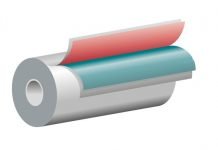
To overcome this bottleneck, material scientists and chemical suppliers have engineered water-based dispersion coatings, bio-based wax alternatives, and vacuum-metallized surface treatments applied directly to primed paper surfaces. The goal is to provide functional protection against ambient moisture, grease migration, and oxygen transmission while maintaining sufficient solubility in warm-water hydrapulping systems to permit mechanical fiber liberation.
| Substrate Configuration | Moisture Barrier Capability | Oxygen Barrier Capability | Conventional Hydrapulping Compatibility |
|---|---|---|---|
| Traditional Paper / Polyethylene Extrusion | High | Moderate | Low (Requires dedicated recovery infrastructure) |
| Aqueous Dispersion-Coated Kraft Paper | Moderate to High | Moderate | High (Disperses under standard agitation) |
| Vacuum-Metallized Paper with Topcoat | High | High | High (Ultra-thin metal layer separates cleanly) |
| Standard Multi-Layer Flexible Plastic (Baseline) | Very High | Very High | Incompatible with municipal paper processing |
Hurdles Faced in Mass Production
- Material Differences & Web Handling Challenges: High-performance plastic films feature significant tensile elongation, allowing them to stretch, conform to mechanical guides, and tolerate machine misalignments without rupturing. Paper has minimal elongation capacity compared to plastic, making it prone to sudden web breaks during rapid directional changes.
- Machinery Redesign & Dynamic Tension Control: Running paper-based substrates at industrial line speeds requires re-engineered converting pathways, including low-friction idler rollers and large-radius forming shoulders. Sensitive closed-loop servo drives continuously track and adjust web tension to dampen mechanical shock waves during machine acceleration, stops, and splicing.
- Thermal Transfer & Sealing Obstacles: Synthetic plastic films conduct heat and melt uniformly under pressure, whereas paper acts as a thermal insulator that does not melt. Sealing paper packages requires heat to conduct through the insulating fiber layer to activate an inner heat-sealable dispersion coating. Increasing sealing bar temperatures risks scorching external fibers and weakening package integrity. Lengthening dwell times avoids scorching but slows line speeds, lowering overall throughput and equipment efficiency.
- Advanced Sealing Solutions: Ultrasonic sealing and high-response impulse heating resolve thermal trade-offs. Ultrasonic sealing transmits high-frequency acoustic vibrations directly through the material to create localized friction, melting the internal sealant in milliseconds while keeping the outer paper layer cool and undamaged.
Retrofit Strategies Versus Dedicated Processing Equipment
Packaging plant operators face a critical choice between modifying existing plastic-handling equipment and investing in ground-up fiber packaging lines. Retrofit kits, which generally feature specialized forming shoulders, low-friction belts, and adaptive sealing jaws, enable operations to run coated paper substrates with modest capital expenditure. However, retrofitted lines often experience an operational speed penalty of twenty to thirty percent compared to their original plastic output rates.
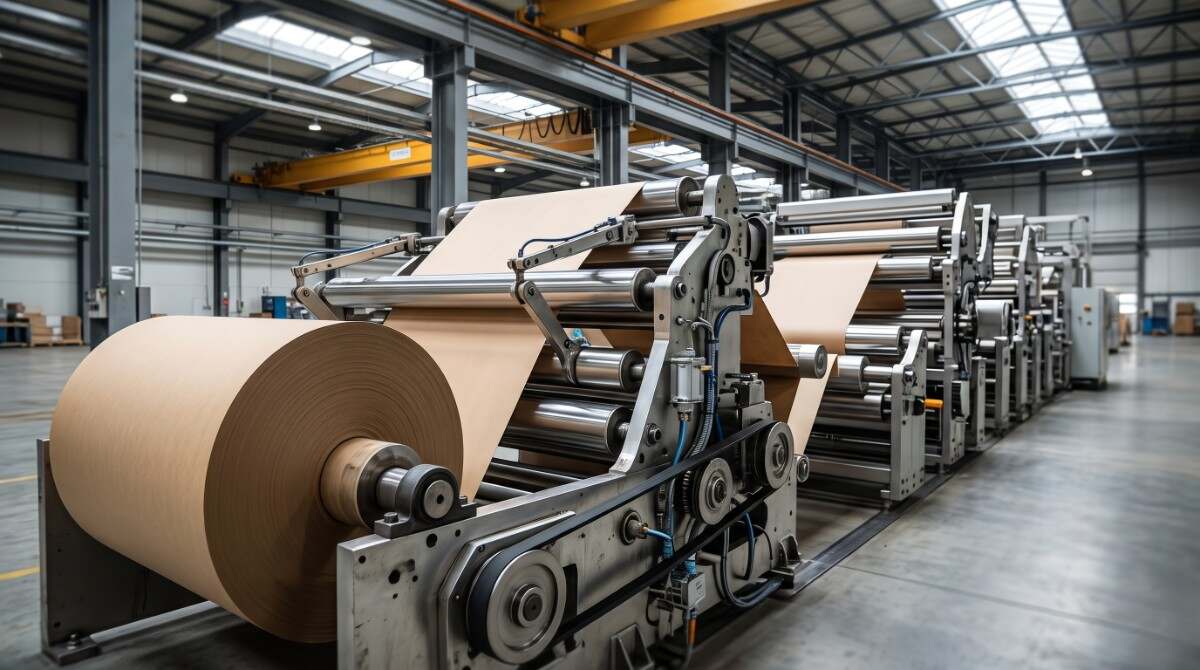
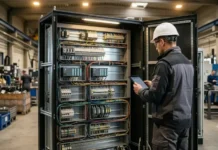
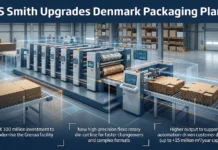
In contrast, dedicated paper packaging machinery is engineered specifically to eliminate sharp mechanical deflections, maintain gentle continuous web tension, and integrate inline non-contact vision systems that inspect packages for micro-fractures along fold lines. While requiring higher capital outlay, purpose-built machinery achieves line speeds that closely approach traditional flexible polymer converting platforms, making true mass production commercially sustainable. Beyond baseline hardware adjustments, targeted automation upgrades allow operators to mitigate speed penalties, cut scrap rates, and maintain target throughput across delicate paper runs.
Supply Chain Integration and Fiber Sourcing Strategies
Sustaining global paper-based packaging mass production requires reliable access to high-grade virgin pulp. Primary packaging applications that encounter mechanical stresses during high-speed folding and filling rely almost exclusively on virgin kraft fibers sourced from slow-growing softwood forests. The extended fiber length inherent in these pulps delivers the tear resistance, tensile energy absorption, and burst strength necessary to survive high-speed processing without increasing overall basis weight.
While recycled content is widely embraced in rigid corrugated cartons and tertiary packaging, its use in high-speed flexible primary packaging presents ongoing technical difficulties. Secondary fibers contain variable levels of broken, shortened fibrils, mineral fillers, and residual printing chemistries. This variability can compromise web tensile strength and introduces migration risks in direct food-contact packaging. Consequently, industrial packaging converters are aligning their procurement with responsibly managed forestry certifications to ensure virgin fiber supplies remain both environmentally defensible and mechanically uniform.
Recyclability Protocols and End-of-Life Processing
The industrial logic supporting paper-based packaging mass production collapses if the resulting formats fail to integrate into post-consumer recycling collection and processing channels. Packaging converters must validate their structures against standardized laboratory repulpability methods established by regional trade organizations. These testing frameworks measure the percentage of usable, clean paper fiber recovered during mechanical washing cycles and evaluate whether functional coatings produce insoluble residues that clog industrial screens or contaminate papermaking felts.
Ensuring that modern barrier formulations release cleanly from pulp suspensions under standard hydrapulper temperatures and neutral pH levels is paramount. When coatings break down into manageable particulate sizes without forming adhesive contaminants, recycling facilities can process the packaging alongside common corrugated boards and mixed papers. Packaging World Insights observes that as barrier chemistry and sorting automation continue to align, fiber packaging is steadily progressing from a bespoke marketing asset into a permanent, high-volume standard for consumer goods manufacturing worldwide.

