














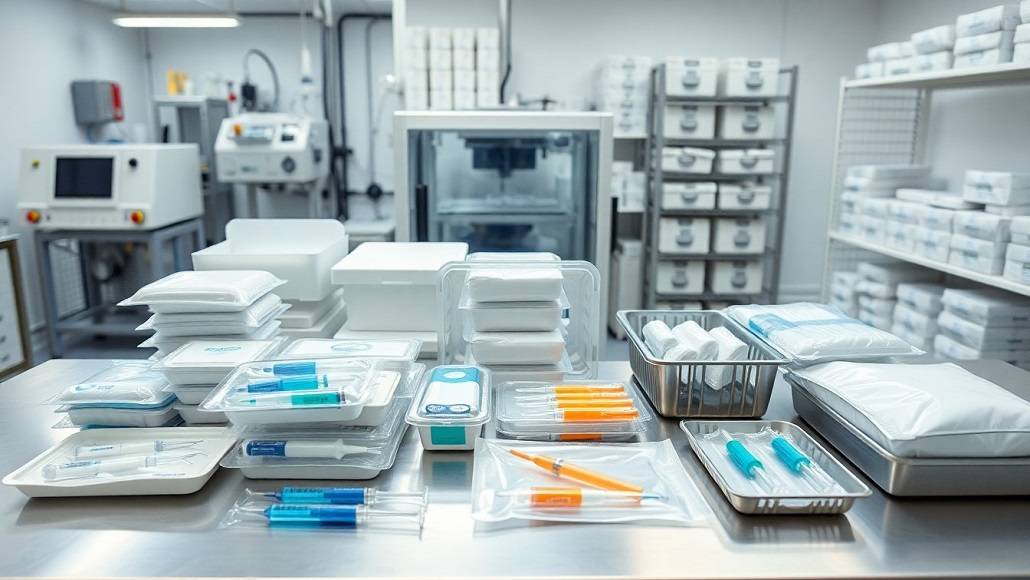

Valued at USD 43.2 billion in 2025, The Medical Device Packaging Market is growing quickly and is anticipated to rise to USD 67.7 billion by 2035, with a robust compound annual growth rate (CAGR) of 4.6% over the years.
Market Development and Growth Trajectory
By mid-2025, the market is solidly grounded on the shoulders of a growing ageing population globally, a higher incidence of chronic disease, and ongoing medical device advancements.
Bi-annual trends show a magnificent acceleration: the first half of the decade has a growth rate of 2.9%, and the second half of the decade accelerates at 4.5%. This shows the increasing rate of growth in the market as innovations and adoption of regulations gain traction.
Medical Device Packaging Requirements:
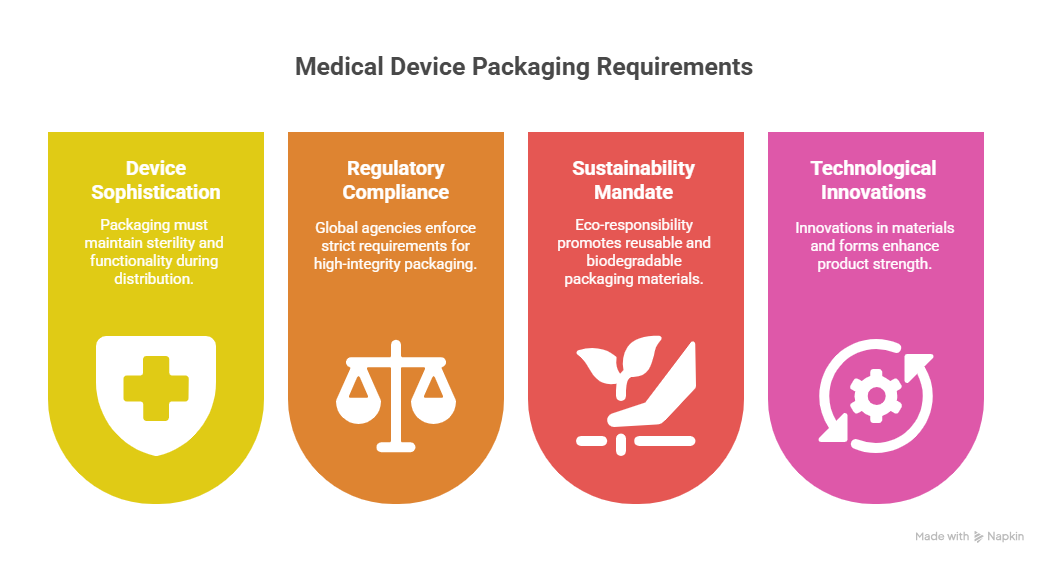
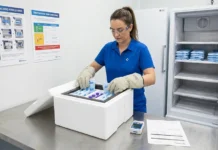
Device Sophistication & Sterility Requirements: As devices have evolved into more sophisticated diagnostic, surgical, and implantable products, packaging must remain sterile and operational throughout the distribution chain
Regulatory Compliance: Global regulatory agencies, such as the FDA and EMA, have stringent requirements reaffirming the critical nature of high-integrity packaging systems
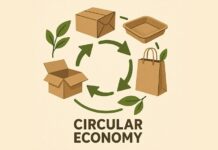
Sustainability Mandate: Greater focus on eco-responsibility encourages the use of reusable and biodegradable materials for packaging and adherence to broader environmental standards
Technological Innovations: Attention to form and material innovations—such as sterile barrier systems, flexible film, and blister pack forms—drives the strength and competitiveness of the product
Leadership in Form and Material
Material innovation is the focus of development for this market. Plastics are the top ones in the materials segment in 2025 with an astonishing 40.7% of the global market. It is so because it is cheap and also suitable for different kinds of packages.
When it comes to packaging types, the flexible ones are gaining traction. Bags and pouches, in particular, can be expected to hold over 31% market share by the year 2035. They are light, compact, and scalable solutions, and they are very suitable for disposable medical devices as well as single-use kits.
Regional Outlook
North America is a market leader, fuelled by technological innovation, sophisticated healthcare infrastructure, and ongoing regulatory toughness. The United States alone will see a consistent 3.4% CAGR in 2035. Europe is its second, with developed markets such as Spain that will achieve a 2.9% CAGR throughout the decade.
East Asia expansions lift off with projected CAGR rates of 6.7% over the forecast period. Expansion in the region reflects increasing expenditure on healthcare, a growing middle class, and increasing adoption of new medical technology.
Regulatory and Sustainability Impact
Strict regulatory requirements for North America, Europe, and Asia-Pacific also serve as guidance and market differentiators. Packaging design must achieve increasingly high standards for barrier protection, tamper evidence, label integrity, and sterilisation integrity. In parallel, the trend towards more sustainable packaging—recycled plastics, biodegradable film, and energy-efficient production—is a strategic imperative.
Emerging Themes and Strategic Pillars
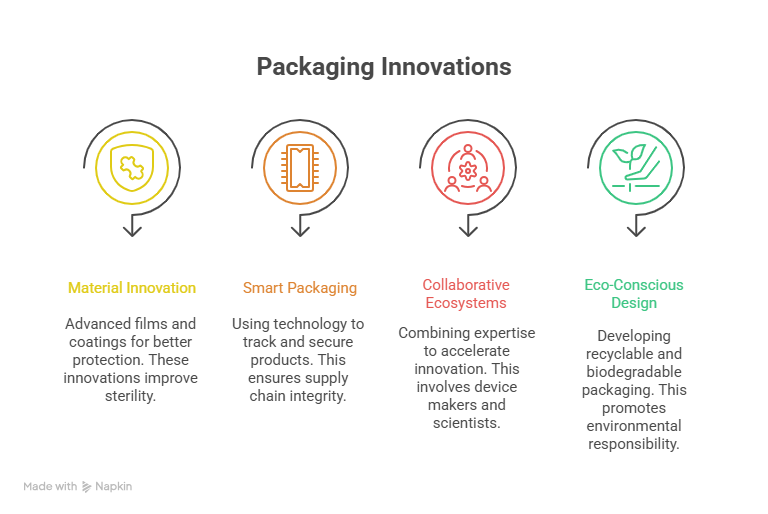
Material Innovation: Multi-layer film technology, anti-microbial coatings, and enhanced sterile barriers.
Smart Packaging: Combining traceability technologies like RFID and tamper-evidence features to facilitate integrity in supply chains.
Collaborative Ecosystems: Enhanced collaboration between device makers, packaging engineers, and regulatory scientists to innovate at higher speeds.
Eco-Conscious Design: Ongoing progress towards recyclable and biodegradable packaging platforms.
Conclusion
The Medical Device Packaging Market stands at the crossroads with growth projections in the long term—from USD 43.2 billion in 2025 to USD 67.7 billion in 2035 with a 4.6% CAGR—the sector is a reflection of healthcare need fundamentals, device complexity, and regulatory intensity. Its evolution will be influenced by technology in the material sciences, digital traceability, and sustainable practice. Those interests best positioned to benefit from those trends will have significant opportunity, first in quickly emerging economies like East Asia, and through investment in green technology and innovation.