







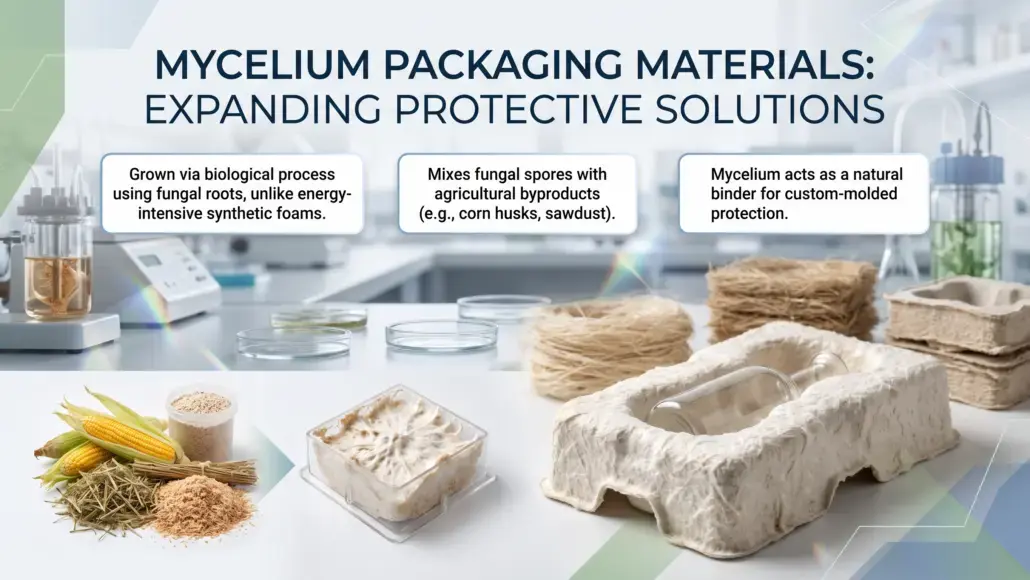
The conventional approach to manufacturing protective packaging involves energy-intensive chemical processes to create synthetic foams like expanded polystyrene or polyethylene. In contrast, mycelium packaging materials are grown through a biological process that utilizes the root structure of fungi. This process begins by mixing fungal spores with agricultural byproducts such as corn husks, hemp hurdles, or sawdust. The mycelium acts as a natural adhesive, binding the substrate together into a solid mass over several days. Because the growth occurs within a custom mold, the material can be shaped into complex geometries to fit specific products precisely. This eliminates the need for cutting and gluing, reducing waste and ensuring a perfect fit for delicate items such as electronics or glassware.
The growth environment is carefully controlled to optimize the density and strength of the final material. Factors such as temperature, humidity, and CO2 levels influence how the mycelium colonizes the substrate. Once the desired form is reached, the material is dried and heat-treated to deactivate the fungus, ensuring that the packaging remains stable and inert during use. This biological manufacturing method requires significantly less energy than traditional foam production and results in a material that is entirely bio-based. As the industry looks for ways to decarbonize its supply chain, the ability to “grow” packaging from waste streams represents a significant shift in material sourcing and production.
Cushioning performance and shock absorption characteristics
Protective packaging must be able to absorb and dissipate energy during impacts to prevent damage to the enclosed product. Mycelium packaging materials exhibit excellent cushioning properties that are comparable to many synthetic foams. The microscopic structure of the mycelium-substrate composite creates a porous, resilient network that can undergo significant deformation while protecting the contents. Technical evaluations have shown that these materials can meet the rigorous shock-absorption requirements of international shipping standards. Engineers can adjust the cushioning performance by varying the substrate type and the duration of the growth cycle, allowing for the creation of materials with different densities and load-bearing capacities.
The resilience of mycelium packaging is also notable in its ability to withstand multiple impacts. Unlike some brittle foams that break or permanently deform after a single drop, mycelium-based structures maintain their integrity across repeated stress events. This is particularly valuable for the logistics of high-value or fragile goods that may be handled multiple times during the distribution cycle. Furthermore, the material is naturally non-abrasive, protecting the surface finish of products without the need for additional protective films or wraps. The combination of structural strength and gentle contact makes mycelium an ideal choice for a wide range of protective applications, from heavy industrial components to delicate luxury goods.
Thermal insulation properties for temperature-sensitive goods
Beyond shock absorption, thermal insulation is a critical requirement for many packaging applications, particularly in the pharmaceutical and food sectors. Mycelium packaging materials possess an inherent cellular structure that provides effective resistance to heat transfer. The low thermal conductivity of the material makes it an excellent choice for shipping temperature-sensitive items like vaccines, clinical trial samples, or gourmet food products. In many cases, mycelium-based coolers can provide thermal performance similar to expanded polystyrene, keeping products within the required temperature range for extended periods during transit.
The use of mycelium for thermal insulation also addresses the environmental concerns associated with traditional cooler materials. Expanded polystyrene is often difficult to recycle and persists in the environment for centuries if not disposed of correctly. Mycelium-based insulators offer a sustainable alternative that can be easily composted by the end-user. This is a significant advantage for home-delivery services where the disposal of large amounts of packaging waste is a major consumer pain point. By providing high-performance insulation in a biodegradable format, mycelium packaging materials help brands meet their technical requirements while enhancing their environmental reputation. The versatility of the material allows it to be integrated with other sustainable components, such as bio-based ice packs, to create a fully compostable cold-chain solution.
Scalability of agricultural waste upcycling in production
The sustainability of mycelium packaging materials is rooted in the use of agricultural waste as a primary feedstock. Every year, millions of tons of crop residues are generated globally, much of which is left in the fields or burned. By upcycling these materials into high-value packaging, mycelium production provides an additional revenue stream for farmers and reduces the environmental impact of agricultural waste. The scalability of this model is impressive, as the raw materials are abundant and widely distributed. This allows for the establishment of localized production facilities near agricultural hubs, reducing the carbon footprint associated with transporting bulky packaging materials.
The production of mycelium-based materials is also a low-water and low-chemical process. Unlike paper or plastic production, it does not require vast amounts of fresh water or complex chemical additives. The fungal growth process is inherently efficient, converting low-value waste into a structured composite with minimal external inputs. As the technology matures, innovations in bioreactor design and substrate preparation are further increasing the efficiency and speed of production. The ability to utilize diverse substrates also means that the process can be adapted to different regional agricultural outputs, making it a globally applicable solution. This resilience and adaptability are key to the long-term viability of mycelium as a mainstream packaging material.
Replacement feasibility for expanded polystyrene in logistics
The logistics industry is under increasing pressure to find viable alternatives to expanded polystyrene, which is facing bans and restrictions in numerous jurisdictions. Mycelium packaging materials are a leading contender for this replacement, offering a unique combination of performance, cost-potential, and sustainability. While the current cost of mycelium-based solutions is often higher than that of mass-produced polystyrene, the gap is closing as production scales and the true environmental costs of plastics are reflected in regulations and taxes. Many large-scale consumer goods companies are already piloting mycelium-based protective packaging, signaling a strong market interest in the technology.
The transition from polystyrene to mycelium requires careful planning to ensure that the new materials integrate seamlessly into existing logistical frameworks. This includes verifying compatibility with automated packing lines and ensuring that the material can withstand the humidity and temperature fluctuations of international shipping. The aesthetic appeal of mycelium, with its natural and earthy appearance, also resonates with consumers who are increasingly critical of plastic-heavy packaging. For brands, switching to mycelium is not just a functional decision but a strategic move to align with consumer values and future-proof their operations against tightening plastic regulations. The successful replacement of polystyrene with mycelium in high-volume applications would mark a major milestone in the move toward a more sustainable and circular packaging economy.

