



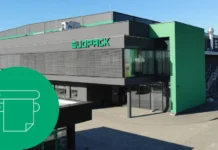


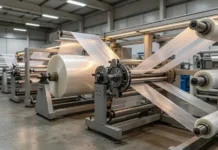














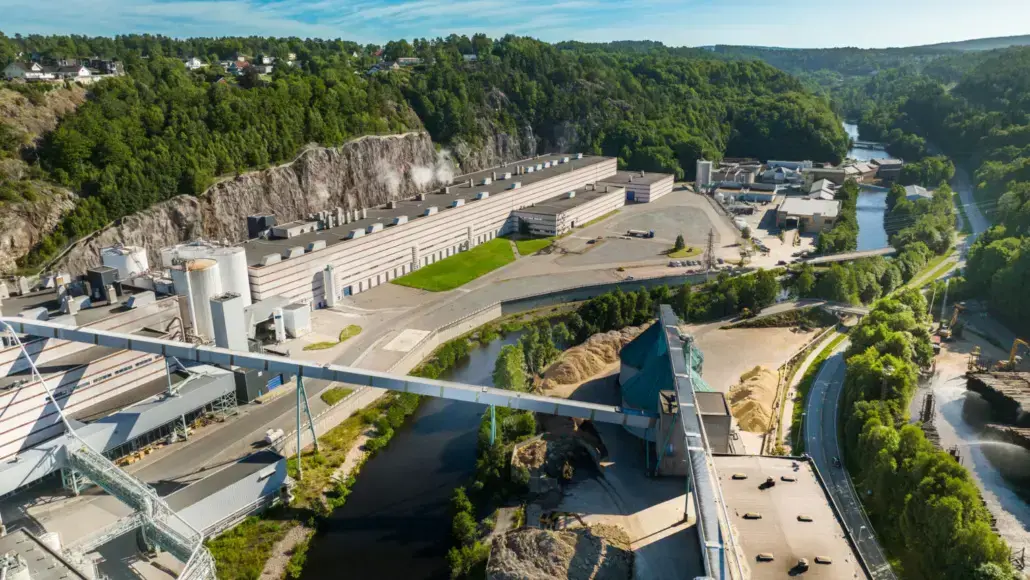

Norske Skog has confirmed a positive investment decision to rebuild paper machine 6 (PM6) at its Saugbrugs mill in Halden, Norway. The approved investment of up to approximately NOK 850 million will facilitate flexible kraftliner production alongside SC magazine paper on a single rebuilt machine. This PM6 rebuild marks a long-term commitment to sustaining industrial operations at the Saugbrugs site, while expanding the company’s footprint in the fibre-based packaging market.
PM6 had been out of operation since a rockslide at the Saugbrugs mill in April 2023. In the interim, the facility continued to serve the SC magazine paper market through its PM4 and PM5 production lines. Extensive project development and new technology have now enabled a solution that allows the rebuilt PM6 to switch flexibly between TMP-based kraftliner production and SC magazine paper output.
Key investment details:
- Investment of up to approximately NOK 850 million for the PM6 rebuild at Saugbrugs in Halden, Norway.
- Flexible annual capacity of up to approximately 300,000 tonnes of TMP-based kraftliner or approximately 230,000 tonnes of SC magazine paper.
- These figures represent alternative production configurations, not simultaneous output.
- Start-up of the rebuilt PM6 is expected during the first half of 2028.
Expanded Fibre-Based Packaging Capability
“The rebuild of PM6 represents an important step in securing a competitive and sustainable industrial future for Saugbrugs. The project combines our strong position and long-standing competence in publication paper with an attractive opportunity within fibre-based packaging. It will significantly improve the cost position of the mill and provide valuable flexibility to adapt production to future market developments. This investment will enable the continued growth of Norske Skog into packaging solutions which has been our strategic vision for many years,” says Geir Drangsland, CEO of Norske Skog.
The new TMP-based kraftliner product will be based on high-quality virgin fibre, particularly targeting lower grammages. Customers are increasingly seeking strong and lightweight packaging solutions with excellent printability, a low fossil carbon footprint and suitability for food-contact applications. This kraftliner production capability will complement the company’s existing packaging paper activities and broaden its exposure to the growing fibre-based packaging segment.
Manufacturing and operational implications:
- The rebuilt PM6 is expected to deliver a materially improved cost position through more efficient energy consumption, a streamlined production process and reduced staffing requirements.
- Following PM6 start-up, production on PM4 and PM5 is planned to cease permanently without interrupting customer deliveries.
- Saugbrugs is expected to remain a reliable supplier of high-quality SC magazine paper.
- Detailed engineering and preparatory activities will continue alongside planned property transactions and project financing measures still to be pursued.
Preparatory Work and Site Development Plans
“Saugbrugs has a highly competent organisation, high-quality fibre resources and established industrial infrastructure. By combining these strengths with a more efficient PM6 and increased product flexibility, we believe the project provides a strong platform for continued value creation here in Halden. The investment also demonstrates Norske Skog’s ambition to develop rather than phase out industrial activity where competitive solutions can be established,” says Anders Hauge Johansen, Mill Director of Norske Skog Saugbrugs.
Preparatory activities will run in parallel with a planned sale of the PM6 building and property and a leaseback agreement for the same assets, while a potential sale of the Saugbrugs administration office is also being considered. Project financing measures are expected to be pursued over the coming period to cover the investment in this kraftliner production expansion. Separately, the Saugbrugs site continues to explore the opportunity for an 80 to 100 MW data centre development on available portions of the site alongside continued fibre-processing operations.