




















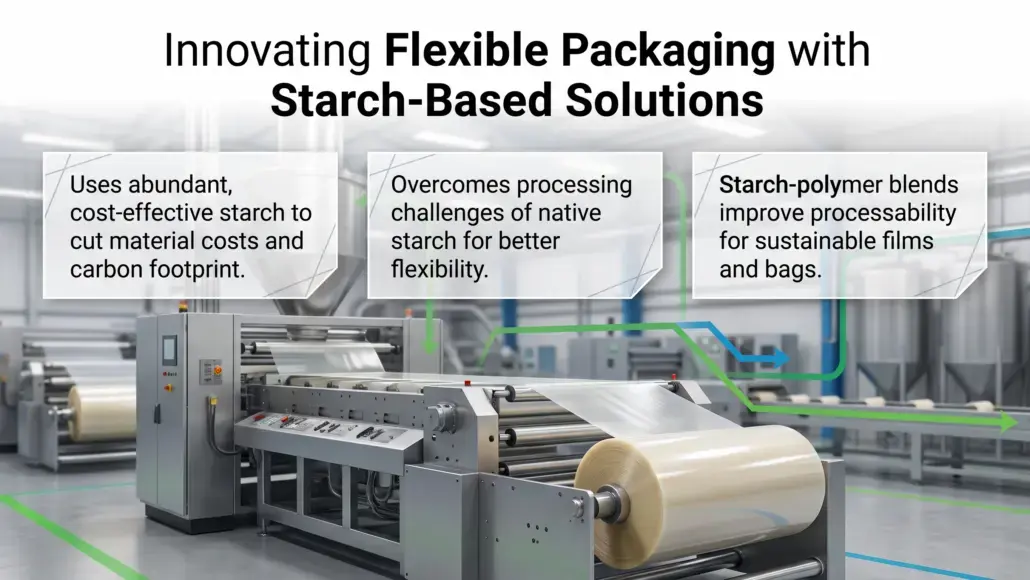
The search for cost-effective and renewable materials in the flexible packaging sector has led to a renewed interest in starch-based formulations. As one of the most abundant and inexpensive natural polymers, starch offers significant potential for reducing the carbon footprint and material costs of films and bags. However, native starch is inherently difficult to process due to its semi-crystalline structure and lack of thermoplasticity. The development of starch-polymer blends improving flexible packaging processability has addressed these issues by converting raw starch into thermoplastic starch and blending it with synthetic or bio-based resins. This transformation allows starch-based materials to be processed on standard industrial equipment, opening new avenues for sustainable packaging design. This analysis explores the technical innovations that have made these blends a viable and efficient choice for the modern converter.
Gelatinization and the Creation of Thermoplastic Starch
The foundation of any starch-based packaging material is the process of gelatinization, which involves breaking down the granular structure of native starch through the application of heat, shear, and plasticizers. Without this step, starch remains a rigid filler that compromises the mechanical properties of a film. The production of starch-polymer blends improving flexible packaging processability begins with the addition of plasticizers such as glycerol, water, or sorbitol, which disrupt the hydrogen bonding between starch molecules. This allows the starch to flow like a thermoplastic, facilitating its integration with other polymers. The challenge lies in balancing the plasticizer content to ensure adequate flow without making the material too soft or sensitive to moisture.
Modern processing techniques utilize co-rotating twin-screw extruders to achieve a high degree of gelatinization and intensive mixing in a single step. Precise control of temperature and residence time is crucial for preventing the thermal degradation of the starch while ensuring that all granules are fully disrupted. When these processed intermediates are used to create starch-polymer blends improving flexible packaging processability, the resulting material exhibits a more uniform morphology. This uniformity is essential for achieving consistent thickness in blown films and preventing defects such as “gels” or un-melted granules that can cause breakage during the inflation of the bubble. The ability to produce high-quality thermoplastic starch at scale has been a major driver in the adoption of these sustainable materials.
The choice of starch source (whether corn, potato, cassava, or pea) influences the final properties of the blend. Different starches have varying ratios of amylose to amylopectin, which affects the viscosity and crystallization behavior of the melt. By selecting the appropriate starch source and tailoring the plasticization process, manufacturers can optimize these materials for specific applications, ranging from thin retail bags to thicker agricultural mulch films. This level of material customization ensures that the sustainable benefits of starch do not come at the expense of production efficiency or product quality.
Compatibilization and Phase Morphology Management
Starch is a highly hydrophilic polymer, whereas most of the resins it is blended with, such as polyethylene or polylactic acid, are hydrophobic. This inherent incompatibility often leads to poor interfacial adhesion and phase separation, resulting in weak mechanical properties and low processing stability. To overcome this, the formulation of starch-polymer blends improving flexible packaging processability relies on the use of compatibilizers or functionalized polymers. These molecules contain both hydrophilic and hydrophobic segments, allowing them to act as a bridge between the starch and the polymer matrix. Maleic anhydride grafted polymers are commonly used for this purpose, providing a chemical link that strengthens the interface and ensures a stable morphology.
Management of phase morphology is critical for maintaining the stability of the extrusion process. In a well-compatibilized blend, the starch phase is finely dispersed within the continuous polymer matrix, leading to a smooth melt flow and consistent pressure at the die. This stability allows for higher production speeds and reduces the frequency of line stoppages. When starch-polymer blends improving flexible packaging processability are properly engineered, they can even improve the melt strength of the overall system, making it easier to produce thin-gauge films with a stable bubble. This is a significant advantage for converters who are under pressure to increase throughput while maintaining strict quality standards.
The fine dispersion of starch contributes to the aesthetic quality of the final package. Poorly blended starch can result in a rough surface or a hazy appearance, which may be unacceptable for premium packaging. Through the use of reactive extrusion and advanced compatibilization strategies, modern materials can achieve a high degree of transparency and a smooth finish. This visual appeal, combined with the soft-touch feel characteristic of starch-based materials, provides a unique value proposition for brands looking to differentiate their products through sustainable packaging.
Enhancing Performance in Blown Film Extrusion
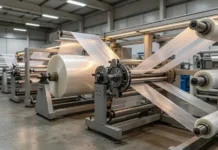
Blown film extrusion is the most common method for producing flexible packaging, and the processability of the material in this system is paramount. One of the historical issues with starch blends was their sensitivity to moisture and temperature, which could lead to bubble instability and high levels of scrap. The latest generation of materials has been formulated to provide a wider processing window. By controlling the moisture content of the resin and using specialized additives to manage the rheology, manufacturers can now run starch-based films at speeds that are comparable to conventional polyolefins.
Melt strength of these blends is particularly important during the cooling and orientation phases of the blown film process. A high melt strength ensures that the bubble maintains its shape as it is drawn upward and cooled by the air ring. Advanced blends are often reinforced with biodegradable polyesters like polybutylene adipate terephthalate to enhance their toughness and stretchability. This combination allows for the production of films with excellent tear resistance and puncture strength, which are vital for applications like compostable waste bags and retail carry-out bags.
In addition to mechanical performance, the printability and sealability of starch-based films are also key factors in their processability. Starch-based materials inherently have a high surface energy, which can improve the adhesion of water-based inks and reduce the need for corona treatment. The low melting point of the starch phase can facilitate faster heat-sealing, potentially increasing the efficiency of form-fill-seal equipment. When integrated into a comprehensive packaging system, the use of advanced starch-based resins can lead to improvements in overall line efficiency, demonstrating that sustainability and productivity are not mutually exclusive.
Thermal Stability and Humidity Resistance in Starch-Based Materials
A critical technical frontier in the development of starch blends is the improvement of their thermal stability during high-speed conversion. Standard starch-based resins can be prone to yellowing or degradation when subjected to the high temperatures required for thin-film extrusion. To address this, manufacturers are incorporating natural antioxidants and specialized heat stabilizers that protect the starch molecules from oxidative stress. These additives ensure that the film maintains its mechanical properties and visual clarity even when processed at the high shear rates typical of modern industrial packaging lines. This thermal resilience is essential for maintaining the integrity of the film through multiple stages of production, including printing and lamination.
Resistance to humidity is another area where significant progress has been made. Because starch is naturally absorbent, earlier generations of starch-based films could become brittle in dry conditions or lose their structural stiffness in high humidity. By engineering the polymer matrix to provide a more effective barrier for the starch particles, scientists have created blends that are much more stable under varying environmental conditions. This improved moisture resistance allows starch-based packaging to be used for a wider range of products, including those with high moisture content or those that require a longer shelf life in humid climates. The ability to maintain performance across different geographic regions is a key requirement for global packaging standardization.
The ongoing refinement of these materials also involves the exploration of nano-reinforcements, such as cellulose nanocrystals or nano-clays. These additives can significantly improve both the mechanical strength and the barrier properties of the starch blend without compromising its biodegradability. By creating a tortuous path for moisture and gas molecules, these nano-composites provide the level of protection needed for sensitive food products. This technological leap further closes the performance gap between starch-based materials and traditional fossil-fuel plastics, positioning starch as a cornerstone of the sustainable packaging industry.
Market Adoption and the Future of Compostable Packaging
Demand for compostable packaging is a major driver for the adoption of starch-polymer blends. Unlike traditional plastics that persist in the environment, starch-based materials can be designed to break down in industrial composting facilities or even in home compost bins. Ability to use these materials to create certified compostable films is a powerful tool for brands looking to address the end-of-life challenges of their packaging. As municipal composting infrastructure continues to expand, the market for these materials is expected to grow significantly, particularly in the fresh produce and food service sectors.
The cost-effectiveness of starch is also a significant factor in its market appeal. As the price of petroleum-based resins fluctuates, the stability and relatively low cost of starch provide a degree of economic predictability for manufacturers. By maximizing the starch content in these formulations, companies can reduce their overall material costs while meeting their sustainability targets.
The development of even higher-performing starch blends will likely focus on improving their barrier properties and water resistance. While starch is naturally sensitive to moisture, new coating technologies and nano-reinforcements are being explored to mitigate this issue. Successful integration of these advancements will further expand the range of applications for these materials, potentially allowing them to be used in more demanding formats like stand-up pouches for liquid products. Evolution of starch technology represents the ingenuity of the packaging industry in its pursuit of a sustainable future. By utilizing the natural properties of starch, the industry is creating practical materials.

