

























Life-Cycle Analysis Revealing Material Trade-Offs
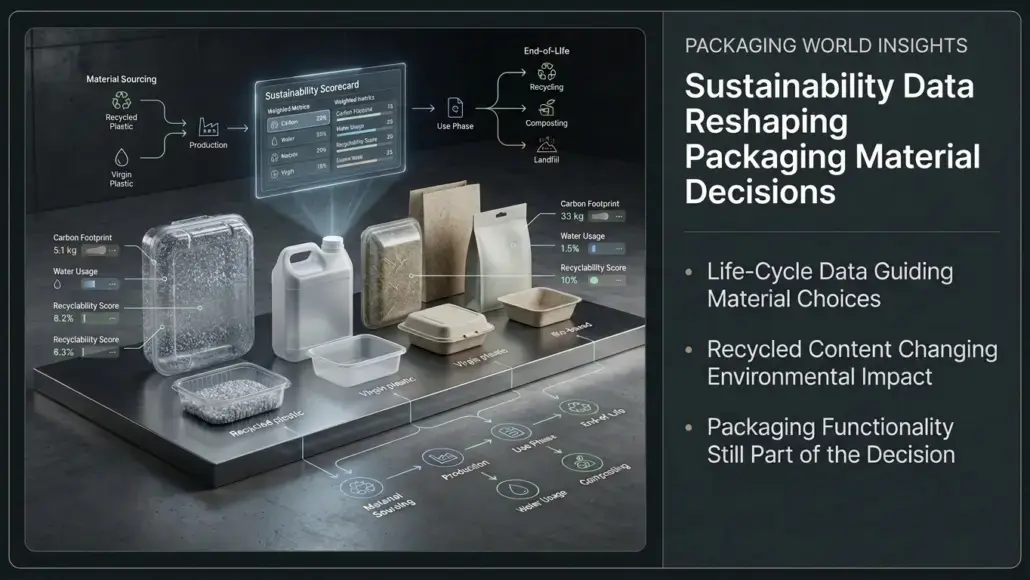
For packaging teams, sustainability data becomes more useful when different options are assessed against consistent environmental and functional criteria.
- Material production impacts can be compared across alternative packaging structures.
- Packaging weight can be assessed alongside transportation requirements.
- Recycled content can be evaluated within the wider material profile.
- End-of-life assumptions can influence the overall environmental result.
The same study found that replacing polyethylene with alternative materials in its European scenarios could substantially increase packaging mass. That reinforces the importance of looking at the complete packaging system rather than treating material substitution as an isolated environmental decision.
Evidence Supporting More Informed Material Selection
The quality and scope of the underlying data also matter. LCA results can change depending on the functional unit, system boundary, geography, energy mix, transport assumptions and end-of-life scenario. Two studies comparing apparently similar packaging materials may therefore produce different results if they use different assumptions. Useful sustainability data should consequently support several areas of decision-making:
- Clearly defined measurement boundaries and assumptions
- Comparable datasets for competing material options
- Consideration of product protection and potential product loss
- Assessment of environmental performance alongside packaging functionality
This approach moves packaging development away from choosing materials based on a single sustainability label and toward understanding how each option performs across its wider life cycle.
Recycled Content Bringing Measurable Environmental Differences
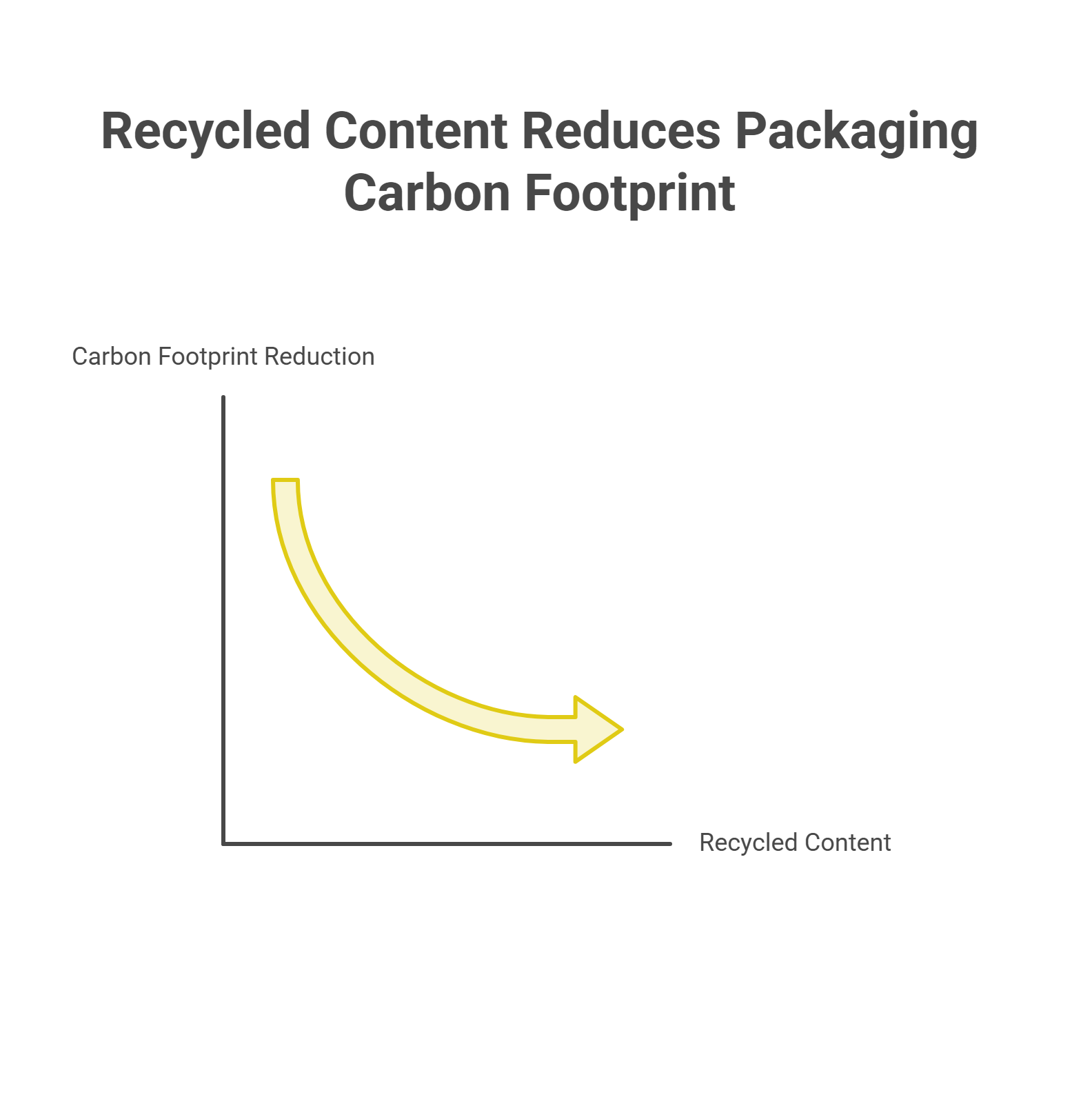
The value of sustainability data becomes more apparent when packaging teams assess specific interventions rather than making broad claims about materials. Recycled content, lightweighting, energy use and material substitution can each affect environmental performance, but the scale of the benefit depends on the packaging structure, production system and assumptions used in the assessment. A 2024 study published in Procedia CIRP examined different strategies for reducing the environmental impact of plastic cosmetic packaging. Across the scenarios assessed, the use of recycled material produced some of the strongest improvements. The study reported an average 52% reduction in total carbon footprint when 100% recycled material was used in the modelled scenarios. This was a result from the specific study and should not be treated as a universal reduction for all packaging applications. The finding illustrates how sustainability data can help move material discussions from general preferences toward measurable interventions.
- Recycled content can change the environmental profile of packaging materials
- Dematerialisation can reduce material demand where functional requirements allow
- Manufacturing energy sources can influence the overall footprint
- Environmental improvements need to be assessed against the complete packaging system
Context Determines the Material Decision
The evidence becomes more complicated when different materials are compared directly. A 2025 European study examining polyethylene (PE) against alternative packaging materials found lower Global Warming Potential (GWP) for PE in 68% of its 50 comparisons, while the alternative performed better in 26%. This demonstrates why material decisions cannot rely on a universal hierarchy in which one material is always considered environmentally preferable. The quality of the underlying sustainability data therefore matters as much as the result itself. Packaging teams need to understand the functional unit, geographical scope, energy assumptions, transport conditions and end-of-life scenario behind a comparison. This broader approach also brings reuse into the material discussion, where the environmental outcome can depend on how frequently packaging is used and what systems support its return and recovery. That creates a natural connection to reusable packaging systems.
Data Making Material Choices More Contextual
The growing use of sustainability data is changing packaging decisions from simple material comparisons into broader assessments of environmental trade-offs. Life Cycle Assessment (LCA) can help teams examine impacts across production, transport and end-of-life, while recycled-content analysis can show how specific interventions affect a package’s footprint. The evidence suggests that material selection increasingly needs to consider:
- Environmental performance across the complete life cycle
- The functional role of the packaging and the product it protects
- The assumptions and boundaries behind each comparison
A material that performs better in one impact category may not be the strongest choice across the entire packaging system. This makes transparent, comparable data increasingly important for designers, procurement teams and sustainability functions making long-term material decisions.
References
- Cleaner Environmental Systems – Life cycle assessment of polyethylene packaging and alternatives on the European market – 2025
- 2. Dolci, G., et al. – How Does Plastic Compare With Alternative Materials in the Packaging Sector? A Systematic Review of LCA Studies – Waste Management & Research, 2025
- Procedia CIRP – Life Cycle Assessment of Various Initiatives towards Sustainable Plastic Packaging – 2024
- Sustainable Packaging Coalition – Materials Decision Matrix – 2025
- European Union – Regulation (EU) 2025/40 on Packaging and Packaging Waste – 2025