










Close
DRIVEN BY INNOVATION POWERD BY PRINT
Friday, December 5, 2025
ACHEMA MIDDLE EAST

Portuguese researchers develop edible and health-friendly packaging

Note* - All images used are for editorial and illustrative purposes only and may not originate from the original news provider or associated company.

Subscribe

- Never miss a story with notifications

- Gain full access to our premium content

- Browse free from any location or device.

Media Packs

Expand Your Reach With Our Customized Solutions Empowering Your Campaigns To Maximize Your Reach & Drive Real Results!

– Access the Media Pack Now

– Book a Conference Call

Leave Message for Us to Get Back

Related stories

Expansion Strategy of Aptar in Brazil Pharma Market

Aptar, which is a worldwide leader when it comes...

PFAS-free Morro Coatings Expand in Asian Packaging Markets

Xampla has joined with DIC Group to roll out...

RecyClass Approval Validates Nitrocellulose-Free Ink Use

RecyClass has confirmed that a new set of nitrocellulose-free...

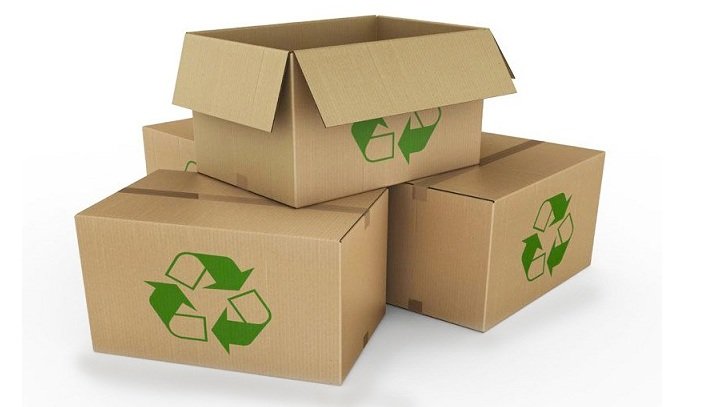
Researchers Mara Braga, Marisa Gaspar, and Patricia Almeida Coimbra, from the Research Center for Chemical Process, Engineering, and Forest Products of the University of Coimbra (Portugal), have developed edible and health-beneficial packaging made out of fruit and vegetable remains and crustaceans, as an alternative to plastic packaging.

The packaging is still a prototype, but the objective is to place them on the market in the near future, according to sources from the University of Coimbra. “There are already some edible packaging in the market, but these are pioneers in taking advantage of waste and including beneficial compounds for health, such as antioxidants and probiotics,” they stated.

Potato starch and quince pectin are two of the main ingredients of the packaging because of their structural polymeric characteristics that allowed the researchers to obtain very thin sheets of them through simple processing.

Cooking with the packaging
This innovation allows cooking the food without having to remove it from its packaging, as the edible film, specially designed to cover fruits, vegetables, and cheeses, has been designed to contain bioactive properties.

To confer these properties, the researchers evaluated the reactions of the compounds, and carried out microbiological and sensory analysis of the films, studying their compatibility with food.

The project began in 2018 and has European funding. It is based on the circular economy that seeks to reuse and avoid the creation of waste and has been awarded by the University of Coimbra and in the LL2FRESH ideas competition.


Latest stories

Related stories

Expansion Strategy of Aptar in Brazil Pharma Market

Aptar, which is a worldwide leader when it comes...

PFAS-free Morro Coatings Expand in Asian Packaging Markets

Xampla has joined with DIC Group to roll out...

RecyClass Approval Validates Nitrocellulose-Free Ink Use

RecyClass has confirmed that a new set of nitrocellulose-free...

New UK Packaging Pact to Overhaul the Packaging Spectrum

In a move that may as well be called...

Subscribe

- Never miss a story with notifications

- Gain full access to our premium content

- Browse free from any location or device.

Media Packs

Expand Your Reach With Our Customized Solutions Empowering Your Campaigns To Maximize Your Reach & Drive Real Results!

– Access the Media Pack Now

– Book a Conference Call

Leave Message for Us to Get Back

Translate »