

















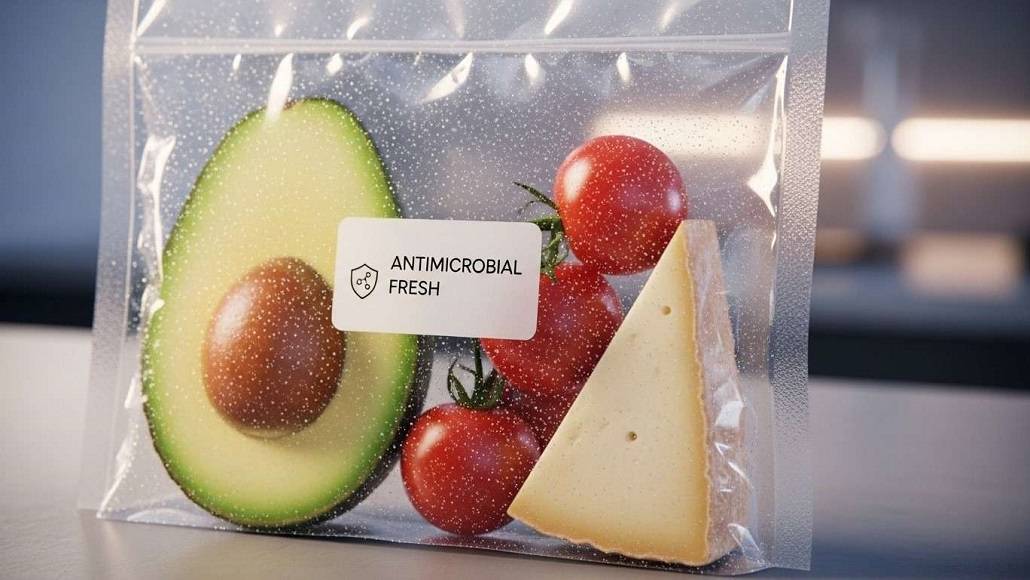

In a time of heightened food safety expectations and shifting consumer habits, the food industry is undergoing a quiet revolution—driven by packaging technology. At the forefront of the revolution is antimicrobial food packaging, a technology that improves not only product safety but also shelf life by leaps and bounds. As the global food system becomes more complex and demand for safe, fresh, and minimally processed food increases, antimicrobial food packaging is rapidly becoming a cornerstone technology for maintaining both quality and shelf life during food distribution.
Essentially, antimicrobial food packaging is the incorporation of active ingredients—either natural or synthetic—into packaging materials to inhibit the growth of bacteria, fungi, or other pathogens that may compromise food safety. This innovation meets the powerful need of fighting foodborne illness and reducing food waste, two challenges as powerful as they are linked. Through antimicrobial food packaging, stakeholders across the supply chain—from manufacturers to retailers to consumers—stand to benefit from a more intelligent and more robust packaging system.
The Imperative: Food Safety and Shelf Life Concerns
Foodborne illness remains a persistent worldwide health issue. The World Health Organization (WHO) estimates that 600 million individuals—nearly 1 in 10 around the globe—are sickened after consuming contaminated food annually, and 420,000 die as a result. Even in developed countries, with advanced systems for regulating food, outbreaks of listeria, salmonella, and E. coli remain cause for concern. For the food industry, this represents both a threat to reputation and a significant economic burden.
Similarly urgent is the matter of food waste. The United Nations Food and Agriculture Organisation indicates that about a third of all food that is produced in the world—about 1.3 billion tonnes—is lost or wasted annually. Most of this loss is in the retail and consumer phases due to spoilage, which antimicrobial food packaging addresses directly.
With active inhibition of microbial growth, antimicrobial packaging technologies not only enhance customer protection but also maintain food products quality and consumability over long cycles. This makes it a potent weapon in the fight for both safety and sustainability goals simultaneously.
Understanding the Science Behind Antimicrobial Packaging
Antimicrobial food packaging is one of the types of active packaging—a phenomenon whereby the packaging actively interacts with the packaged food to improve its shelf life and safety. Antimicrobial agents embedded into or coated onto packaging materials inhibit, slow, or destroy microbial growth on the surface of the food or in the packaging environment.
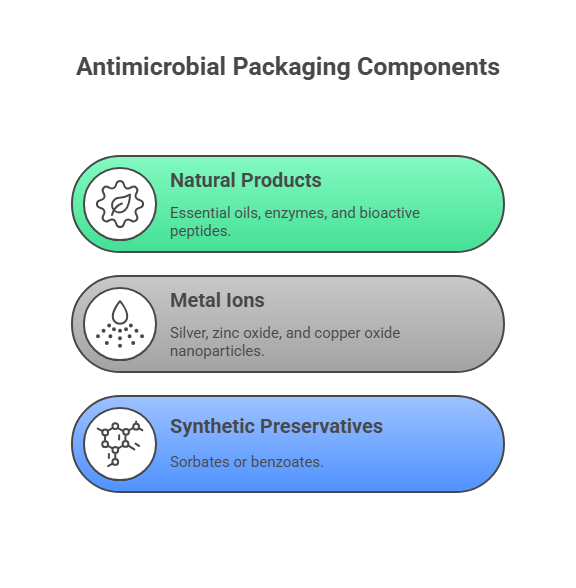
These agents are typically in one of several categories:
- Natural products such as essential oils (for example, thymol, eugenol), enzymes (for example, lysozyme), and bioactive peptides.
- Metal ions and nanoparticles such as silver, zinc oxide, and copper oxide, which are strong antimicrobial substances.
- Synthetic preservatives such as sorbates or benzoates, though less favoured in modern packaging due to clean-label consumer preference for this alternative.
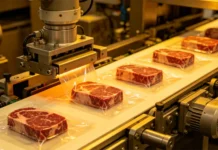
The efficacy of antimicrobial food packaging is subject to a variety of variables, including food type, packaging material, environmental conditions (humidity and temperature), and microbial hazard chemistry. Meat and dairy items, for instance, with their high susceptibility rates to contamination and spoilage, are prime targets for antimicrobial packaging applications.
Real-World Applications and Materials in Use
Globally, the food industry is witnessing increasing applications of antimicrobial packaging across a wide variety of product groups, from fresh produce and meat to baked foods and dairy foods.
Reports suggest that chitosan films—a biodegradable polymer derived from crustaceans’ shells—are becoming more commonly used with incorporated essential oils that are showing inhibitory action on common spoilage bacteria like Listeria monocytogenes and Escherichia coli. Besides this, renewable and biodegradable materials are also being combined with antimicrobial agents, further making such packaging solutions more eco-friendly.
In addition, food packaging with antimicrobial activity is increasingly on the move in Modified Atmosphere Packaging (MAP) systems, where oxygen levels are being controlled to prevent microbial growth. With the integration of antimicrobial coatings, these packaging systems render double protection against contamination as well as spoilage.
Regulatory Landscape and Consumer Acceptance
In the European Union, products are strictly regulated by EU Framework Regulation EC No. 1935/2004, which ensures that such products do not pose any risk to human health or compromise food composition. Analogously, the U.S. Food and Drug Administration (FDA) imposes pre-market approval conditions on foods to which substances are added directly, most significantly in the case of bioactive agents.
Transparency remains critical. Consumers are being heard and asking for more clarity on the material in their packaging and its effect on health as well as the environment. Packaging alternatives that incorporate natural antimicrobial agents and self-identify this through labelling can possess a strong competitive position in acquiring consumer trust and brand loyalty.
Advantages of Antimicrobial Packaging
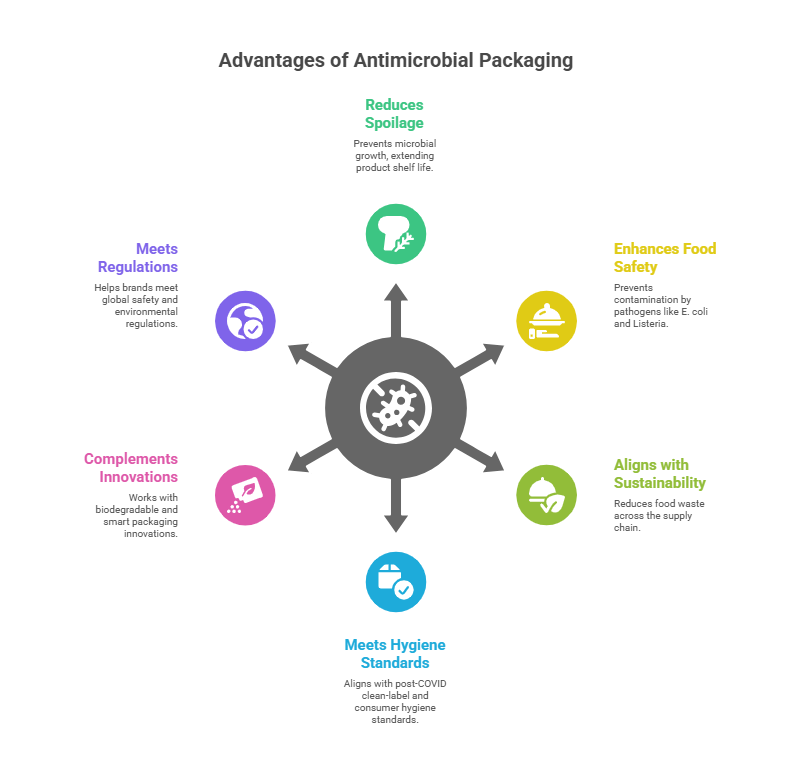
- Reduces product spoilage by preventing microbial growth.
- Enhances food safety by preventing contamination by pathogens like E. coli and Listeria.
- Aligns with sustainability goals through reduction of food waste across the supply chain.
- Aligns with post-COVID clean-label and consumer hygiene standards.
- Complements biodegradable and smart packaging innovations.
- Helps brands meet global safety and environmental regulations.
Conclusion
Antimicrobial food packaging is not only a new packaging technology—it’s a central enabler of safer, more efficient food systems. By reducing microbial contamination and extending shelf life, it directly addresses two of the food industry’s most stubborn challenges: safety and waste. The convergence of the technology with international health standards, consumer requirements, and sustainability programs places it not as a special-case technology but as a central tool for future food logistics and processing strategies.
As regulation changes, material science improves, and consumer awareness grows, antimicrobial food packaging will just become the course of modern food packaging. For companies that aspire to lead in safety, innovation, and responsibility, this is not just an advantage; it is essential.