












Coveris, a leading European paper and plastics packaging maker, has teamed up on a healthcare project that recycles used medical plastics into new contact-sensitive packaging. Hospitals face a growing problem with plastic waste. In Europe alone, roughly 1,700 kilotonnes of non-contaminated polyethylene (PE) and polypropylene (PP) medical waste are incinerated each year, even though the materials could technically be recycled. Hospitals must keep patient safety and sterility as top priorities, and that makes circular solutions harder to implement.
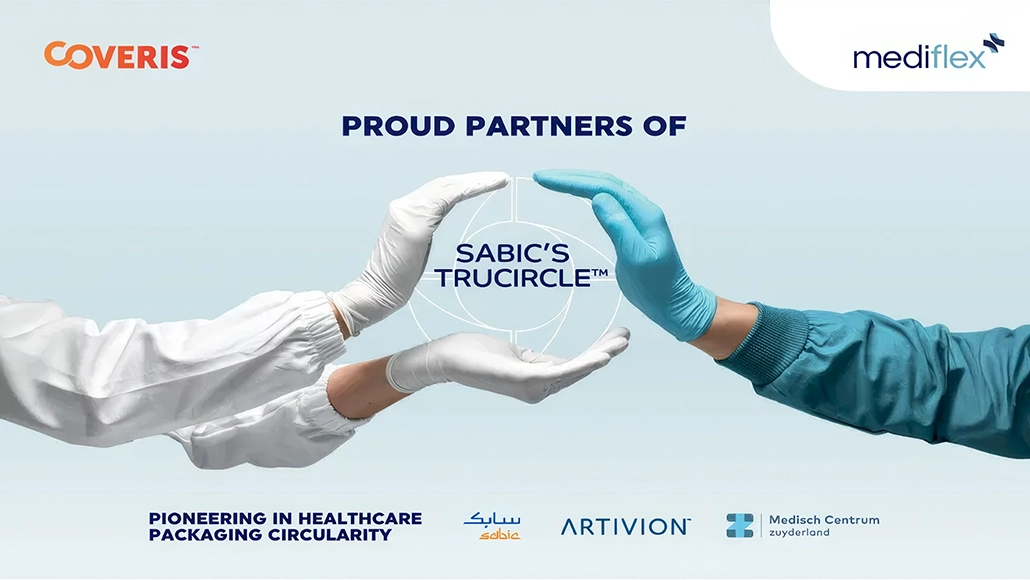
Coveris has now joined SABIC, Zuyderland Medical Centre, healthcare brand Artivion, and other partners to show that circular medical packaging is possible. The effort is part of SABIC’s TRUCIRCLE™ initiative, which turns hospital waste into high-quality contact-sensitive packaging, a first in the healthcare sector.
In 2024, Zuyderland Medical Centre in the Netherlands set up a system to separate and collect non-contaminated waste. The materials collected in pink bag are then processed by SABIC into pyrolysis oil and transformed into certified circular polyethylene (PE) under the TRUCIRCLE™ label, fully meeting strict medical standards. Coveris then uses this feedstock to produce new medical packaging.
At Coveris Halle, the TRUCIRCLE™ PE resin is made into film, and Coveris Rohrdorf converts the film into sterile pouches. Artivion uses these pouches for their vascular surgery guidewires, which are sent back to Zuyderland Medical Centre. The circular medical packaging loop is now complete, and the final packaging contains 25% material from non-contaminated medical waste, giving a real-world example of circularity in action.
This initiative exemplifies Coveris’ No Waste vision, which aims to eliminate all forms of waste, product, packaging, and operational, across industries. Jan-Willem Bruijsten, Segment Director Medical at Coveris Group, remarked: “At Coveris, we see collaboration as key to a circular future, and we are extremely proud to be part of this pioneering initiative. It proves that circularity in healthcare packaging is possible. The project fully echoes the core values of our No Waste vision. his partnership is a perfect example of how we can make meaningful impact by joining forces.”
Khaled Al-Jalawi, Global Circular Economy Director at SABIC, added: “We are excited about this pioneering circular business model pilot, which showcases the potential of circular plastic innovations when leading actors from across the medical ecosystem closely collaborate. Non-contaminated medical plastic waste represents a valuable feedstock opportunity, and SABIC TRUCIRCLE™ solutions could play a major role in advancing circularity in healthcare.”