




















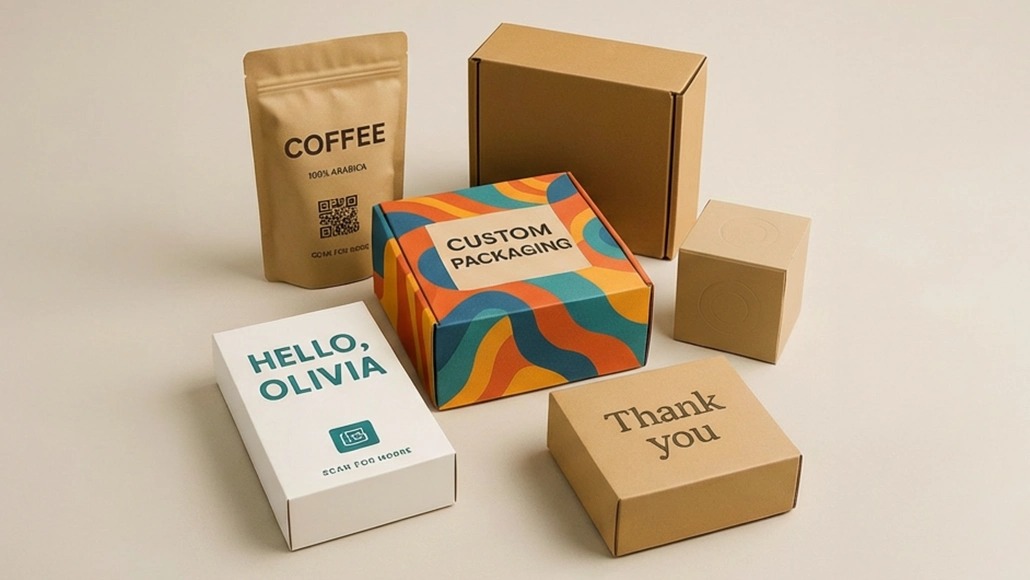

In a market defined by short runs, fast launches, and unforgiving retail standards, custom packaging has to do more than look good—it has to flow cleanly from design to delivery. As someone who has sat on both sides of the table (brand and supplier), I see the same three failure points crop up again and again: unclear specs, late-stage surprises, and logistics that weren’t planned early enough. The fix isn’t magic; it’s process. Here’s a pragmatic, shop-floor view of how to move from concept to boxes, sleeves, pouches & inserts that are shelf-ready without drama.
Start with a “decision-complete” brief
A strong brief anticipates the questions your converter or manufacturer will ask later. Include:
- Primary & secondary pack roles: What’s protecting the product vs. what’s selling it?
- Dimensions & tolerances: Net product size, target internal clearances, and any fit-check notes for inserts.
- Supply chain reality: Fill lines, co-packers, or hand-pack details (line speeds, packout method, pallet pattern).
- Regulatory & labeling: Claims, mandatory copy zones, barcodes, and country-of-sale differences.
- Sustainability priorities: Recyclability targets, PCR content goals, FSC® or other material requirements.
Decision-complete briefs eliminate most rework. If you don’t know a spec yet, flag it as “TBD” with the date you’ll confirm—silence costs you weeks later.
Prototype like you mean it
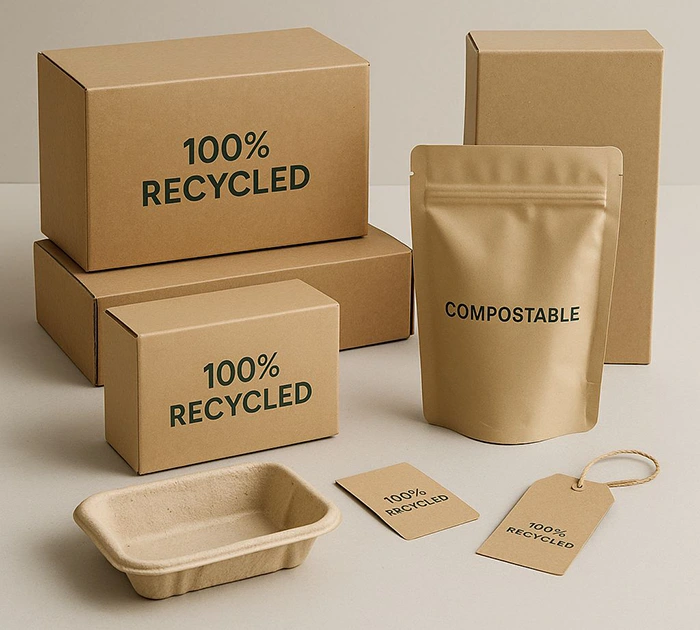
Rushing past prototyping is the fastest way to lose a month. Treat this stage as a controlled experiment:
- White sample first, then pre-production color proof (for graphics and finishing alignment).
- Fit tests with actual product—check crush, scuff, abrasion, and insert compression.
- Transit checks: ISTA-style thinking even if you don’t run full protocols; drop and compression tell you a lot.
- Finish realism: Soft-touch, foil, spot UV, and emboss/deboss stack tolerances—proof them together, not in isolation.
If you’re moving into flexible formats, your pouches deserve equal rigor: film structure selection (barrier/O₂/H₂O), zipper types, spouts/fitments, and seal strength. Record these as process specs, not just “it worked once.”
Nail the finish stack early
Premium finishes are where brands fall in love—and where timelines go to die. Agree the finish stack (order of operations) with your converter so you avoid rejecting a batch because the foil dulls under a post-coat or an emboss flattens after lamination. For sleeves, confirm die windows, paper weight, and glue flap widths early; for rigid boxes, confirm board grade, wrap paper caliper, and magnet strength.
MOQ, lead time, and cost: set real expectations
Small brands want low MOQs and speed; operations needs repeatability. The compromise lives in:
- Print method: Digital for small batches or variable data; offset/gravure for scale and richness.
- Standardized dielines: Re-use structural “families” to keep tooling costs down.
- Material availability: Choose paper/film specs that are in continuous stock to avoid mid-project delays.
A credible partner will show the trade-offs explicitly—per-unit pricing at several run sizes, and what happens to lead time when you add specialty finishes or change substrates.
Quality control: don’t bolt it on—build it in
QC isn’t a final-step gate; it’s a chain of checks:
- Incoming materials: Certificates, board caliper checks, film thickness verification.
- In-process: Color ΔE targets, registration tolerances, seal and glue strength, rub resistance.
- Finished goods: Random AQL sampling, carton labeling accuracy, pallet integrity.
Document what “good” looks like in plain language (with images), not just a standards reference. When things get busy, pictures save projects.
Logistics: design for delivery, not just for dielines
A perfectly printed box that arrives at your 3PL a week late is still a miss. Bake logistics into design:
- Case & palletization targets: Align inner packs to minimize air and damage.
- Retail constraints: Planogram sizes, shelf depth, and peg locations for sleeves and cartons.
- Incoterms and paperwork: Duties, HS codes, and carton marking should be locked before press—never after.
Choosing a partner: signals that matter
Look for suppliers who are comfortable being measured. The right partner will provide:
- End-to-end visibility (from design support and prototyping, through quality control, to global logistics) and a named project manager for accountability.
- Transparent constraints—they tell you what they can’t do just as clearly as what they can.
- Process artifacts you can keep: spec sheets, color standards, QC checklists, and packout instructions that survive team turnover.
If you need a benchmark for what “end-to-end custom packaging” support looks like in practice, see how Paking Duck describes its approach to custom packaging—covering design, prototyping, QA, and freight coordination for boxes, sleeves, pouches & inserts (low MOQs, premium finishes, fast turnaround). You can review their services here: Custom Packaging Services — Paking Duck. And when you’re ready to scope a project or sanity-check specs, you can to compare lead times and options.
The bottom line
Great packaging isn’t an accident; it’s the sum of clear decisions, validated early. If you make the brief decision-complete, prove the finish stack, lock the MOQs and materials, and treat QC and logistics as design inputs—not afterthoughts—you’ll hit launch dates with fewer surprises and better margins. That’s the difference between “we got it out the door” and a packaging system that scales with your pipeline.