


















The global manufacturing landscape is currently navigating a period of unprecedented demand, driven by a burgeoning global population and the rapid expansion of international trade. To keep pace with these requirements, the industrial sector has turned toward significant technological upgrades, particularly within the realm of end-of-line processes. Current packaging machinery advancements are not merely incremental improvements but represent a total overhaul of how products are handled, encased, and prepared for distribution. This evolution is essential for companies aiming to maintain high volume production while ensuring that quality remains uncompromised and operational costs are kept under control. The integration of sophisticated sensors, high-speed robotics, and intelligent software has created a new standard for throughput that was once thought impossible.
The Shift Toward Intelligent Automation
The cornerstone of modern production is the move away from manual or semi-automated systems toward fully autonomous environments. In the past, high volume production was often synonymous with a lack of flexibility, as machines were tuned for a single product type and required lengthy downtime for adjustments. However, recent packaging machinery advancements have introduced the concept of “smart automation,” where equipment can automatically detect changes in product size or format and adjust its parameters in real-time. This eliminates the bottleneck of manual changeovers, allowing a single line to handle a diverse range of products without sacrificing speed. This adaptability is particularly crucial for manufacturers serving multiple retail channels with varying packaging requirements.
Precision Engineering and Speed Optimization
When operating at the scales required for global distribution, even a fraction of a second saved per unit can translate into millions of additional units produced over the course of a year. Modern systems leverage precision-engineered servo motors and linear motion technologies to achieve speeds that surpass human capability by orders of magnitude. These packaging machinery advancements have allowed for the synchronization of complex movements, such as the simultaneous folding of cartons and the insertion of products, with microscopic accuracy. By reducing the mechanical vibration and friction within the system, engineers have also extended the lifespan of the equipment, ensuring that high volume production can be maintained for longer periods between scheduled maintenance cycles.
Integration of Robotics in End-of-Line Systems
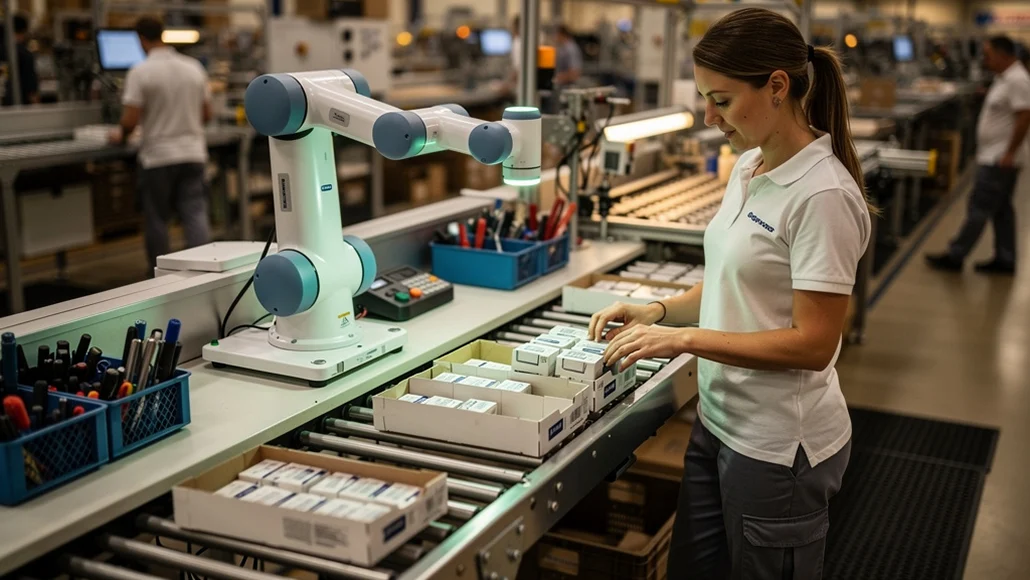
Robotics has moved beyond the simple pick-and-place tasks of the previous generation. Today, multi-axis robotic arms equipped with advanced vision systems are capable of performing intricate assembly and palletizing tasks with a level of delicacy that rivals the human hand. These packaging machinery advancements are critical for handling fragile items or complex assortments that require specific orientations. The use of collaborative robots, or “cobots,” has also allowed human workers to operate alongside machines safely, focusing on higher-level supervisory tasks while the heavy lifting and repetitive motions are handled by the mechanical systems. This synergy is a major contributor to the sustained efficiency of high volume production facilities.
Industry 4.0 and the Power of Data
The digital transformation of the factory floor, often referred to as Industry 4.0, has brought a new layer of intelligence to packaging lines. Machinery is no longer an isolated mechanical tool but a connected node in a massive data network. Through the use of Industrial Internet of Things (IIoT) sensors, every component of the line can transmit performance data to a centralized management system. This level of connectivity is one of the most impactful packaging machinery advancements of the last decade. It allows plant managers to monitor Overall Equipment Effectiveness (OEE) in real-time, identifying bottlenecks and inefficiencies as they occur rather than after the shift has ended.
Predictive Maintenance and Downtime Reduction
One of the greatest threats to high volume production is unplanned downtime. A single failed bearing or a misaligned belt can halt an entire facility, leading to massive financial losses. Through the power of data analytics, modern packaging machinery advancements now include predictive maintenance capabilities. By analyzing patterns in vibration, temperature, and power consumption, the software can predict when a part is likely to fail and alert the maintenance team to replace it during a scheduled break. This proactive approach ensures that the machinery remains in peak condition, maximizing the uptime necessary for meeting aggressive production targets.
The Role of Digital Twins in System Design
Before a single piece of hardware is even installed, engineers are now using “Digital Twin” technology to simulate the entire packaging process in a virtual environment. This allows for the testing of different configurations and the optimization of workflows without the risk of physical trial and error. These digital-first packaging machinery advancements ensure that when the physical line is eventually commissioned, it is already optimized for the highest possible throughput. This reduces the “ramp-up” period significantly, allowing high volume production to commence almost immediately after installation.
Sustainability Through Precision and Efficiency
While speed and volume are often the focus, the modern manufacturing era also demands a commitment to sustainability. Precision engineering has a direct impact on reducing material waste. Advanced filling machines can now dispense liquids or powders with such accuracy that “overfill” waste is virtually eliminated. Furthermore, packaging machinery advancements have enabled the use of thinner, more sustainable materials that were previously too difficult for older machines to handle without tearing or jamming. By providing consistent tension control and precise sealing temperatures, modern equipment allows brands to transition to eco-friendly packaging without compromising on the speed of their high volume production.
Energy Efficiency in Modern Equipment
The power consumption of a large-scale packaging facility can be staggering. To combat this, newer machine designs incorporate regenerative braking and energy-efficient motors that lower the overall utility cost per unit produced. These packaging machinery advancements are not just better for the environment; they are a vital component of maintaining profitability in a market where energy prices are rising. By optimizing the thermodynamic cycles of sealing jaws and shrinking tunnels, manufacturers can achieve the same results with a fraction of the energy input compared to systems from just ten years ago.
Scalability and Modular Machine Design
The ability to scale production up or down in response to market fluctuations is a key requirement for modern businesses. Modular machine design allows companies to add or remove components of a line as their needs change. This flexibility is a hallmark of current packaging machinery advancements. A manufacturer might start with a basic filling and capping line and later add automated labeling, case packing, and palletizing modules as their high volume production needs grow. This “plug-and-play” approach to industrial engineering protects the initial investment while providing a clear path for future expansion.
Conclusion: The Path to Fully Autonomous Production
As we look toward the future, the trend toward greater autonomy is clear. We are moving toward a world where packaging lines can self-diagnose, self-correct, and even order their own replacement parts. The ongoing packaging machinery advancements are setting the stage for dark factories, where production can continue twenty-four hours a day with minimal human intervention. This shift is not about replacing workers but about elevating them to roles that require human creativity and strategic thinking, while the mechanical systems handle the rigorous demands of high volume production.
The fusion of mechanical excellence and digital intelligence is creating a more resilient, efficient, and sustainable global supply chain. For manufacturers, staying at the forefront of these technological changes is no longer optional; it is the baseline for survival in a hyper-competitive global market. As these systems continue to evolve, the definition of what is possible in high-speed manufacturing will continue to be rewritten, ensuring that the world’s goods are delivered faster, safer, and more efficiently than ever before.