

















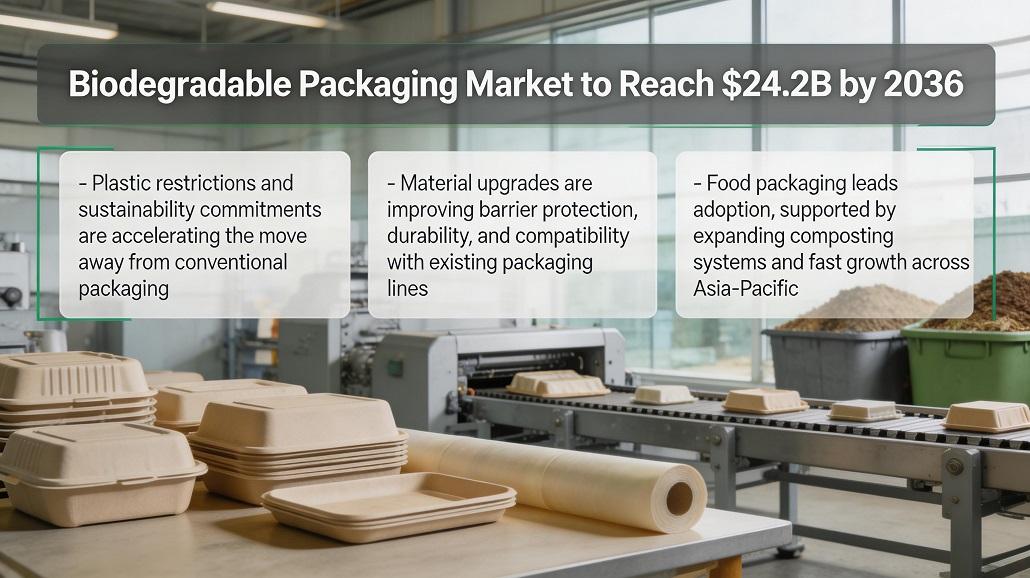

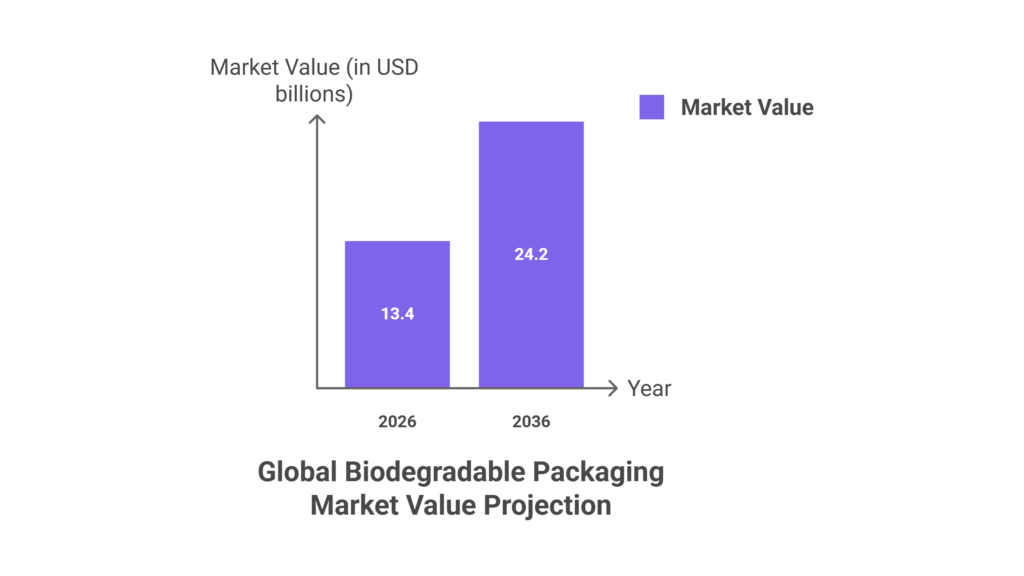
The global biodegradable packaging market is entering a significant period of transformation as governments, brands, and packaging manufacturers accelerate the transition away from conventional petrochemical plastics. Industry analysis indicates that the market is expected to reach USD 13.4 billion in 2026 and continue expanding at a CAGR of 6.1% through 2036, ultimately surpassing USD 24.2 billion by the end of the forecast period.
This shift reflects broader structural changes across the packaging ecosystem. Environmental policies aimed at reducing single-use plastics are tightening across multiple regions, while sustainability commitments from companies in the food service, retail, and consumer goods sectors are reshaping packaging strategies. As circular economy models gain stronger traction globally, biodegradable materials are gradually moving from niche applications to mainstream packaging formats.
Regulatory Push and Consumer Demand Driving Adoption
A growing combination of policy intervention and consumer awareness is accelerating the biodegradable packaging market momentum. Regulations restricting or banning single-use plastics have become a central driver for biodegradable packaging adoption. Governments in several countries now require packaging materials that can decompose safely under controlled environmental conditions.
At the same time, consumer sentiment is influencing brand decisions. Surveys suggest that buyers are willing to pay 20–25% more for environmentally responsible packaging. This shift is encouraging manufacturers and brand owners to replace conventional plastics with compostable and bio-based alternatives derived from renewable sources.
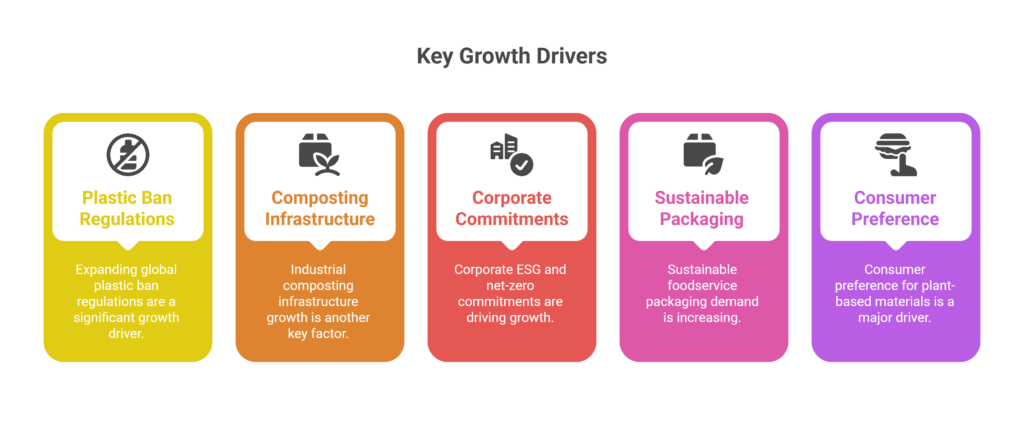
Industrial composting infrastructure is also expanding rapidly in developed economies, with facilities growing at an estimated 15% annual rate. This infrastructure plays a critical role in enabling compostable polymers such as PLA and PHA to complete their lifecycle within controlled composting systems.
Technology Advancements Improving Material Performance
Technological innovation is reshaping the biodegradable packaging industry as manufacturers work to improve durability, scalability, and cost competitiveness.
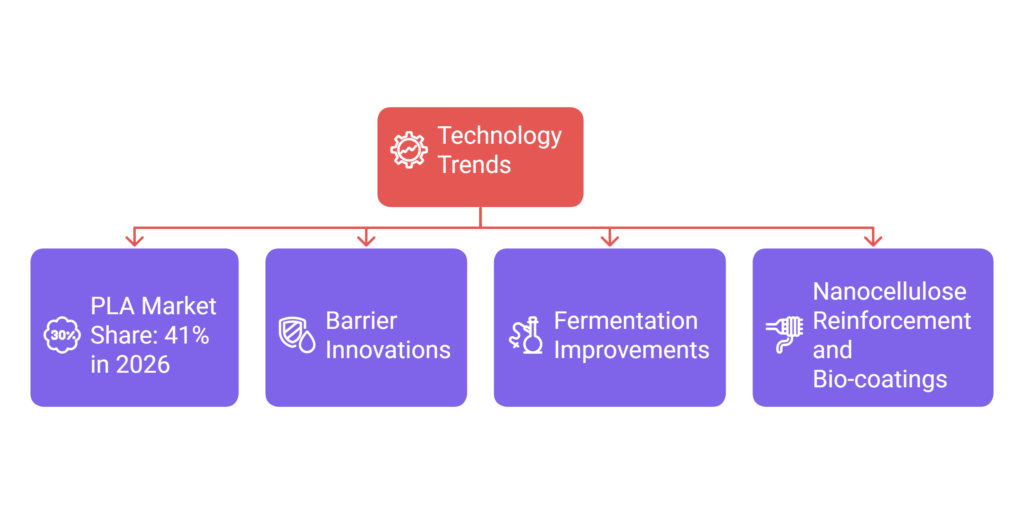
PLA-based packaging continues to dominate the market, accounting for approximately 41% of market share in 2026. Its popularity is largely attributed to its clarity, mechanical strength, and compatibility with existing thermoforming equipment.
At the same time, advancements in bio-laminate barrier films are improving resistance to moisture and oxygen, helping biodegradable materials compete with conventional multi-layer plastics. Innovations in fermentation technologies are also enhancing production efficiency for PHA polymers, reducing manufacturing costs and improving margins.
Emerging research into nanocellulose reinforcement and bio-coatings is further strengthening packaging structures while improving shelf-life performance for food products. Meanwhile, companies are increasingly exploring second-generation feedstocks, including agricultural waste and algae-derived biomass, to reduce reliance on food-based raw materials such as corn and sugarcane.
Food Packaging Leads Market Demand
Among application segments, food packaging remains the largest contributor to biodegradable packaging demand, representing approximately 40% of total market revenue.
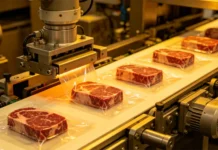
Food-soiled packaging often presents recycling challenges, making compostable alternatives particularly valuable within organic waste management systems. Compostable containers, films, and service ware allow food waste and packaging to be processed together in composting facilities, helping reduce landfill volumes and methane emissions.
As a result, quick-service restaurants, stadiums, corporate campuses, and large event venues are increasingly adopting certified compostable packaging solutions as part of broader zero-waste strategies.
Asia-Pacific Emerging as a Key Growth Region
Regional growth trends vary depending on regulatory frameworks and waste management infrastructure. However, Asia-Pacific is expected to emerge as the fastest-growing region during the forecast period, supported by aggressive plastic reduction policies and expanding manufacturing capacity.
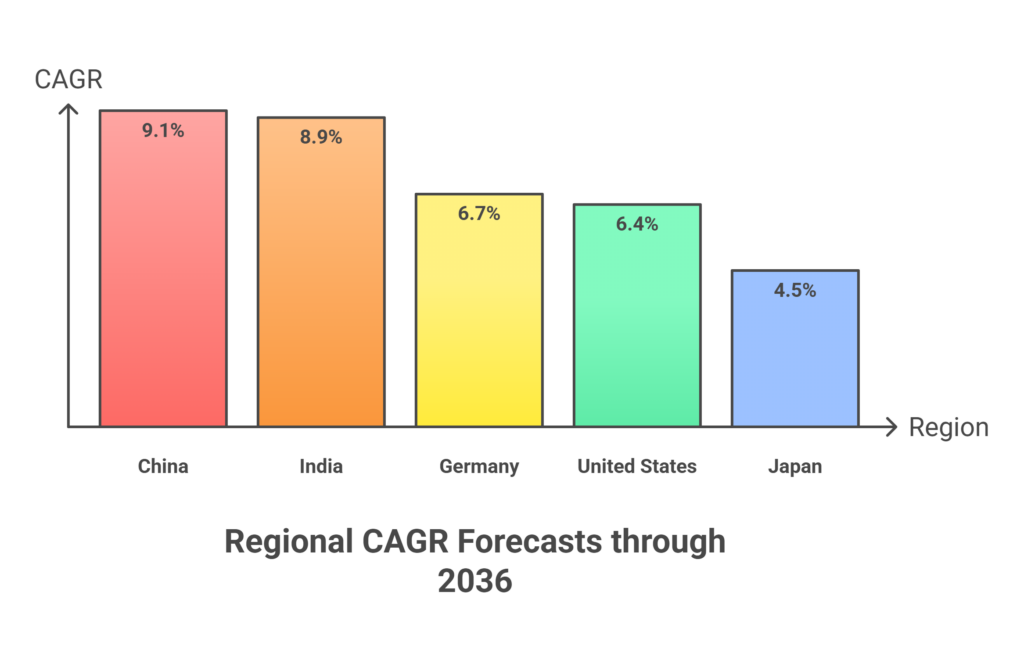
China’s nationwide plastic restrictions and government-backed bio-economy initiatives are accelerating investment in PLA and PBAT production capacity. Meanwhile, India’s single-use plastic ban and Swachh Bharat initiatives are increasing demand for packaging derived from agricultural by-products such as bagasse and starch.
Future Outlook: Biodegradable Materials Gain Strategic Importance
Looking ahead, biodegradable packaging is expected to become a critical component of the global transition toward sustainable materials and circular waste systems. Regulatory mandates, consumer expectations, and continued innovation in bio-based materials are collectively driving adoption across sectors including food service, retail, healthcare, agriculture, and e-commerce logistics.
As governments continue tightening plastic regulations and composting infrastructure expands worldwide, biodegradable materials are positioned to play an increasingly important role in shaping the future of global packaging systems.