






















Packaging definitions have rarely been treated as a business priority. For most companies, they’ve been a technical reference point important for compliance, but not something that directly shaped commercial or operational decisions. That is beginning to change under the EU’s Packaging and Packaging Waste Regulation (PPWR).
The regulation does not radically redefine what packaging is. Instead, it expands how those definitions are applied across the value chain. Even small clarifications such as including packaging whether empty or filled are widening the scope of responsibility across manufacturers, suppliers, and fulfilment operations.
What makes this shift significant is not the definition itself, but its impact. Classification now determines how packaging is assessed, what obligations apply, and where responsibility sits. In that sense, packaging definitions are no longer just technical they are increasingly tied to compliance exposure, design decisions, and overall business risk.
Why Packaging Classification Is Becoming a Strategic Risk
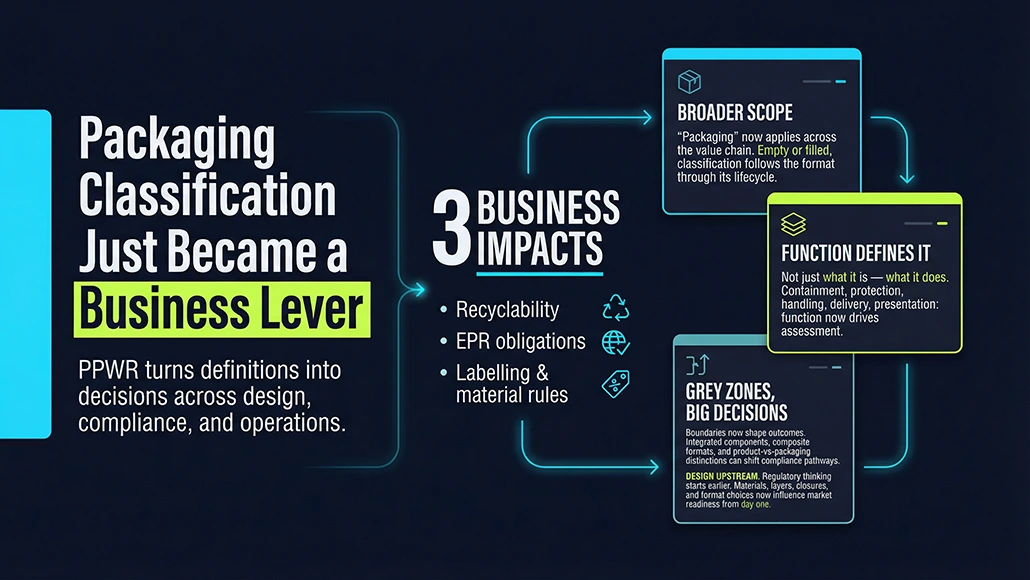
At the core of the PPWR lies a deliberately broad definition of packaging covering any item used for containment, protection, handling, delivery, or presentation of products. On paper, this appears straightforward. In practice, it significantly expands the scope of what falls under regulatory oversight.
The real challenge, however, is not inclusion it is interpretation.
A misclassification is no longer a minor technical error. It can determine:
- Whether a product falls under recyclability requirements
- Whether EPR obligations apply
- Whether additional material restrictions or labelling rules are triggered
For businesses operating across multiple markets and product categories, this introduces a new layer of regulatory risk one that sits at the intersection of design, compliance, and commercial strategy.
From Static Definitions to Functional Interpretation
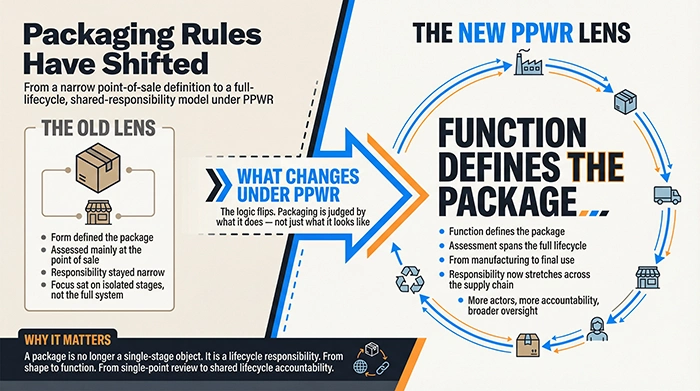
One of the most consequential shifts introduced by the regulation is the move away from static definitions toward function-based classification.
Packaging is now defined not just by what it looks like, but by what it does.
The inclusion of wording such as “whether empty or with a product” reinforces this approach. It ensures that packaging is regulated across all stages of its lifecycle from manufacturing to final use closing gaps that previously allowed certain formats to fall outside regulatory scope.
This has two immediate implications:
- Packaging decisions are now evaluated across the entire supply chain, not just at the point of sale
- More stakeholders including converters, fillers, and brand owners are drawn into compliance responsibility
In effect, packaging is no longer a static object. It is a regulated system component.
The Grey Zones Redefining Packaging Boundaries
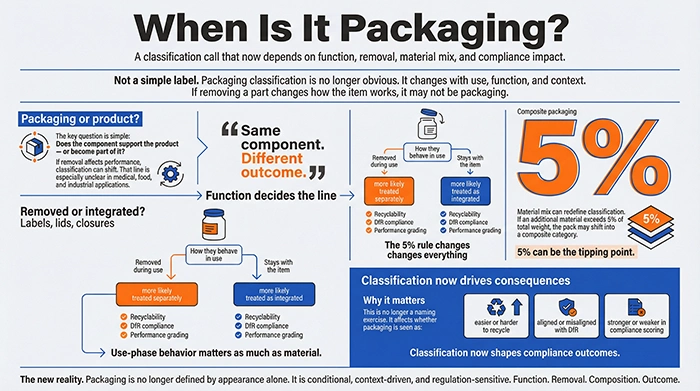
Where the regulation becomes particularly complex and valuable from an industry perspective is in its treatment of grey areas.
From an industry standpoint, Packaging World Insights notes that these grey areas are where most compliance risks are likely to emerge, particularly as companies navigate functional interpretation rather than fixed definitions.
Packaging vs Product
A key distinction lies in whether an item is considered packaging or an integral part of a product. If removing a component compromises the product’s function, it may fall outside the definition of packaging. However, this boundary is not always clear.
This ambiguity is especially relevant in:
- Medical and pharmaceutical applications
- Food systems (e.g. single-serve formats)
- Industrial and technical products
Integrated vs Separate Components
The classification of components adds another layer of complexity. Elements such as labels, closures, and lids are assessed based on whether they are integrated or must be removed to access the product.
This distinction directly impacts:
- Recyclability assessments
- Design for Recycling (DfR) compliance
- Overall packaging performance grading
Composite Packaging
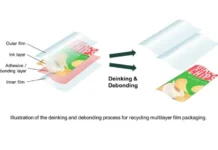
The regulation also introduces a threshold-based definition for composite packaging, where secondary materials exceeding 5% of total weight can change classification.
For industries relying on multilayer and flexible packaging, this is particularly significant. Materials that were previously optimised for performance may now face increased scrutiny due to their structural composition.
Taken together, these grey zones highlight a critical reality:
Packaging classification is no longer binary it is conditional, contextual, and increasingly complex.
What This Means for Packaging Companies
For businesses across the packaging value chain, the implications are both operational and strategic.
Design and R&D Teams
Packaging design must now anticipate regulatory classification outcomes. Choices around materials, layers, and components are no longer driven solely by performance they must also align with compliance frameworks.
Compliance and Regulatory Functions
Documentation requirements are expanding. Companies must be able to justify classification decisions, particularly in borderline cases where interpretation plays a key role.
Brand Owners and Retailers
Responsibility is shifting upstream. Branding, product positioning, and packaging formats are increasingly linked to regulatory obligations, including EPR and recyclability requirements.
Supply Chain and Operations
Packaging classification affects how products move through the supply chain impacting labelling, sorting, recycling pathways, and cost structures.
As Packaging World Insights observes, packaging decisions are no longer isolated they are becoming embedded across business functions.
A Broader Industry Shift: Packaging as a Regulatory Function
The redefinition of packaging under PPWR is not an isolated development. It aligns with broader regulatory trends across the EU, including recyclability mandates, recycled content targets, and restrictions on substances of concern.
What emerges is a clear pattern:
Packaging is transitioning from a design-led function to a compliance-driven system.
This shift is reshaping how companies approach:
- Material innovation
- Product development
- Market entry strategies
Packaging is no longer just about protecting products it is about meeting regulatory thresholds that define whether those products can be placed on the market at all.
Conclusion
The PPWR transforms packaging definitions from a technical formality into a strategic decision point. Classification now carries tangible business consequences, influencing everything from compliance costs to product viability.
From an analytical standpoint, Packaging World Insights notes that the companies best positioned to adapt will be those that integrate regulatory thinking early at the design and development stage rather than treating compliance as a downstream function.
In this new landscape, packaging is no longer defined solely by its form or function.
It is defined by its regulatory outcome and the business decisions that follow.