




















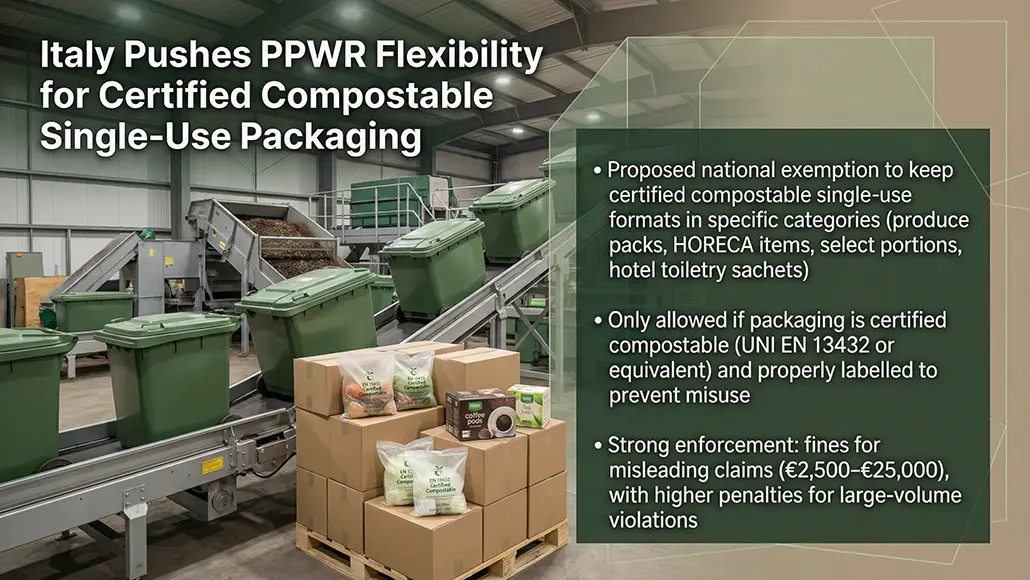

Italy is moving to secure regulatory flexibility under the Packaging and Packaging Waste Regulation, as its environment ministry has formally submitted a proposal to the European Commission to permit limited use of single-use items made from certified compostable materials. The draft, filed via the TRIS notification system by Italy’s Ministry of the Environment and Energy Security, seeks to amend Legislative Decree No. 152 of 3 April 2006 and introduce a partial derogation from existing restrictions.
Under current PPWR provisions, compostable plastics will become mandatory for selected applications from 12 February 2028, including tea bags, coffee pods and produce labels. At the same time, stricter measures will apply from 1 January 2030, banning a range of single-use packaging formats considered unnecessary. These include packaging for pre-packed fresh fruit and vegetables below 1.5kg, single-use formats used for food and beverages consumed on HORECA premises, condiment portion packs, and sachets for cosmetics and hygiene products commonly used in hospitality settings.
The Italian proposal aims to allow these categories to remain on the market, provided they meet stringent criteria. Specifically, the packaging must be “biodegradable and compostable, certified by accredited bodies, in accordance with UNI EN 13432 or equivalent European-recognised standards”. The exemption would apply across multiple use cases, including lightweight produce packaging, foodservice-related packaging within the HORECA sector, condiment portions—with defined exceptions—and single-use flexible packaging for hotel-based personal care items intended for disposal between guest stays.
Alongside the regulatory adjustment, the draft introduces enforcement measures targeting misleading claims. Penalties for false declarations of conformity or evasive labeling would range from €2,500 to €25,000, with potential escalation up to four times the maximum fine where violations involve packaging volumes exceeding 10% of a company’s turnover. The framework mirrors existing enforcement practices applied to non-compliant shopping bags in Italy.
The rationale behind Italy seeks PPWR exemption is grounded in the country’s established organic waste management infrastructure. Authorities argue that the integration of certified compostable packaging aligns with Italy’s intensive separate collection systems, enabling such materials to be processed through anaerobic digestion and composting streams. According to the regulatory impact assessment, this approach reduces contamination from conventional plastics while converting waste into usable agronomic resources.
Industry response has been supportive. European Bioplastics described the draft as a constructive step that enhances regulatory clarity at a critical stage for the sector. The group highlighted the importance of clear and functional rules, particularly for packaging types that are difficult to recycle or frequently contaminated with food waste, noting that Italy seeks PPWR exemption could reinforce investment confidence and innovation in certified compostable solutions.