
















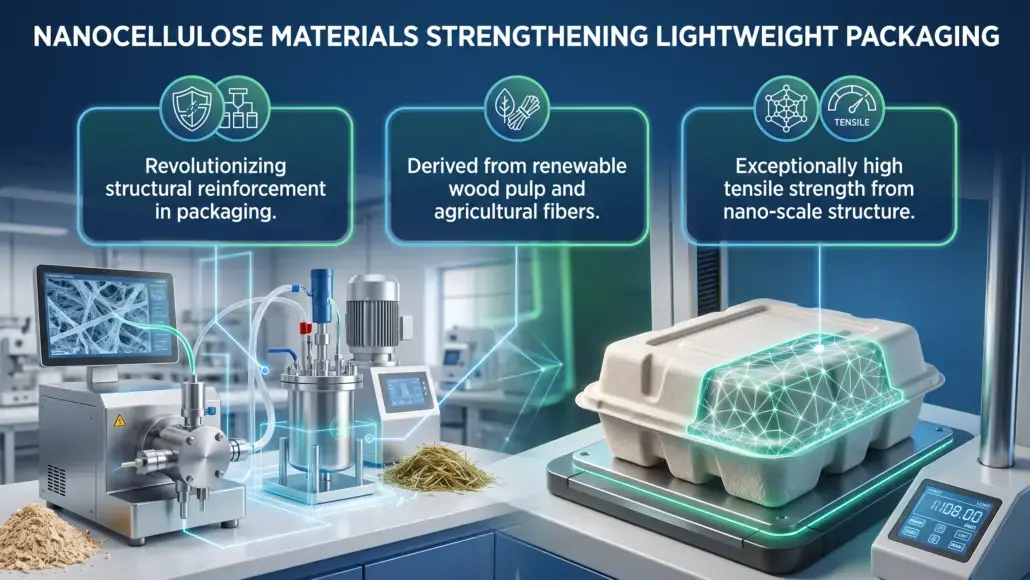
The application of nanotechnology to renewable resources has led to the development of nanocellulose materials, which are revolutionizing the approach to structural reinforcement in packaging. Nanocellulose is produced by breaking down wood pulp or agricultural fibers into their constituent nano-scale components: cellulose nanocrystals or cellulose nanofibrils. These particles possess an exceptionally high aspect ratio and a crystalline structure that gives them a tensile strength comparable to that of Kevlar or even steel. When incorporated into paper, board, or bioplastic matrices, nanocellulose acts as a highly effective reinforcing agent, dramatically increasing the mechanical performance of the base material. This reinforcement allows for the creation of packaging that is significantly thinner and lighter while maintaining the necessary strength and durability for transit.
The mechanical benefits of nanocellulose are a result of its ability to form a dense, interconnected network at the molecular level. Because the particles are so small, they can fill the gaps between larger fibers or polymer chains, creating a more cohesive and rigid structure. This is particularly valuable in the production of lightweight corrugated board, where nanocellulose can be used to strengthen the fluting and linerboard. The resulting board can withstand higher stacking loads and resist crushing, even when manufactured with a lower basis weight. This reduction in material usage directly translates to lower shipping costs and a smaller environmental footprint, as less raw material is required for each package produced.
Oxygen barrier enhancement in ultra-thin film applications
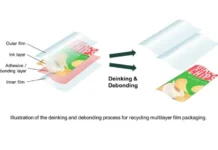
In addition to its mechanical properties, nanocellulose is highly effective at blocking the passage of gases, particularly oxygen. This barrier performance is essential for maintaining the freshness and safety of food products. The dense network formed by nanocellulose particles creates a tortuous path that gas molecules find difficult to penetrate. In many cases, a thin coating of nanocellulose can provide oxygen barrier properties that are superior to traditional synthetic barriers like ethylene vinyl alcohol. This allows packaging manufacturers to replace complex, non-recyclable multi-layer films with simpler, more sustainable structures that utilize nanocellulose for their functional performance.
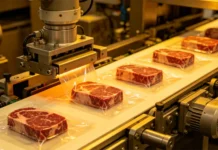
The transparency of nanocellulose materials is another significant advantage for packaging applications. Because the particles are smaller than the wavelength of visible light, coatings and films containing nanocellulose remain clear, allowing consumers to see the contents of the package. This is a critical factor for food packaging, where visual appeal and product transparency are key drivers of consumer choice. Researchers are also exploring the use of nanocellulose in combination with other bio-based materials to create fully compostable films with high barrier performance. The ability to achieve these properties in an ultra-thin format is vital for the continued development of lightweight packaging solutions that do not compromise on product protection or shelf life.
Surface modification techniques for moisture resistance
While nanocellulose possesses excellent gas barrier properties, its performance can be affected by moisture due to the inherent hydrophilicity of cellulose. In high-humidity environments, nanocellulose can absorb water, leading to a swelling of the fibers and a reduction in barrier effectiveness. To overcome this challenge, various surface modification techniques are being developed to enhance the moisture resistance of nanocellulose materials. These include chemical treatments such as esterification or silylation, which attach hydrophobic groups to the surface of the nanocellulose particles. These modifications significantly reduce the water sensitivity of the material, ensuring consistent performance across a wide range of environmental conditions.
Another approach to managing moisture is the use of multi-layer structures where the nanocellulose barrier is protected by outer layers of hydrophobic biopolymers or specialized coatings. This encapsulation prevents direct contact with water vapor while allowing the nanocellulose to perform its gas-blocking function. Innovation in this area is also focusing on the development of bio-based hydrophobic coatings that are compatible with the sustainable profile of nanocellulose. By addressing the moisture sensitivity issue, researchers are expanding the range of applications for nanocellulose, making it suitable for liquid packaging and other challenging food and beverage sectors. The ability to tailor the surface chemistry of nanocellulose is a powerful tool for material scientists, allowing for the creation of highly specialized packaging materials with precise functional attributes.
Sustainable sourcing from wood pulp and agricultural byproducts
The environmental credentials of nanocellulose materials are bolstered by their origin from renewable and abundant biomass. The primary source for industrial-scale nanocellulose production is wood pulp, which is sourced from sustainably managed forests. However, there is growing interest in utilizing agricultural byproducts such as wheat straw, sugar cane bagasse, and fruit processing waste as feedstocks. These materials are often underutilized and provide a low-cost, renewable source of cellulose. By converting these waste streams into high-value nanocellulose, the packaging industry can support the circular economy and reduce its reliance on fossil-fuel-based additives.
The production of nanocellulose involves mechanical, chemical, or enzymatic processes to isolate the nano-scale fibers. While these processes can be energy-intensive, advances in manufacturing technology are leading to more efficient and sustainable production methods. For example, enzymatic pretreatment can significantly reduce the mechanical energy required to fibrillate the cellulose, while closed-loop systems allow for the recycling of chemicals used in the extraction process. The sustainability of the entire supply chain is a key consideration, and manufacturers are increasingly looking for ways to reduce the carbon footprint of nanocellulose production. As the capacity for large-scale manufacturing grows, nanocellulose is becoming a more accessible and cost-effective option for a wide range of packaging applications.
Scaling nanomanufacturing for commercial packaging volumes
The transition of nanocellulose from a laboratory curiosity to a mainstream packaging material requires the development of robust and scalable nanomanufacturing processes. One of the primary challenges is the handling and processing of nanocellulose in large volumes, as the material is often produced as a dilute aqueous suspension. Concentrating and drying nanocellulose without losing its unique properties is a complex technical task. Industry specialists are developing advanced dewatering and drying techniques, such as spray drying and freeze drying, to produce nanocellulose in a form that is easy to transport and incorporate into existing packaging production lines.
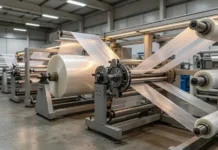
The integration of nanocellulose into conventional papermaking and plastic conversion processes is also an area of active development. In papermaking, nanocellulose can be added to the wet end of the process or applied as a surface sizing or coating. In plastic conversion, nanocellulose must be effectively dispersed within the polymer melt to achieve the desired reinforcement. Various techniques, including masterbatch preparation and in-situ polymerization, are being explored to ensure uniform dispersion. As more packaging manufacturers gain experience with these materials, the technical barriers to adoption are being overcome. The long-term potential of nanocellulose materials to enable the next generation of lightweight, high-performance, and sustainable packaging is immense, and the industry is moving steadily toward commercial-scale implementation.

