















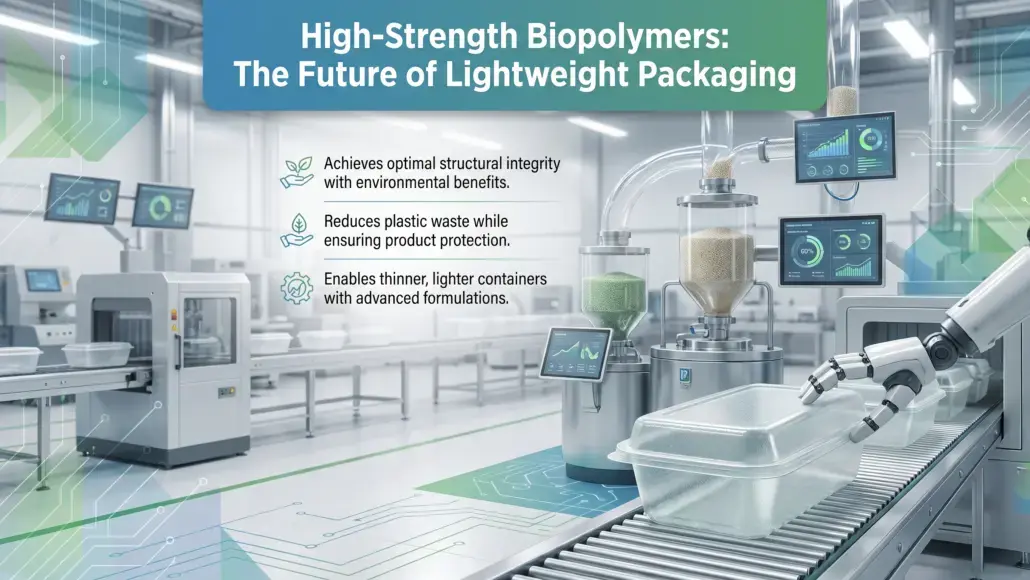
The packaging industry is currently witnessing a significant shift toward materials that balance structural integrity with environmental responsibility. As manufacturers face increasing pressure to reduce plastic waste while maintaining the protection of goods, the development of high-strength biopolymer blends improving lightweight packaging structures has emerged as a critical technological frontier. These advanced material formulations allow for the creation of thinner, lighter containers and films without sacrificing the rigorous performance standards required for logistics and retail environments. By integrating various bio-based resins, engineers are overcoming the traditional limitations of single-source bioplastics, such as brittleness and poor thermal stability. This analytical exploration examines the mechanical synergies of these blends and their role in modern packaging systems.
Mechanical Properties and Synergistic Formulations of Biopolymer Blends
The primary challenge in lightweighting packaging has always been the maintenance of tensile strength and impact resistance when reducing wall thickness. Conventional bioplastics like polylactic acid often lack the necessary toughness for high-demand applications, leading to premature failure in thin-walled structures. However, the introduction of high-strength biopolymer blends improving lightweight packaging structures provides a solution by combining polylactic acid with more ductile polymers like polyhydroxyalkanoates or polybutylene adipate terephthalate. This blending process creates a multi-phase morphology where the secondary polymer acts as a toughening agent, effectively absorbing energy and preventing crack propagation. The result is a material that can be extruded or molded into thinner profiles while retaining the load-bearing capacity of much thicker, traditional plastic alternatives.
Advanced research into these blends focuses on the optimization of the interface between different polymer phases. Without proper compatibility, the resulting blend can suffer from phase separation, which severely compromises the structural uniformity of the packaging. Manufacturers are increasingly utilizing bio-based compatibilizers to bridge the gap between immiscible polymers, ensuring that the structural integrity remains high. These compatibilizers enhance the molecular entanglement at the interface, allowing for a more efficient transfer of mechanical loads across the material. This molecular engineering is essential for producing lightweight films that must withstand the rigors of high-speed filling lines and the stacking pressures encountered during distribution.
The crystallinity of these blends plays a pivotal role in their performance. By controlling the cooling rates during processing and incorporating nucleating agents, processors can tailor the crystalline structure to achieve specific mechanical outcomes. A higher degree of crystallinity generally leads to improved stiffness and barrier properties, which are vital for lightweight containers that must protect sensitive contents from moisture and oxygen. The ability to fine-tune these properties within advanced material systems allows for a degree of customization that was previously unattainable with standard petroleum-based resins. This precision is particularly beneficial in the food and beverage sector, where every gram of material reduction contributes to significant cost savings and carbon footprint reductions across the supply chain.
Impact of Material Reduction on Supply Chain Efficiency and Logistics
Lightweighting is not merely an exercise in material science: it is a strategic logistical advantage that ripples through the entire packaging value chain. When high-strength biopolymer blends improving lightweight packaging structures are utilized, the total weight of the primary packaging is reduced, which directly translates to lower transportation costs and reduced fuel consumption. For high-volume producers, even a five percent reduction in container weight can lead to thousands of tons in annual material savings. This weight reduction also enables more units to be packed per pallet, optimizing warehouse space and increasing the efficiency of shipping containers. The economic incentives for adopting these high-strength materials are therefore as compelling as the environmental ones, providing a clear pathway for broad industry adoption.
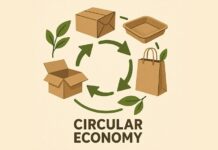
Beyond the immediate cost savings, the reduction in material volume simplifies the waste management process at the end of the product life cycle. Lighter packaging means less mass entering the recycling or composting streams, which reduces the energy required for processing and transport. When these lightweight structures are composed of advanced bio-based resins, they align with the circular economy goals of many global brands. The bio-based nature of the resins ensures that the carbon footprint associated with material production is significantly lower than that of virgin fossil-fuel plastics. This combination of reduced mass and renewable sourcing creates a powerful value proposition for companies looking to meet stringent sustainability targets without compromising the safety or quality of their products.
The logistical benefits also extend to the retail environment, where lightweight packaging can improve the ease of handling for both staff and consumers. Thinner films are easier to open and manipulate, while lightweight rigid containers reduce the risk of strain-related injuries during stocking operations. The integration of high-strength biopolymer blends improving lightweight packaging structures into the retail industry demonstrates that sustainability and functionality can coexist. As retail chains continue to push for “frustration-free” packaging, the demand for materials that are both light and durable will only continue to grow. The ability of advanced biopolymer blends to meet these dual requirements positions them as a cornerstone of future packaging designs.
Processing Innovations and Compatibility in Modern Manufacturing
The adoption of new material blends often requires adjustments to existing manufacturing infrastructure, and biopolymers are no exception. One of the major hurdles in deploying these materials has been their processing window, which can be narrower than that of traditional polyolefins. Modern extrusion and injection molding equipment must be calibrated to handle the specific rheological properties of these blends. Recent innovations in screw design and temperature control systems have made it possible to process these materials at commercial speeds. By managing the shear rates and thermal profiles during production, manufacturers can ensure that the final packaging retains the high-performance characteristics designed at the molecular level.
Compatibility with existing tooling is another critical factor for industry-wide implementation. Many converters are hesitant to invest in new molds or dies specifically for biopolymers. To address this, material scientists have developed formulations that can serve as “drop-in” replacements for traditional resins. These blends are engineered to mimic the shrinkage rates and melt strengths of conventional plastics, allowing for a seamless transition without significant capital expenditure. This approach significantly lowers the barrier to entry for small and medium-sized packaging companies, fostering a more diverse and innovative market. The versatility of these blends across different processing techniques, from blow molding to thermoforming, ensures their applicability in a wide range of packaging formats.
In addition to mechanical performance, the aesthetic qualities of these blends are being refined to meet consumer expectations. Early biopolymers often suffered from a lack of clarity or a yellowish tint, which was undesirable for clear packaging applications. Through the use of highly refined resins and specialized additives, modern materials can achieve levels of transparency that rival those of polyethylene terephthalate. This visual appeal is crucial for products where visibility is a key selling point, such as fresh produce or premium beverages. The ability to maintain high clarity while reducing weight and improving strength marks a significant milestone in the evolution of sustainable packaging materials.
Barrier Performance and Shelf Life Stability in Bio-Based Systems
Protecting the contents of a package is the fundamental purpose of any packaging structure, and the barrier properties of biopolymer blends are a major focus of current development. Traditional lightweighting often risks compromising the barrier against moisture, oxygen, and aromas, which can lead to shortened shelf life and increased food waste. Advanced formulations address this by incorporating specialized barrier layers or nano-additives within the polymer matrix. These additives create a tortuous path for gas molecules, effectively slowing their diffusion through the thin walls of the package. This enhancement allows for the creation of lightweight structures that provide the same level of protection as much heavier, multi-layer conventional films.
The thermal stability of these barrier properties is also essential, particularly for products that undergo pasteurization or hot-filling processes. Many standard bioplastics soften at relatively low temperatures, which can lead to structural deformation and loss of barrier integrity. Modern blends are formulated to withstand higher temperatures, ensuring that the packaging remains stable throughout the entire production and distribution cycle. This thermal resistance expands the potential applications of biopolymer blends into categories such as ready-to-eat meals and hot beverages, where lightweighting was previously considered too risky. The stability of these materials under various environmental conditions, including high humidity and fluctuating temperatures, further solidifies their reliability as professional packaging solutions.
Ultimately, the goal is to create a packaging system that is as durable as it is sustainable. The ongoing optimization of advanced material blends represents a balanced approach to these two often-conflicting objectives. By leveraging the latest advancements in polymer chemistry and processing technology, the packaging industry can move toward a future where material efficiency is maximized and environmental impact is minimized. The continuous refinement of these blends will lead to even more impressive weight reductions and performance enhancements, driving the industry toward a truly circular and efficient model. As these materials become more cost-competitive and widely available, their role in the global packaging industry will only become more prominent, setting new benchmarks for quality and sustainability.

