















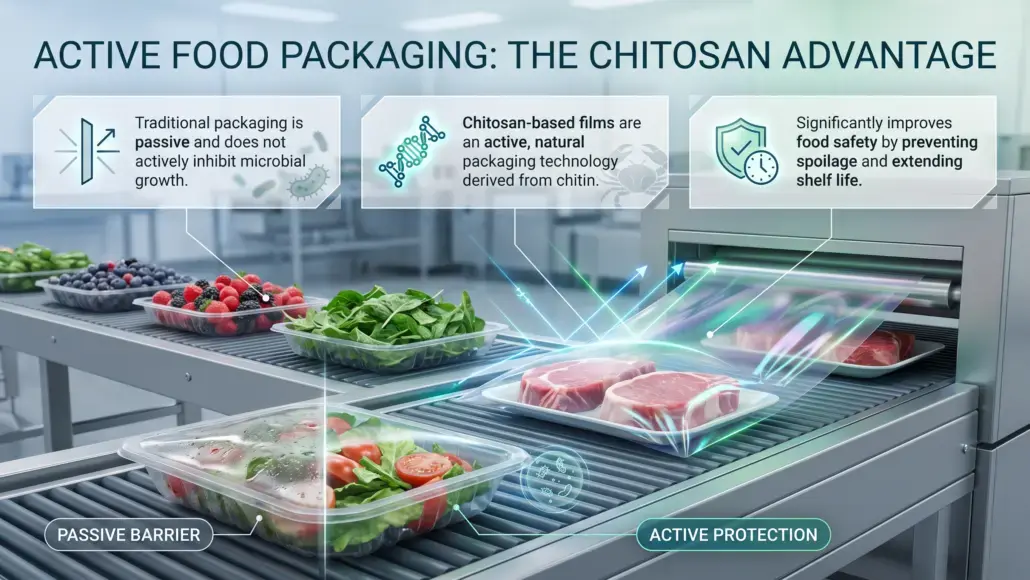
The prevention of food spoilage and the assurance of consumer safety are the most critical objectives in the food packaging industry. While traditional synthetic materials provide excellent physical protection, they often act as passive barriers that do not actively inhibit the growth of microorganisms. The development of chitosan-based films improving antimicrobial food packaging performance represents a significant leap forward in active packaging technology. Derived from chitin, a natural polymer found in the shells of crustaceans, chitosan possesses inherent antimicrobial properties that can be utilized to extend the shelf life of perishable goods. By integrating this bio-based material into film structures, manufacturers are creating a new generation of “intelligent” packaging that actively works to maintain the quality and safety of food products.
Mechanisms of Antimicrobial Action in Chitosan Systems
The effectiveness of chitosan-based films improving antimicrobial food packaging performance is primarily due to the presence of positively charged amino groups along the polymer chain. These cationic groups interact with the negatively charged components of microbial cell membranes, leading to structural damage and the leakage of intracellular contents. This mechanism is effective against a broad spectrum of bacteria, yeasts, and molds, making chitosan a highly versatile agent for food preservation. Unlike many synthetic antimicrobial additives that may raise health concerns, chitosan is biocompatible and generally recognized as safe, providing a natural alternative for clean-label packaging initiatives.
In addition to its direct interaction with cell membranes, chitosan can also act as a chelating agent, binding essential metals that microorganisms need for growth and enzyme function. This multi-modal approach to antimicrobial activity makes it difficult for pathogens to develop resistance, ensuring the long-term efficacy of the packaging. The development of chitosan-based films improving antimicrobial food packaging performance often involves optimizing the molecular weight and degree of deacetylation of the chitosan to maximize these inhibitory effects. Research has shown that medium-molecular-weight chitosan often provides the best balance of antimicrobial strength and film-forming capability, allowing for the creation of durable and effective packaging materials. The molecular structure of the chitosan can be further modified through enzymatic or chemical treatments to enhance its solubility and compatibility with other polymer systems, ensuring a Potent antimicrobial effect.
Chitosan can also be used to encapsulate or carrier other natural antimicrobial substances, such as essential oils or plant extracts. This synergistic approach further enhances the inhibitory power of the film, providing targeted protection against specific foodborne pathogens like Listeria or Salmonella. When these active components are embedded within chitosan-based films improving antimicrobial food packaging performance, they are released slowly over time, maintaining a protective environment around the food throughout its entire shelf life. This controlled release mechanism is a key advantage of chitosan-based systems, ensuring consistent performance even in challenging distribution environments. The ability to customize the release rate by adjusting the cross-linking density of the chitosan matrix allows for a high degree of precision in active packaging design.
Enhancement of Shelf Life for Meat and Seafood Products
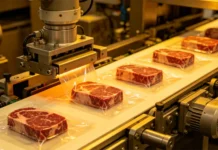
Meat and seafood are among the most perishable food categories, often requiring stringent temperature control and specialized packaging to prevent rapid spoilage. Application of these active materials has shown remarkable results in these sectors. By applying chitosan as a coating or incorporating it into the base film of vacuum or modified atmosphere packaging, processors can significantly delay the onset of microbial growth. This not only extends the time the product remains safe for consumption but also preserves its sensory qualities, such as color, texture, and aroma, which are vital for consumer acceptance. Maintaining these organoleptic properties is essential for premium products where the visual appeal is directly linked to the brand’s reputation.
In seafood packaging, the ability of chitosan to inhibit the growth of specific spoilage organisms, such as Pseudomonas, is particularly beneficial. Fresh fish often has a very short shelf life due to high moisture content and a neutral pH, which facilitate rapid bacterial proliferation. Use of advanced antimicrobial films can extend the freshness of seafood by several days, reducing the amount of waste at both the retail and consumer levels. The natural origin of chitosan also aligns well with the premium, healthy image of many seafood products, providing a sustainable packaging story that resonates with modern buyers. Ability of the chitosan layer to also act as a moisture regulator helps to prevent the loss of product weight and the development of undesirable textures, further enhancing the value of the active packaging system.
Similarly, for red meat and poultry, chitosan-based systems help to maintain the stability of the product during storage. Antimicrobial activity of the film reduces the total viable count of bacteria on the surface of the meat, which is where most spoilage begins. When integrated into multi-layer structures, these films can also provide secondary benefits, such as moisture control and reduced oxygen permeability. This comprehensive protection ensures that the meat retains its nutritional value and remains safe for consumption for a longer period, providing a significant advantage for both producers and retailers operating in global supply chains. Reduction in lipid oxidation, a major cause of flavor degradation in meats, is another benefit often observed with chitosan coatings, providing a double layer of protection for high-value protein products.
Processing and Material Integration in Commercial Films
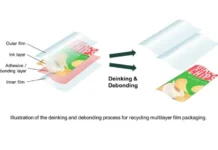
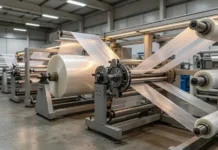
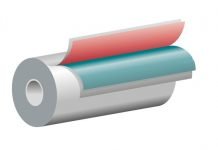
Integrating chitosan into commercial packaging lines requires a thorough understanding of its material properties and processing requirements. While chitosan can be formed into standalone films, it is often more practical to use it as a functional coating on existing substrates like polyethylene or polylactic acid. Production of advanced functional films typically involves the use of solvent casting or coating techniques, where a chitosan solution is applied to the base material and then dried. Modern coating technology allows for the application of very thin, uniform layers of chitosan, providing high antimicrobial activity without significantly affecting the mechanical or optical properties of the primary package. This efficiency is critical for high-speed industrial production where the thickness and weight of the packaging must be strictly controlled.
Another area of active development is the use of melt-processing techniques to incorporate chitosan directly into the polymer matrix. While chitosan can be thermally sensitive, the use of specialized plasticizers and low-temperature extrusion processes has made it possible to create chitosan-polymer blends. These blends offer the convenience of being processable on standard equipment while retaining the functional benefits of the chitosan. Formulation of these materials must be carefully managed to ensure that the active sites of the chitosan remain accessible to microorganisms. Use of nano-chitosan or chitosan-grafted polymers is being explored to improve the dispersion and efficacy of the material within the blend, ensuring that the antimicrobial action is distributed evenly throughout the entire film structure.
Compatibility of chitosan with other bio-based materials is also a major advantage. For example, starch-chitosan or PLA-chitosan blends offer a 100 percent renewable and biodegradable packaging solution that also provides active antimicrobial protection. This alignment with the circular economy is a key driver for the adoption of antimicrobial biopolymer films in the fresh produce and organic food sectors. As processing techniques continue to refine and the cost of raw chitosan decreases, the widespread adoption of these advanced films is becoming increasingly feasible for a broad range of high-volume packaging applications. Development of industrial-scale extraction methods for chitosan from seafood waste also contributes to the sustainability of the material, turning a waste stream into a high-value packaging component.
Regulatory Environment and Safety Standards for Active Films
Active packaging involves navigating complex regulatory requirements, particularly regarding food contact materials. Active agents must be tested to ensure they do not migrate into food in harmful quantities. The natural nature of chitosan-based systems gives them an advantage. Many grades of chitosan are approved for food use, simplifying commercialization. Continuous dialogue between the industry and regulatory bodies is essential for establishing clear safety standards, providing a framework for the global trade of products protected by active films.
Consumer perception is another critical factor in the success of new packaging technologies. Modern shoppers are increasingly wary of synthetic preservatives and chemicals in their food. Use of natural, ocean-derived materials to preserve products allows brands to highlight their commitment to safety and sustainability. This “clean label” approach to packaging can be a powerful marketing tool, differentiating products on the shelf and building consumer trust. Transparent communication about the benefits of active packaging, such as reduced food waste and improved safety, is key to fostering widespread acceptance among retailers and end-users alike. By framing active packaging as a natural extension of food quality, brands can overcome the historical skepticism associated with functional materials.
Looking to the future, the role of chitosan in packaging will likely expand to include diagnostic and interactive functions. Research is underway into chitosan-based sensors that can detect the presence of spoilage metabolites and provide a visible signal to the consumer. This type of functionality, combined with the inherent antimicrobial activity of the material, represents the next level of food safety and quality assurance. Ongoing evolution of these materials is a testament to the power of biomimicry and natural materials in solving the complex challenges of the modern food industry. By harnessing the properties of this remarkable biopolymer, the packaging industry is creating a safer, more sustainable, and more efficient global food system.

