

















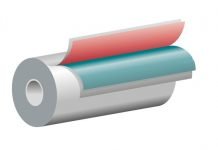
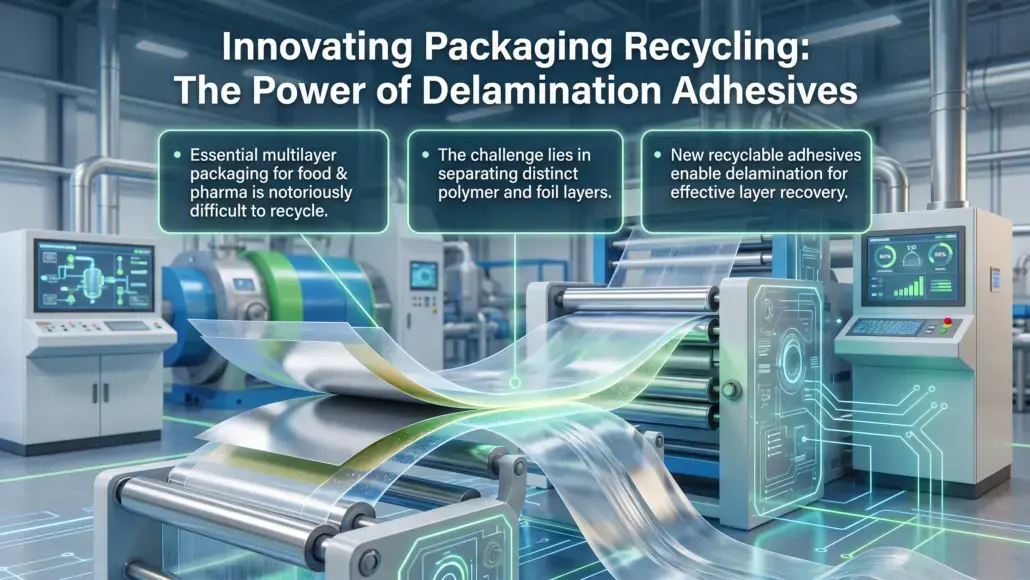
Multilayer flexible packaging is a cornerstone of the modern food and pharmaceutical industries, providing the complex barrier properties needed to protect sensitive products. However, these structures (often composed of several different polymers and metal foils) are notoriously difficult to recycle because the individual layers cannot be easily separated. The development of recyclable adhesive systems enabling delamination of multilayer packaging is a critical innovation that addresses this circularity bottleneck. By utilizing adhesives that can be “de-bonded” under specific conditions, manufacturers are creating a pathway for these complex films to be broken down into their constituent parts during the recycling process. This capability ensures that high-quality polymers can be recovered and reused, rather than being relegated to low-grade applications or landfill.
Chemistry of Stimuli-Responsive Adhesives in Packaging
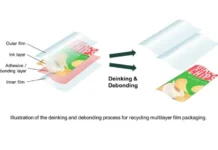
The fundamental principle behind recyclable adhesive systems enabling delamination of multilayer packaging is the use of stimuli-responsive polymers. These adhesives are designed to maintain strong bond strength during the product’s useful life but lose their adhesive properties when exposed to a specific trigger. This trigger can be a change in temperature, a specific chemical wash, or the application of light or sound. In the context of mechanical recycling, water-triggered de-bonding is particularly promising, as it can be integrated into the standard hot-wash cycles already used by many recycling facilities. By adjusting the pH or the temperature of the wash water, recyclers can initiate the delamination process without the need for specialized equipment.
Molecular structure of these adhesives often incorporates reversible covalent bonds or highly specific solubility profiles. For example, some recyclable adhesive systems enabling delamination of multilayer packaging utilize polymers that remain stable at ambient conditions but become highly soluble in a slightly alkaline solution. When the shredded packaging flakes enter the washing tank, the adhesive dissolves or loses its grip, allowing the different layers of film to separate based on their density or other physical properties. This precise control over the adhesive’s behavior is essential for ensuring that the delamination only occurs when intended, preventing premature failure of the package during distribution or use.
Ongoing research in this field also explores the use of “switchable” adhesives that can be triggered by thermal energy. These systems often utilize side-chain crystalline polymers that undergo a sharp phase transition at a specific temperature. When the packaging is heated above this transition point (usually during the initial stages of a recycling process) the adhesive becomes a low-viscosity liquid or a brittle solid, facilitating the mechanical separation of the layers. The versatility of these systems means they can be optimized for a wide variety of film combinations, from simple two-layer laminates to highly complex high-barrier structures.
Impact on Recycling Yield and Material Purity
The ability to separate multilayer structures has a direct and significant impact on the purity of the recovered material. When multilayer films are recycled without delamination, the resulting “mixed plastic” recyclate often has poor mechanical properties and a dark color, limiting its use to low-value items. However, the implementation of recyclable adhesive systems enabling delamination of multilayer packaging allows for the recovery of clear, high-purity resin streams. For instance, the polyethylene from a PE/PA structure can be separated from the polyamide, allowing both polymers to be returned to their respective high-value recycling loops. This increase in material purity is essential for meeting the growing demand for food-grade recycled content.
Beyond purity, the total yield of the recycling process is also improved. Multilayer packaging that cannot be delaminated is often rejected by recycling facilities because it can contaminate more homogeneous streams. By ensuring that these materials can be cleanly separated, advanced adhesive systems increase the total volume of flexible packaging that can be diverted from landfill. This is particularly important as the volume of flexible packaging continues to grow globally. For brands, the ability to claim that their multilayer structures are “recyclable in practice” rather than just “recyclable in theory” is a major step toward transparency and accountability in their sustainability reporting.
Economic benefits of higher-quality recyclate are also driving the adoption of these systems. Clear, sorted resins command a much higher price on the market than mixed plastic waste. By investing in specialized adhesive technology, converters can provide their customers with materials that have a higher residual value at the end of their life cycle. This helps to justify the potentially higher initial cost of these materials, creating a more compelling economic case for circular packaging design. As the infrastructure for advanced sorting and washing continues to mature, the value proposition of delaminatable packaging will only become more significant.
Engineering Challenges in Application and Performance
While the benefits of delamination are clear, the application of these adhesives requires careful engineering to ensure they meet the rigorous performance standards of the packaging industry. One of the primary challenges is maintaining bond strength across a wide range of temperatures and humidity levels. Packaging must often withstand everything from freezer storage to high-temperature shipping in tropical climates. The adhesive must remain reliable under these conditions, only failing when it encounters the specific trigger used in the recycling plant. Achieving this level of selectivity requires a deep understanding of polymer physics and interfacial chemistry. This molecular selectivity ensures that the package remains secure during consumer use while being fully prepared for the recovery process at the facility.
Processability is another critical factor. Many delaminatable adhesives have different rheological properties than standard polyurethane or acrylic systems. Converters must be able to run these materials on existing lamination equipment at commercial speeds without issues like “tunneling” or poor wetting. Manufacturers are working closely with equipment makers to ensure their formulations are compatible with a variety of application methods, including solvent-based, solvent-less, and water-based lamination. This compatibility is essential for broad industry adoption, as it allows companies to transition to more sustainable designs without significant capital expenditure on new machinery. The efficiency of the lamination process is a key performance indicator that dictates the commercial viability of these advanced adhesive solutions.
In addition to mechanical performance, the chemical compatibility of the adhesive with the contents of the package must be verified. This is especially vital for food and medical packaging, where there is a risk of migration of adhesive components into the product. Rigorous testing is required to ensure that these systems comply with all relevant safety regulations and do not affect the taste, smell, or safety of the enclosed goods. Successful deployment of these systems in sensitive applications demonstrates the high level of technical sophistication that has been achieved in modern adhesive science. Every batch of adhesive must undergo extensive validation to ensure that the functional performance is not compromised during the entire shelf life of the product.
Strategic Implications for Brand Owners and Packaging Converters
For brand owners, the adoption of delaminatable packaging is a clear signal of their commitment to environmental stewardship. As consumers become more aware of the challenges associated with plastic waste, the ability to provide packaging that is actually recycled into new products offers a significant competitive advantage. This move toward circularity also helps brands stay ahead of evolving regulations, such as the European Union’s Packaging and Packaging Waste Regulation, which sets ambitious targets for recyclability and recycled content. By working with converters to implement these advanced adhesive systems, brand owners can ensure that their products are positioned as leaders in the sustainable marketplace. This proactive approach to material management is a core pillar of modern corporate social responsibility.
Converters, in turn, play a pivotal role in the technical implementation of these systems. They must balance the demands of production efficiency with the new requirements of end-of-life processing. The successful converter will be the one that can master the processing of these stimuli-responsive materials and provide their customers with high-performance, fully recyclable solutions. This requires ongoing investment in research and development, as well as a willingness to collaborate with recycling professionals. The evolution of the packaging industry is toward a more integrated model where every stage of the life cycle is considered, and the role of the converter is central to this transition. Mastering the nuances of delamination technology allows converters to offer specialized services that differentiate them from competitors in a crowded market.
Environmental impact of the delamination process itself must be considered. Triggers used to initiate de-bonding, such as heated water or alkaline solutions, should be managed in a way that minimizes energy consumption and water waste. Closed-loop washing systems that recycle the water and the delaminating agents are being developed to ensure that the recycling process is as sustainable as the packaging it recovers. As the industry moves toward a future where material recovery is prioritized, these specialized adhesives will become the standard, enabling an efficient supply chain for global consumer products. Transition to circular packaging requires a fundamental rethink of how materials are joined together. The development of recyclable adhesive systems enabling delamination of multilayer packaging provides a powerful solution to one of the industry’s most persistent challenges.

