


















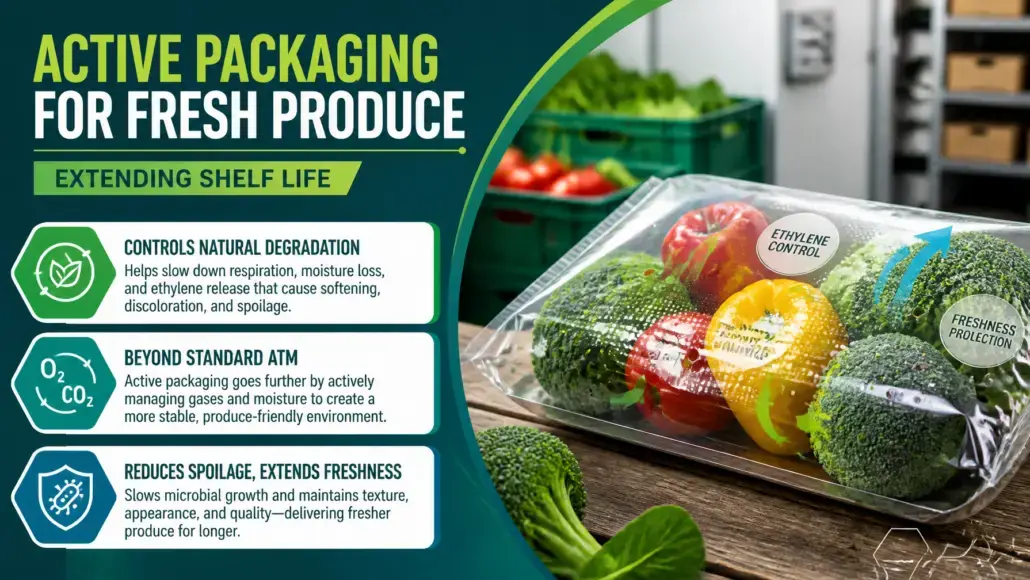
Post-harvest produce management presents a continuous operational battle against natural biological degradation. Fresh fruit and vegetables remain living, respiring biological entities long after field harvest. They consume ambient oxygen, metabolize stored carbohydrates, transpire internal moisture, and release ethylene gas.
Left unchecked, these natural metabolic activities drive rapid tissue softening, surface discoloration, turgor loss, and microbial breakdown. While standard modified atmosphere packaging (MAP) established a vital baseline by passively moderating head-space gas diffusion through calculated film permeability, it frequently falters when confronted with harvest-to-harvest respiration variability or unexpected cold chain temperature excursions.
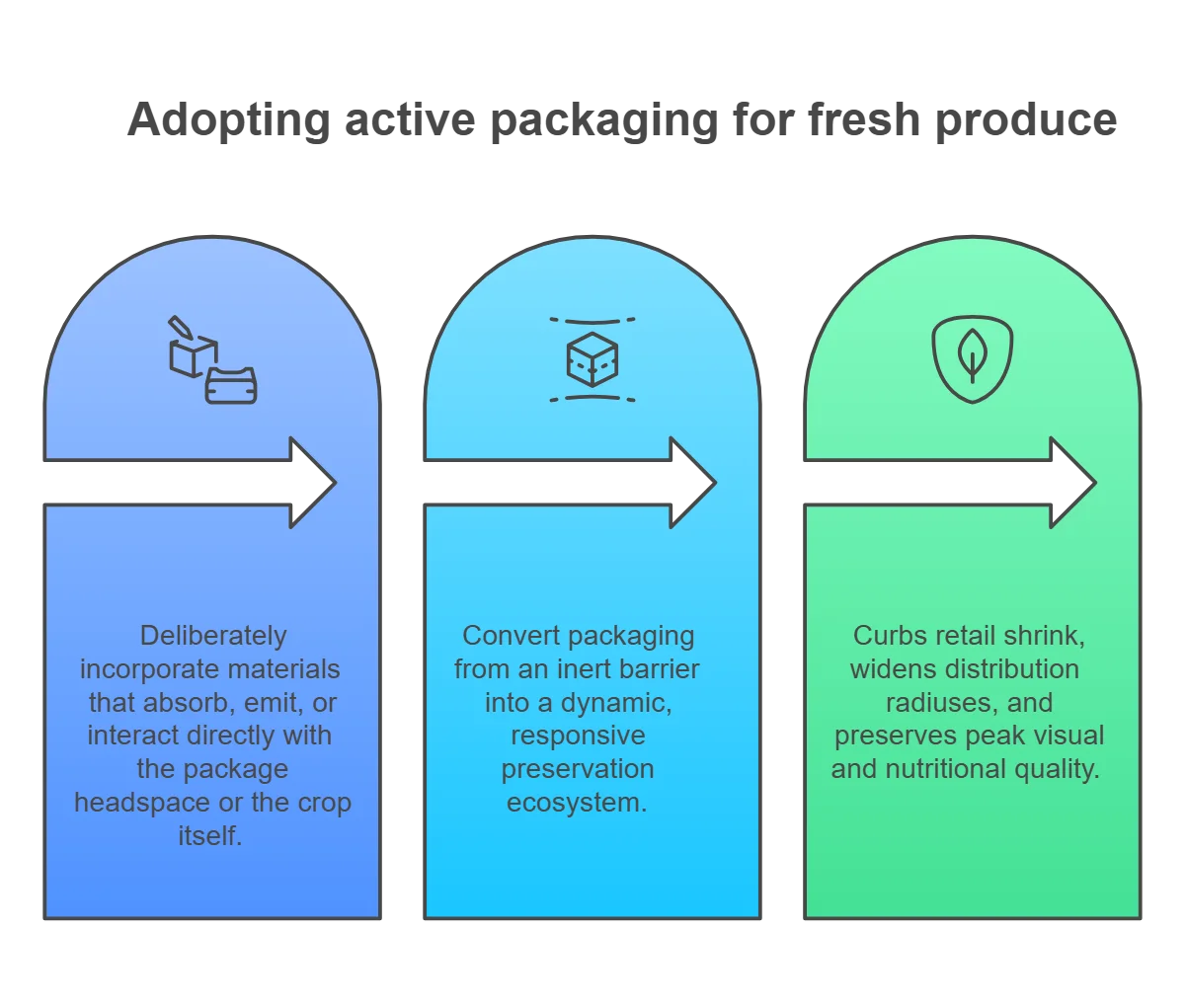
The industrial adoption of active packaging for fresh produce bridges this critical preservation gap. Packaging World Insights observes that by deliberately incorporating materials that absorb, emit, or interact directly with the package headspace or the crop itself, active systems convert packaging from an inert barrier into a dynamic, responsive preservation ecosystem. For commercial growers, contract packers, and grocery retailers navigating slim operating margins and extended supply chains, active packaging for fresh produce delivers tangible protection that curbs retail shrink, widens distribution radiuses, and preserves peak visual and nutritional quality.
Ethylene Management: Trapping, Oxidation, and Receptor Control
Because ambient trace levels of ethylene can spoil an entire shipping consignment or retail pallet, active packaging for fresh produce places significant emphasis on ethylene removal and inhibition technologies. Rather than simply venting or containing the volatile gas, modern functional packaging intercepts and neutralizes the hormone within the package micro-environment.
Adsorption and Catalytic Chemisorption
Early scavenging architectures relied primarily on discrete, permeable sachets filled with potassium permanganate immobilized on high-surface-area carriers like activated alumina, silica gel, or zeolite. The permanganate oxidizes ethylene into ethylene glycol, followed by subsequent conversion into carbon dioxide and water. As the oxidation progresses, the material undergoes an unmistakable color change from deep purple to brown, providing a visual gauge of active capacity exhaustion. While effective in master cartons and bulk pallet liners, individual sachets pose ingestion hazards for retail consumers and add an extra physical dispensing station on automated packaging lines.
Material science advances have addressed this manufacturing challenge by compounding inorganic scavengers directly into polyolefin masterbatches. Natural zeolites, chemically treated halloysite nanotubes, and tailored layered clays like montmorillonite are incorporated directly into the sealant layers of blown or cast polyethylene and polypropylene films. These micro-porous additives selectively trap ethylene molecules through surface adsorption. Advanced film structures incorporate transition-metal catalytic complexes into the polymer, enabling ongoing ambient catalytic cracking that neutralizes adsorbed ethylene molecules without exhausting the porous carrier matrix, maintaining protective capacity across prolonged oceanic journeys.
| Technology | Active Mechanism | Primary Format | Optimal Applications |
|---|---|---|---|
| Permanganate Matrices | Chemical oxidation yielding CO2 and water | High-porosity sachets, bulk carton strips | Export bananas, avocados, pome fruit cartons |
| Mineral-Compounded Films | Porous adsorption and catalytic degradation | Extruded monolayer/coextruded flexible pouches | Pre-cut salads, broccoli crowns, bell peppers |
| Receptor Blockade (1-MCP) | Competitive binding to plant ethylene receptors | Moisture-triggered peel-and-stick release pads | Greenhouse tomatoes, stone fruits, persimmons |
| Desiccant Reservoirs | Equilibrium vapor sorption via deliquescence | Perforated bottom pads, lidding film coatings | Table grapes, raspberries, sliced mushrooms |
Receptor Blockade Mechanisms
An alternative strategy bypasses ethylene removal altogether by biochemically shielding the crop. 1-Methylcyclopropene (1-MCP) functions as a gaseous structural analog to ethylene that binds irreversibly to ethylene-binding protein receptors on cell membranes. With these receptor sites occupied, the crop remains physiologically insensitive to both endogenous and environmental ethylene. Commercial systems incorporate alpha-cyclodextrin-encapsulated 1-MCP formulations into adhesive labels, printed coating zones, or moisture-sensitive barrier membranes. Once the package is sealed and internal relative humidity climbs, moisture triggers a steady release of micro-quantities of gaseous 1-MCP into the package headspace, delivering targeted ripening inhibition without requiring specialized warehouse fumigation chambers.
Moisture Management and Condensation Equilibrium
Managing water vapor is one of the most critical packaging challenges in post-harvest produce logistics. Fresh crops feature elevated internal moisture contents, and persistent transpiration rapidly elevates headspace relative humidity toward saturation inside closed, non-permeable packaging. While near-saturated vapor levels are necessary to maintain crop firmness and avoid sellable weight loss, minor downward temperature changes drop the air below its dew point. This temperature drop causes water to condense onto the interior film surface and pool against plant tissues, creating an ideal micro-environment for airborne fungal spores, particularly gray mold caused by Botrytis cinerea.
Engineered active packaging for fresh produce mitigates condensation while maintaining adequate humidity through coordinated packaging architectures:
- Active Absorbent Reservoirs: Absorbent bottom pads use cross-linked sodium polyacrylates, refined cellulose matrices, or food-grade calcium chloride to capture excess weeping, cell sap, and condensation. Multi-ply nonwoven constructions enable rapid capillary uptake and lock fluid into a gel matrix, preventing reverse liquid migration onto produce during transit agitation.
- Surfactant Coatings and Moisture-Buffering Films: Antifog coatings and blended masterbatch surfactants reduce interfacial tension, causing condensation to spread into a continuous, transparent film rather than dripping droplets. Integrated functional mineral phases create a dynamic humidity buffer by absorbing excess water vapor under saturated conditions and releasing it back when relative humidity drops.
Antimicrobial Release Systems and Headspace Hygiene
Plant-Derived Bio-Active Volatiles
Botanical essential oils, such as thymol, carvacrol, eugenol, and allyl isothiocyanate, possess broad-spectrum antifungal and antibacterial characteristics. These volatile phenolic compounds compromise microbial cell membranes, leading to intracellular leakage and microbial cell death. The technical challenge lies in governing their diffusion rate; uncalibrated desorption can impart persistent foreign odors that mask or degrade the crop’s natural flavor profile. Modern converters use molecular encapsulation inside modified starches, cyclodextrins, or porous inorganic carriers to release active vapors at levels below sensory detection thresholds yet sufficient to arrest fungal growth.
In-Package Vapor Emitters
For high-risk crops prone to mold, such as commercial table grapes and late-season berries, active emission systems provide indispensable protection. In place of traditional sulfur dioxide treatment pads, which carry risk of bleached spotting and sulfite sensitivity issues, modern active formats utilize reactive chemistries like chlorine dioxide generation. Dual-component dry precursors embedded into polymer laminates react to moisture ingress, generating controlled, sub-ppm concentrations of chlorine dioxide gas. As an oxidizing gas, chlorine dioxide circulates throughout the entire pack, penetrating tight clusters and stem junctions that liquid sanitizer washes cannot reach, decomposing cleanly without leaving objectionable residues.
Packaging Line Integration and Material Circularity
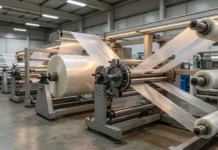
Implementing active packaging must match the economic and operational realities of industrial packing facilities. In-line operations running vertical or horizontal form-fill-seal equipment demand materials that seal cleanly across broad temperature windows without degrading heat-sensitive active additives. Compounding active functional chemistry into blown or cast films has minimized the line stoppages and mechanical jamming historically associated with secondary sachet feeding equipment.
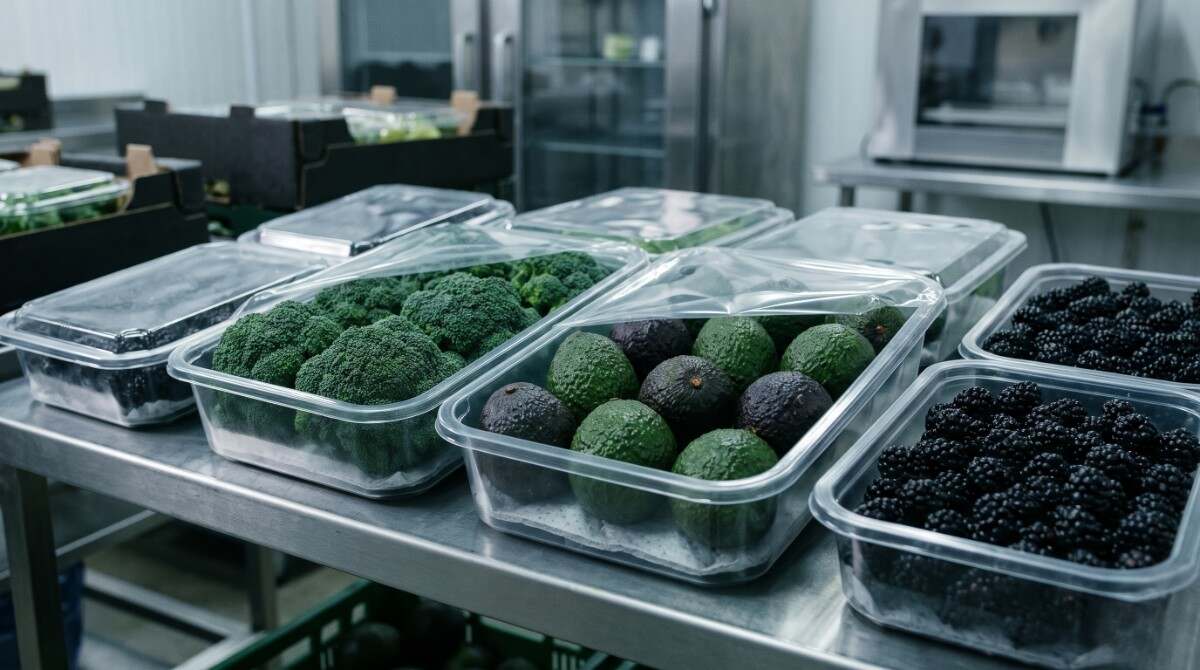
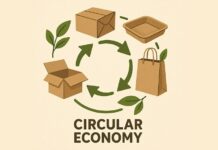
Concurrently, active packaging must align with modern sustainability and recyclability targets. Early active solutions frequently depended on multi-material, non-recyclable laminates to isolate diverse functional layers. Converters have largely overcome these limitations by formulating active additives into mono-material biaxially-oriented polypropylene and high-density polyethylene structures that retain processing clarity and barrier consistency. These unified formats fit directly into conventional polyolefin mechanical reclamation infrastructure without complicating sorting streams.
Beyond mono-material plastics, the industrial scaling of functional coatings has accelerated paper-based packaging mass production, enabling fiber punnets and corrugated liners to integrate active moisture or ethylene barriers on standard high-speed convertor lines.
Commercial Return on Investment across the Supply Chain
While adopting active packaging for fresh produce introduces an incremental increase in initial packaging material expenditures relative to plain commodity films, this premium is balanced by downstream operational gains. The functional performance of active packaging directly mitigates post-harvest shrink across sensitive commodity categories, generating measurable financial returns.
By moderating respiration kinetics, eliminating moisture-driven mold growth, and halting premature ripening cascades, active packaging reliably preserves post-harvest freshness across multi-day transit windows. Packaging World Insights observes that this expanded freshness horizon gives logistics operators crucial flexibility during distribution delays, port congestion, or retail hold times. Distributors can transition delicate commodities from costly air freight to more economical ocean and intermodal transport corridors. Concurrently, supermarket buyers secure produce with longer retail display longevity, reduced waste at the store shelf, and superior freshness profiles that preserve brand equity and drive consumer repurchase rates.

