













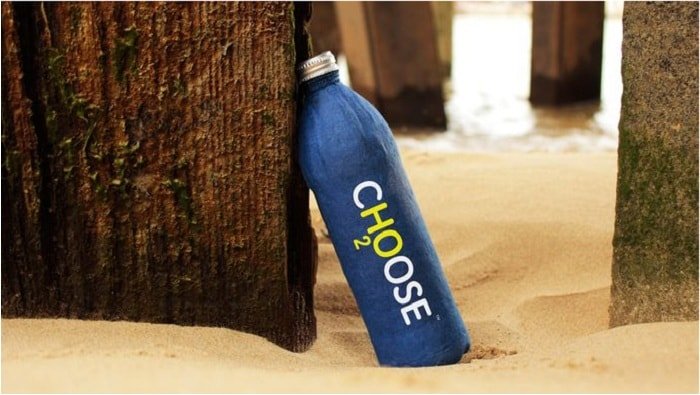

A new bottled water company called Cove is reportedly launching an 100% biodegradable water bottle, hoping to make the single-use water bottle game a little easier on the environment.
Made from a biopolymer called PHA, the new bottle will be fully biodegrade if ends up in a landfill or compost bin-or even the ocean.
Alex Totterman, founder of new company Cove, says, “It just became very clear that the reason we have a problem with plastic pollution is convenience, and trying to change that delivery mechanism is going to be very difficult.”
“And we don’t really have time. We’re looking at probably less than 30 years and we’ll have an ocean filled with more plastic than fish. While cleanup efforts are really important, we also just need to stop the amount of plastic going into our environment, especially single-use plastic,” he adds.
PHA, which is made by bacteria through a fermentation process, isn’t new, but it’s only recently become economical to produce. Cove’s bottles are fed with biomass, but the company is also working with a manufacturer that can make the same product from captured greenhouse gases. “The product could be carbon neutral, even carbon negative,” Totterman says.
“PHA is the only polymer that’s fully biodegradable in all conditions,” he says. “So it’s kind of sidestepping the need for the recycling system we have.”
“For the last two years, we’ve been working on really providing a direct alternative to the single-use plastic bottle,” says Totterman. He previously worked at a nanotechnology company on water purification, and had initially considered making a filter that people would use at home. But he realized that wouldn’t solve the problem.
The company also plans to source water near the markets where it sells. “It’s an industry that’s notoriously unsustainable and often involves shifting water across oceans and using huge amounts of energy to transport these bottles around,” says Totterman. “So we’re always going to set up production as close as possible to where we’re distributing them to.” That comes with challenges–the brand will launch first in Los Angeles on February 28 before expanding to other parts of the United States, and sourcing water in drought-prone California can be problematic.
Larger beverage companies, which are slowly making commitments to improve their packaging, will also need to radically change. “We’re building with the full intention of seeing these big companies transition to working with us or working with PHA,” says Totterman. “And we need to work with them. We’re not the enemy.”