


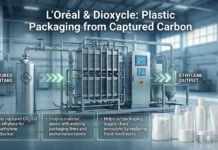












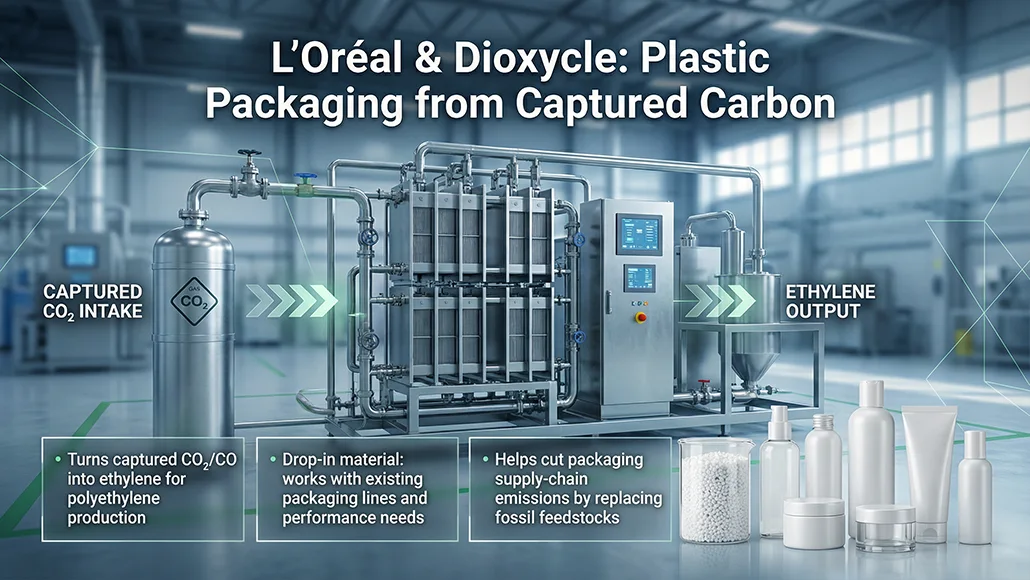

French clean-chemicals startup Dioxycle has entered a multi-year collaboration with cosmetics company L’Oréal to produce polyethylene from captured carbon emissions, marking a step toward alternative raw materials for plastic packaging. The Dioxycle and L’Oréal partnership focuses on carbon electrolysis technology that converts carbon monoxide or carbon dioxide into ethylene, a core chemical used to manufacture polyethylene plastics. For the beauty industry, which depends heavily on plastic packaging, the initiative highlights increasing interest in technologies designed to reduce reliance on fossil-based feedstocks while maintaining existing performance standards.
Polyethylene is among the most widely used plastics globally and is common in packaging for cosmetics and personal care products. Conventional production relies on petrochemical refining, where fossil fuels are processed to generate ethylene. Dioxycle’s technology aims to substitute that fossil input with captured emissions. Through an electrochemical process, the company’s carbon electrolyzer converts CO or CO₂ into ethylene, which can then be used to produce polyethylene. Because the resulting material is chemically identical to conventional polyethylene, it can be integrated into existing packaging production systems without requiring significant changes to manufacturing infrastructure.
The technology is positioned as an additional pathway within broader sustainability strategies for packaging. Mechanical recycling, chemical recycling, and bio-based materials remain central to packaging decarbonization efforts, but carbon-derived chemicals could provide another potential source of non-fossil carbon for industries where material specifications are tightly defined. Packaging also represents a significant share of environmental impact for consumer brands. For many companies, Scope 3 emissions those linked to purchased materials and supply chains account for the largest portion of their overall carbon footprint. Using polyethylene produced from captured carbon could help reduce emissions associated with plastic packaging while maintaining durability, safety, and compatibility with existing product formats.
The Dioxycle and L’Oréal collaboration reflects a broader shift in how large consumer brands are engaging with emerging climate technologies. Partnerships between established manufacturers and early-stage startups can provide real-world markets for new materials, allowing companies to test whether technologies developed in laboratories can scale to industrial production. Industry analysts increasingly view such collaborations as an important step in moving carbon-conversion technologies from demonstration toward commercial deployment.
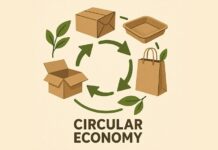
Founded in 2021, Dioxycle focuses on technologies designed to transform industrial emissions into chemical feedstocks. Beyond the L’Oréal collaboration, the company is developing systems intended to retrofit existing industrial facilities, allowing them to convert captured emissions into widely used chemicals such as ethylene. The startup has raised roughly $40 million from investors including Breakthrough Energy Ventures, Lowercarbon Capital, and Gigascale Capital. Its approach aligns with a broader push toward circular carbon systems, where emissions from heavy industry are reused as inputs for manufacturing rather than released into the atmosphere. If technologies such as carbon electrolysis can scale effectively, they could reshape how industries source basic chemical building blocks, potentially influencing supply chains that extend far beyond cosmetics packaging.