














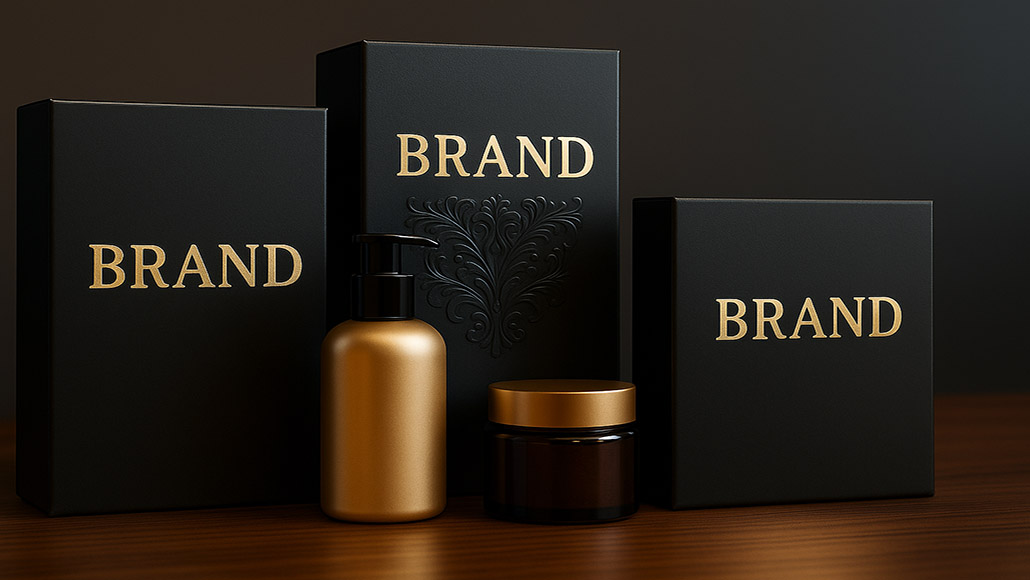

In the globalised economy of consumer products and industrial supply chains, packaging is so much more than a container; it’s a marketing vehicle. To companies in markets such as beauty, beverages, confectionery, or nutraceuticals, packaging is frequently the first tangible contact that sets the tone for how this product is perceived. Brands are investing in high-end printing methods to provide visual and tactile quality to packaging, as buying decisions depend on these as well.
The presentation standards for packaging are increasing, with consumer-facing brands fighting for attention both on physical store shelves and in digital catalogues. What was previously viewed as embellishment is now realised as brand differentiation. Packaging has, in reality, become an unseen salesman—and the way it is printed significantly contributes to what it sells.
Benefits of Premium Printing
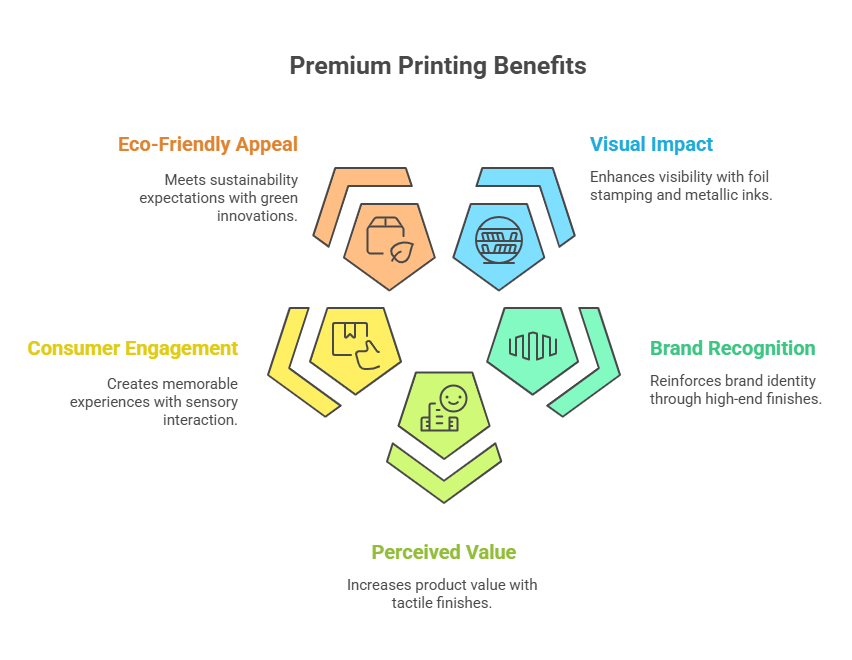
Visual Impact: Foil stamping, spot UV, and metallic inks draw attention instantly and boost shelf visibility.
Brand Recognition: High-end finishes accentuate brand attributes, logos, taglines, or product details, making customers recall and distinguish products.
Perceived Product Value: Tactile finishes like embossing or soft-touch coatings enhance the way customers perceive the quality and value of a product.
Consumer Engagement: Richer textures and finishes provide sensory interaction, making unboxing more memorable and experiential.
Eco-Friendly Appeal: Premium printing techniques now feature recyclable inks, water-based varnishes, and compostable foils, addressing increasing sustainability expectations.
From Technique to Execution: The Print Landscape Today
Innovations are pushing the limits of what’s achievable on packaging surfaces across printing formats. Offset printing continues to be a favourite for crisp reproduction of images and is best suited for high-volume folding cartons. Flexography, long the standard in flexible packaging, is being upgraded through LED curing, finer plates, and expanded gamut inks to provide more precise graphics. Gravure is a top choice for premium flexible packaging given its capacity to print consistent, high-opacity coatings over extended runs.
In recent times, speed, adaptability, and potential for personalisation have made digital printing more popular than ever. Digital processes enable brands to quickly try out new packaging concepts or implement regional and seasonal differences with minimal waste, as printing plates are not needed. Digital presses have also become compatible with a multitude of substrate possibilities and speciality inks, making them valuable for the premium as well as mid-tier product lines. Notably, digital printing also facilitates integration with QR codes and smart packaging functionality to help link physical products with digital experiences.
Premium effects are now being integrated into these workflows. Cold foil applications, for example, are now possible at high speed with zero waste. Textured coatings can be added inline, minimising passes and saving energy. These developments make premium printing techniques available not only to luxury brands but also to high-volume producers looking for design differentiation without compromising scalability.
Sustainability Meets Sophistication
Historically, premium printing techniques were criticised for their environmental footprint, particularly foils, laminates, and coatings that thwarted recyclability. But technological innovations over the past few years have started to harmonise luxury visual appeal with sustainable design. Water-based inks, low-VOC coatings, and recyclable cold foils are now standard in the industry. Large industry associations such as the European Packaging and Packaging Waste Directive and the Sustainable Packaging Coalition have issued guidelines promoting the utilisation of materials that can be processed within standard recycling streams.
Some paperboard suppliers now provide substrates pretreated for foil compatibility or optimised for minimal coating use. Such developments enable packaging designers to have the same high-end effects—gloss, shine, tactility—without compromising recyclability or downstream processing. It’s a significant shift, particularly as retailers and brand owners begin to use packaging scorecards to measure supplier performance on sustainability indicators.
High-end printing methods are no longer in conflict with circular design. Rather, they are becoming a means to present environmental values without compromising on aesthetics or functionality. To brand owners, this double advantage translates into high-end packaging now being compatible with company ESG initiatives—a victory for design and sustainability as well.
Smart Packaging and the Role of Print Innovation
The evolution of premium printing is at the crossroads of technology and design. As smart packaging is a new trend among both the FMCG and pharmaceutical industries, printing now has a function not just in appearance but in information delivery as well. Specialised printing processes like infusing NFC tags, temperature-reactive inks, and invisible security graphics can be done, and when implemented effectively, these technologies contribute functional value in addition to affirming a premium image.
For instance, thermochromic inks, which are temperature-sensitive and change colour accordingly, are applied more and more frequently on beverage packaging to mark ideal drinking temperatures. AR markers that can be read by a smartphone can also be printed directly onto labels, opening up interactive brand content when scanned. Such technologies depend upon precision printing and involve careful choice of ink chemistry and substrate compatibility. In this case too, high-end printing techniques serve not only form but also function.
Notably, the use of smart features is now becoming economically feasible at scale. With more advanced digital printing, barriers for introducing intelligent elements are declining.
High-End Print as a Supply Chain Advantage
For businesses, premium printing techniques may decide buyer perception at distribution, wholesale, or retail levels. Premium packaging can support pricing strategies and build brand reputation. Further, it can help to leave lasting impressions at trade shows, pitches, or sampling initiatives. It shows that a brand is not competing solely on price but also on presentation, positioning, and quality.
From a supply chain perspective, brand teams and packaging converters need to collaborate to ensure that creativity is aligned with operational feasibility. Certain considerations like Ink adhesion, substrate compatibility, machine speed, and finish durability have to be factored in at the early stages of the design. Print enhancements must withstand warehousing, transportation, and point-of-purchase display conditions without damage—particularly in global shipments. When done right, premium printing is a seamless part of the production cycle, rather than an added embellishment.
Premium printing isn’t just about looks. It is also about performance—how the package performs, communicates, and drives sales along the supply chain. That’s particularly true in an age when packaging must be more than protective to act as a persuasive.
Conclusion
By merging beauty, narrative, sustainability, and functionality, premium printing methods are defining a new era of packaging. For owners, suppliers, and design experts alike, insight into these methods is no longer a choice. It’s key to building packaging that resonates, converts, and stands the test of time.
Through the use of appropriate visual, tactile, and performative enhancements, companies can unlock tremendous branding potential that simply isn’t available through standard print techniques. As technology advances and green standards continue to increase, premium printing techniques will lead the way in packaging innovation—illustrating that in the commercial landscape, how you show is just as important as what you show.