






















Key Takeaways
- Robotic pre-feeders, stackers, and palletizing systems significantly reduce manual handling and safety risk in large-format corrugated plants.
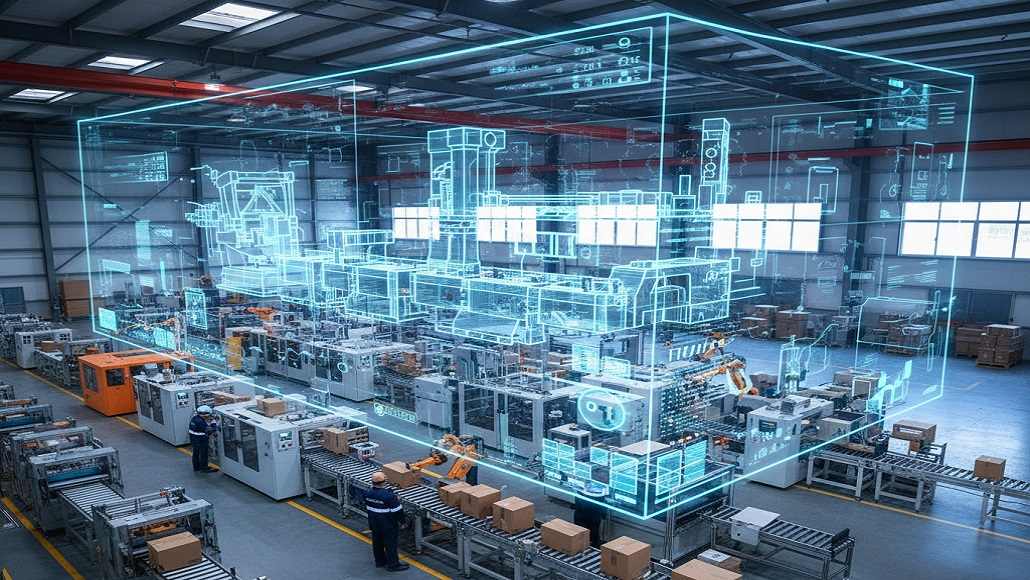
- Automated die-cutting, printing, folding, and gluing modules create continuous, integrated production lines from board input to finished, wrapped pallets.
- AI-driven scheduling and real-time monitoring tools optimize job sequencing, reduce changeover losses, and increase overall equipment effectiveness.
- Predictive maintenance based on sensor data reduces unplanned downtime and stabilizes throughput over long production runs.
- Automation enables plants to run extended or lights-out shifts while maintaining consistent quality and repeatable performance.
Large-format corrugated operations sit at the intersection of heavy materials, high-speed converting, and escalating customer expectations for just‑in‑time delivery. In this context, automation has moved from “nice to have” to a structural requirement for remaining competitive. Corrugated plants that still depend heavily on manual board feeding, stacking, and palletizing are seeing rising labor costs, higher injury risks, and variability in output that customers are no longer willing to tolerate. By contrast, facilities that systematically deploy corrugated production automation are proving that throughput, quality, and safety can all improve simultaneously.
Robotic material handling is often the first visible sign of this shift. Automatic pre-feeders and robotic loaders now take full stacks of corrugated board and feed them precisely into flexo folder‑gluer and rotary die‑cutter lines without manual lifting. These systems can align, square, and buffer boards at speeds that match the fastest converting modules, which removes a major bottleneck familiar to plant managers. In parallel, robotic stackers at the outfeed end collect finished boxes, create stable stacks, and transfer them seamlessly to automated palletizing cells. The result is a continuous flow from raw sheet to finished stack that significantly reduces manual touches and ergonomic risk.
Automated die‑cutting and converting lines take this concept further by integrating printing, slotting, die‑cutting, folding, gluing, and bundling into a single, orchestrated line. Modern large‑format flexo folder‑glu ers can handle multi‑up layouts for oversized boxes while maintaining tight registration and crease accuracy. Servo‑driven controls, automatic plate changes, and recipe management systems enable fast changeovers even for complex jobs. Once boxes exit the converting section, inline strappers secure bundles before they enter robotic palletizers that automatically build pallet patterns optimized for transport stability. This end‑to‑end automation dramatically reduces variability and supports higher sustainable line speeds than manual operations could support safely.
Palletizing and end‑of‑line automation carry direct economic impact. Robotic palletizing systems can handle varying case sizes, weights, and patterns without major re‑tooling, which is critical as SKU counts continue to rise. Robots equipped with multi‑zone vacuum grippers, side clamps, or custom end effectors can stack large-format boxes that would be unsafe for manual operators to handle repeatedly. Once pallets are complete, automatic stretch‑wrapping and labeling systems prepare loads for outbound shipment, ensuring consistent containment force and traceability. This consistency reduces transit damage, which in turn lowers claims and reinforces relationships with brand owners.
Beyond physical automation, AI‑driven scheduling and planning tools are now central to corrugated production automation strategies. Traditional scheduling often relied on planner experience and static rules that could not fully account for real‑time machine conditions, changeover implications, or demand volatility. Newer systems ingest live data from corrugators, converting lines, and warehouse systems to optimize sequencing based on run length, flute combinations, ink changes, and delivery commitments. Machine learning models continuously refine these decisions as they observe how different schedules impact throughput, waste, and changeover duration in practice.
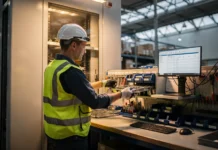
Real‑time monitoring and predictive maintenance sit alongside scheduling as critical enablers. Sensors on motors, bearings, and drive systems monitor vibration, temperature, and load conditions that indicate emerging faults long before failures occur. When analytics detect abnormal patterns, maintenance teams receive targeted alerts that allow them to intervene during planned downtime rather than reacting to catastrophic failures in the middle of key runs. Over time, this approach reduces unplanned downtime and increases overall equipment effectiveness (OEE), especially on critical assets such as corrugators and large flexo folder‑glu er lines.
One of the strategic advantages of automation lies in the ability to decouple plant throughput from direct labor availability. With automated pre‑feeders, robotic stackers, and palletizers, fewer operators can oversee more equipment while focusing on higher‑value tasks such as quality checks, setup optimization, and performance analysis. This shift not only improves productivity per headcount, but also makes the plant less vulnerable to labor shortages and skill gaps that many regions are experiencing. In addition, automation tends to standardize work, which simplifies operator training and supports more consistent outcomes across shifts.
Quality consistency is another crucial benefit. Automated registration control, inline defect detection, and recipe‑based settings reduce the variability introduced by manual adjustments. Once a job is dialed in, the system can reproduce the same settings on subsequent runs, narrowing tolerances across print, die‑cut, and fold parameters. Inline measurement systems can automatically reject non‑conforming sheets and alert operators to process drift before large quantities of waste are produced. For brand owners, this consistency translates into fewer print defects, better fit in downstream packing operations, and more predictable color and structural performance.
Of course, the transition toward fully automated large-format corrugated production requires thoughtful implementation. Plants must assess which automation investments will yield the highest impact given their product mix, order profiles, and existing equipment base. Some sites start with robotic palletizing and automated pre‑feeders, while others begin with scheduling and data infrastructure to ensure they extract maximum value from future capital investments. Change management is equally critical; operators need training not only on how to interact with robots and automated lines, but also on how to interpret performance data and participate in continuous improvement activities.
From a strategic standpoint, automation creates a more scalable and resilient production platform. Plants equipped with automated corrugated production systems can absorb demand surges, support shorter lead times, and handle more frequent changeovers without sacrificing efficiency. They are better positioned to serve e‑commerce customers that expect rapid response and complex structural designs, as well as traditional customers requiring large batches of heavy-duty transit packaging. Ultimately, automation trends in large-format corrugated production are not just about replacing manual tasks; they are about redesigning the corrugated plant around data, consistency, and intelligent orchestration.