






















Key Takeaways
- Water-based inks reduce volatile organic compound emissions by 95% compared to traditional petroleum-based inks, improving worker safety and environmental protection
- Bio-derived inks from soy, vegetable oils, and renewable plant sources maintain print quality while eliminating reliance on fossil fuels
- Compostable substrates derived from plant-based materials enable complete end-of-life recyclability, supporting circular economy principles
- Low-migration inks specifically formulated for food contact applications prevent chemical transfer to packaged products, protecting consumer health
- Regulatory requirements including EU directives and consumer pressure increasingly mandate sustainable material selections across packaging applications
- Eco-friendly ink and substrate combinations often deliver improved print quality and color vibrancy compared to conventional alternatives
- Carbon footprint reduction through sustainable material selection enables brands to meet ESG commitments and appeal to environmentally conscious consumers
Contemporary packaging manufacturers operate within an increasingly complex regulatory and market environment where traditional performance metrics alone no longer suffice. Environmental regulations, consumer expectations, retailer requirements, and corporate sustainability commitments collectively create irresistible pressure toward eco-friendly inks and sustainable substrates. This transition represents far more than compliance with regulatory mandates it embodies fundamental recognition that environmental responsibility and commercial success are inseparable in contemporary consumer markets.
The evolution of eco-conscious packaging reflects both top-down regulatory pressure and bottom-up consumer demand. European Union regulations including the Single-Use Plastics Directive and Extended Producer Responsibility frameworks establish mandatory recycling and sustainable material requirements. Simultaneously, consumer research consistently demonstrates that 70-80% of shoppers factor environmental considerations into purchasing decisions, particularly for personal care, food, and beverage categories. Progressive brands recognize that sustainable packaging represents differentiation opportunity rather than mere compliance burden.
Water-Based Inks: Performance Without Environmental Cost
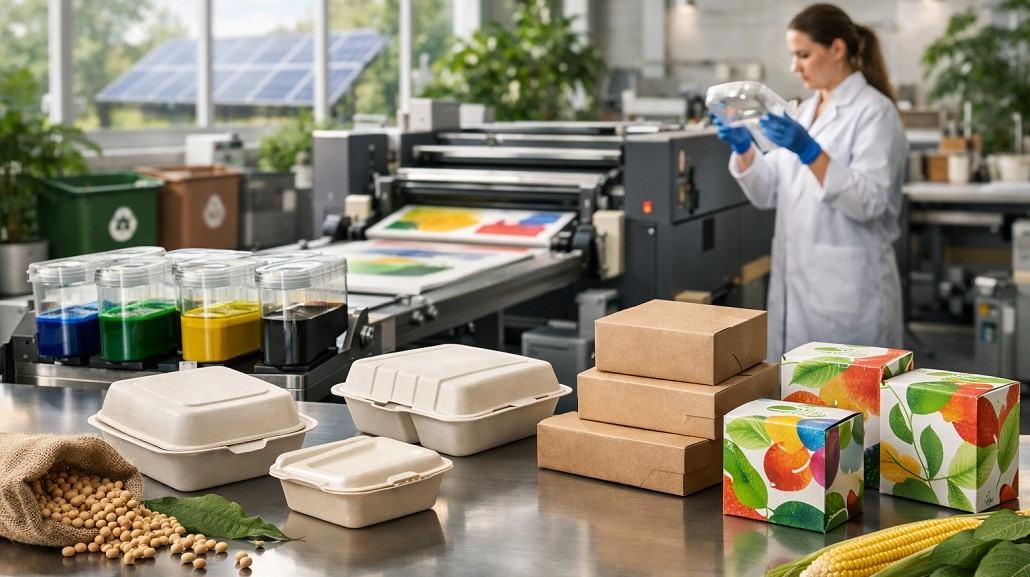
Water-based inks represent the most commercially significant eco-friendly printing ink category, achieving near-parity with traditional solvent-based alternatives on performance metrics while delivering dramatic environmental advantages. These inks employ water as the primary solvent rather than petroleum-derived organic compounds, fundamentally restructuring ink composition and environmental impact profiles. The substitution reduces volatile organic compound emissions by 95% compared to conventional inks, eliminating toxic fumes that harm worker health and contribute to atmospheric photochemical smog formation.
The health and safety advantages for workers prove particularly significant in high-volume printing facilities where prolonged exposure to VOC-laden air creates measurable health consequences. The transition to water-based inks immediately reduces workplace air quality problems, respiratory irritation, and long-term health risks associated with chronic solvent exposure. Regulatory compliance becomes simplified as facilities graduate from complex VOC emission controls and monitoring programs toward straightforward material handling procedures.
Environmental performance extends beyond workplace benefits. Water-based ink formulations employ natural pigments, renewable plant-derived resins, and biodegradable components rather than persistent synthetic chemicals. The reduced environmental persistence means printed materials particularly those entering composting streams break down naturally without accumulating in soil or water environments. This biodegradability proves particularly valuable for packaging destined for industrial composting facilities where microplastic contamination from conventional inks creates operational challenges.
Contrary to historical assumptions about performance tradeoffs, modern water-based inks achieve print quality metrics comparable or superior to conventional alternatives. Color vibrancy, registration accuracy, and image sharpness meet or exceed traditional ink performance. The precise pigment formulations and optimized carrier systems enable sophisticated color spaces supporting premium brand applications. Many industry observers argue that water-based inks actually improve print quality through enhanced color saturation and reduced substrate absorption variations.
Bio-Derived Inks: Renewable Resource Utilization
Bio-derived inks derived from sustainable agricultural sources including soy, vegetable oils, and renewable plant resins represent an expanding alternative to petroleum-based ink components. Soy-based inks utilize oil extracted from soybean crops, a renewable agricultural commodity available in abundant supply. The substitution of soy for petroleum components reduces fossil fuel consumption while supporting agricultural economies and rural communities.
The transition to bio-derived materials eliminates petroleum industry reliance without performance compromises. Soy inks deliver excellent color saturation, precise registration, and rapid drying characteristics comparable to conventional inks. The slightly lower viscosity and enhanced flowability of soy-based formulations often improve print quality and reduce substrate damage compared to traditional inks. For numerous applications, soy inks have become preferred rather than merely acceptable alternatives.
Beyond soy, emerging bio-derived materials include oils from algae, Chinese wood, cottonseed, tung, and linseed sources. These diverse feedstocks provide redundancy protecting against supply disruptions affecting any single agricultural commodity. Algae-based inks particularly attract attention as potentially carbon-negative materials algae cultivation simultaneously produces ink feedstock while removing atmospheric CO₂ and avoiding agricultural land competition with food production.
Low-VOC and Safe-for-Food-Contact Formulations
Low-migration inks specifically formulated for food contact applications address critical safety requirements ensuring printed ink components cannot transfer to packaged products. Food-contact regulations established by agencies including FDA, European Food Safety Authority, and similar bodies worldwide mandate that packaging materials cannot contribute harmful substances to food contents at levels exceeding established thresholds. These regulations drive development of ink formulations employing carefully selected colorants, resins, and solvents with established safety profiles and minimal migration tendency.
Modern low-migration ink systems achieve regulatory compliance through sophisticated formulation chemistry rather than simply reducing known harmful substances. The inks employ oligomers short-chain polymers that cannot migrate through packaging material barriers rather than small-molecule compounds that penetrate substrates. These molecular-scale designs enable excellent print performance while providing absolute certainty regarding food safety compliance.
Manufacturers increasingly certify low-migration inks through independent testing protocols and regulatory submissions, enabling transparent documentation of compliance for customers and regulators. This transparency proves increasingly essential as regulatory requirements tighten and consumer awareness regarding food safety increases. Brands can confidently communicate to consumers that packaging materials meet rigorous safety standards, addressing legitimate concerns regarding chemical migration from printed packaging.
Compostable Substrates and End-of-Life Recyclability
Compostable substrates derived from plant-based materials including polylactic acid (PLA), polyhydroxyalkanoates (PHA), and cellulose-based materials enable complete end-of-life recyclability within established composting infrastructure. These materials break down under industrial composting conditions within 180 days the standard timeframe for commercial composting operations without generating persistent residues or microplastics. The resulting compost enriches soil and completes nutrient cycles rather than persisting in landfills or ecosystems.
PLA derived from corn starch and other renewable sources provides mechanical properties comparable to conventional plastics while maintaining compostability in industrial facilities. The material functions effectively across flexible packaging, rigid containers, and film applications. As industrial composting infrastructure expands across developed markets, PLA adoption accelerates, particularly for applications including produce packaging, prepared foods, and specialty items where premium sustainability positioning justifies material cost premiums.
Recyclable substrates optimized for conventional recycling infrastructure prove equally important for regions lacking industrial composting capacity. Paper-based materials including cardboard, kraft, and specialty papers integrate naturally into existing paper recycling streams with minimal processing requirements. Plastic substrates formulated from mono-material polymers enable high-quality recycling without contamination from multi-layer composite structures that jam sorting equipment and contaminate recycled material streams.
The substrate selection directly influences whether packaging achieves true circular economy characteristics or merely delays landfill disposition. Thoughtful material selection considering regional recycling infrastructure ensures packaging genuinely enters recovery streams rather than contaminates them. Progressive brands increasingly conduct material-specific recycling infrastructure audits, selecting substrates based on actual recovery capabilities within their primary markets rather than aspirational recycling potential.
Regulatory Compliance and Mandatory Sustainability Standards
Regulatory requirements increasingly mandate sustainable material selections, transforming environmental considerations from competitive differentiators to compliance imperatives. The European Union’s Single-Use Plastics Directive restricts single-use plastic packaging, driving substitution toward paper, compostable, and alternative materials. Extended Producer Responsibility frameworks establish manufacturer responsibility for end-of-life packaging recovery and recycling, creating direct financial incentives favoring recyclable and compostable materials over conventional plastics destined for landfills.
Packaging Material Restrictions established by various jurisdictions increasingly target conventional inks and coatings containing substances of concern. Per- and polyfluorinated compounds (PFOA) used in non-stick coatings face global restriction due to environmental persistence and bioaccumulation characteristics. Bisphenol A (BPA) and similar endocrine disrupting chemicals face mandatory phase-outs in numerous regions. Compliance with evolving restrictions drives reformulation toward sustainable printing inks free from substances of concern.
Consumer Perception and Brand Differentiation
Consumer research consistently demonstrates that environmental sustainability significantly influences packaging purchasing decisions, particularly among younger demographics. Surveys indicate that 70-80% of consumers consider environmental factors when evaluating product choices, with many actively preferring sustainably packaged alternatives. This consumer preference creates genuine market differentiation opportunity for brands embracing sustainable packaging innovation.
Premium positioning through sustainability proves particularly effective in affluent consumer segments where environmental consciousness aligns with willingness to pay for sustainable alternatives. Organic food brands, natural personal care companies, and specialty beverage producers leverage sustainable packaging as brand authenticity expression. The premium material costs associated with eco-friendly inks and substrates often disappear within premium market pricing structures where consumers expect and actively seek superior environmental performance.
Brand reputation risks associated with perceived environmental irresponsibility prove substantial in contemporary social media environments. Conversely, demonstrated commitment to sustainability substantiated through third-party certifications, transparent material sourcing, and credible environmental claims generates substantial brand loyalty and advocacy benefits. The reputational value of sustainable packaging innovation often exceeds direct material cost differentials.
Performance Verification and Third-Party Certification
Industry standards and third-party certification systems provide transparency regarding sustainable material claims, enabling consumers and procurement professionals to verify environmental credentials. Certifications including Cradle to Cradle, ISO 14001, FSC certification, and compostability standards (DIN EN 13432, ASTM D6868) provide objective evidence of sustainable attributes and appropriate material utilization.
Manufacturers increasingly pursue certifications addressing specific consumer concerns including carbon footprint (Product Carbon Footprint, Verified Carbon Neutral), compostability (industrial and home compostability standards), and recycled content verification. These credible third-party attestations address inevitable consumer skepticism regarding environmental claims, providing defensible documentation supporting marketing assertions.
Supply Chain and Scalability Challenges
The transition to sustainable inks and substrates encounters significant supply chain challenges as manufacturing capacity adjusts to accommodate shifting demand. Bio-derived ink production requires specialized processing facilities and quality control protocols different from conventional ink manufacturing. Many ink suppliers lack experience with water-based formulations or bio-derived materials, requiring training, equipment modifications, and quality assurance protocol development.
Substrate suppliers face comparable challenges as they develop compostable and recyclable material production capacity. Industrial composting infrastructure remains limited in many regions, creating market barriers to compostable substrate adoption despite strong environmental advantages. The circular dependency composting facility availability influences substrate demand, which influences processing facility investment creates coordination challenges requiring industry collaboration and policy intervention.
Regulatory harmonization would significantly improve implementation feasibility. Currently, divergent requirements across jurisdictions different VOC thresholds, incompatible compostability standards, conflicting recycled content regulations complicate supply chain design and increase compliance complexity. Progressive industry organizations and governmental bodies increasingly recognize that harmonized standards would accelerate sustainability transition while reducing compliance costs.
Economic Analysis and Total Cost Ownership
Conventional economic analysis focusing solely on material acquisition cost often misses substantially lower lifetime costs of sustainable packaging alternatives. Water-based inks typically cost 10-15% premium over conventional solvent-based alternatives, yet reduce overall operational costs through simplified ventilation requirements, eliminated hazardous waste disposal costs, and reduced worker safety program expenses. The total cost of ownership often favors sustainable alternatives despite higher material acquisition cost.
Compostable and recyclable substrates frequently command 5-20% material cost premiums compared to conventional alternatives. These premiums should be evaluated against avoided landfill tipping fees, extended producer responsibility compliance costs, and regulatory risk mitigation benefits. For many applications, premium material costs disappear entirely when total cost of ownership is properly analyzed across full product lifecycle.
Conclusion
The transition toward eco-friendly inks and sustainable substrates represents far more than regulatory compliance or environmental idealism it reflects economic reality and evolving market dynamics. Consumer preferences, regulatory mandates, corporate sustainability commitments, and competitive differentiation all converge toward mandatory adoption of sustainable packaging materials. Manufacturers embracing this transition early position themselves advantageously as regulatory requirements tighten and consumer expectations accelerate. The technological maturity of sustainable alternatives, combined with improving economics and expanding supply chain infrastructure, transform sustainable packaging from niche differentiation to industry standard. Continued innovation will further improve performance characteristics, reduce cost premiums, and expand application scope, accelerating the transition toward genuinely sustainable packaging systems.