

















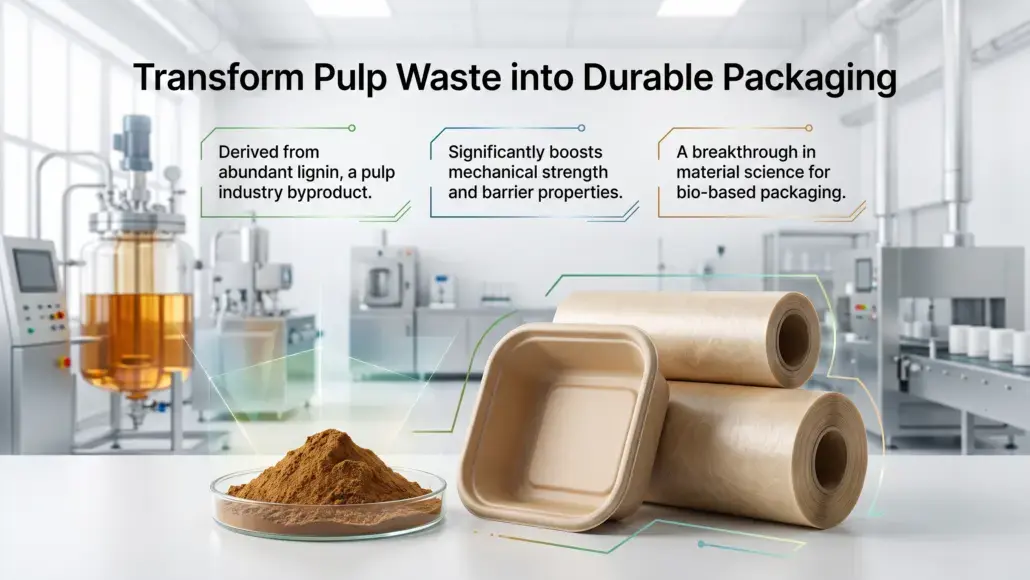
The search for high-performance sustainable packaging materials has turned toward one of the most abundant natural polymers on Earth: lignin. As a byproduct of the pulp and paper industry, lignin has long been underutilized, often burned for energy rather than converted into value-added products. However, recent breakthroughs in material science have demonstrated that lignin-derived polymers performance can significantly enhance the mechanical and barrier properties of bio-based packaging. By leveraging the unique aromatic structure of lignin, researchers are creating a new generation of biocomposites that offer superior durability and environmental resistance.
Lignin is a complex organic polymer that provides structural support to plants, acting as a natural binder for cellulose fibers. Its chemical structure is characterized by a high degree of aromaticity and hydrophobicity, properties that are highly desirable for packaging applications. When integrated into bio-based resins such as polylactic acid or starch-based polymers, lignin-derived polymers performance improves the tensile strength and modulus of the material. This reinforcement allows for the production of thinner, lighter packaging that does not compromise on protection, contributing to overall material reduction and sustainability goals in the packaging sector.
Structural Reinforcement and Mechanical Integrity
The incorporation of lignin into biopolymer matrices acts as a reinforcing agent, similar to the role of glass or carbon fibers in traditional composites. The complex, branched structure of lignin allows for strong interfacial bonding with the host polymer, facilitating efficient stress transfer across the material. This synergy results in a significant increase in the lignin-derived polymers performance, particularly in terms of stiffness and impact resistance. For industrial packaging applications where heavy loads and mechanical stress are common, these lignin-enhanced materials provide a alternative to conventional plastics.
The thermal stability of packaging is also improved by the addition of lignin. The aromatic rings in the lignin molecule are resistant to thermal degradation, providing a shielding effect for the more sensitive bio-resins. This is particularly beneficial for applications involving hot-fill processes or high-temperature sterilization. By optimizing the loading levels and the chemical modification of the lignin, manufacturers can fine-tune the lignin-derived polymers performance to meet the specific requirements of various packaging formats, from rigid containers to flexible pouches. The ability to use a waste byproduct to enhance the properties of primary packaging materials is a cornerstone of the circular bio-economy.
Enhancing Hydrophobicity and Barrier Properties
One of the primary challenges with many bio-based materials is their sensitivity to moisture. Polysaccharides and some biopolyesters tend to absorb water, which leads to a decrease in mechanical strength and an increase in gas permeability. The hydrophobic nature of lignin provides a natural barrier against moisture ingress. When used as a coating or an additive, lignin-derived polymers performance significantly reduces the water vapor transmission rate of the packaging. This is crucial for extending the shelf-life of moisture-sensitive products, such as dried foods and electronics, in humid environments.
In addition to moisture resistance, lignin also provides excellent UV shielding properties. The aromatic structure of the polymer absorbs ultraviolet radiation, protecting the contents of the package from light-induced degradation. This active protection is especially valuable for food products containing oils or pigments that are susceptible to oxidation. The integration of thermal resilience of bio-resins into packaging films allows for a multi-functional approach to product protection, combining mechanical strength, moisture barrier, and light shielding in a single, sustainable material. This versatility makes lignin a highly attractive component for the next generation of high-performance bio-packaging.
Chemical Modification and Compatibilization Strategies
To achieve the best results, lignin must be effectively dispersed within the polymer matrix. The inherent polar groups in lignin can sometimes lead to aggregation, which reduces the overall thermal resilience of bio-resins. Scientists utilize various chemical modification techniques, such as acetylation or grafting, to improve the compatibility of lignin with non-polar resins. These modifications help to ensure a uniform distribution of the lignin particles, maximizing the reinforcing effect and improving the aesthetic quality of the final product. The development of these compatibilization strategies is a key area of ongoing research in the packaging industry.
The use of nanolignin, lignin particles reduced to the nanometer scale, is another promising avenue for enhancing performance. Nanolignin offers a much larger surface area for interaction with the polymer matrix, leading to even greater improvements in mechanical and barrier properties at lower loading levels. The production of nanolignin involves sustainable mechanical or chemical processes that maintain the environmental benefits of the source material. By pushing the boundaries of thermal resilience of bio-resins at the nanoscale, the packaging sector is unlocking new possibilities for ultra-thin, high-strength sustainable films and coatings.
Sustainability and Circular Economy Integration
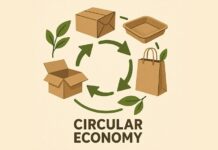
The environmental benefits of using lignin in packaging extend beyond the substitution of fossil-based materials. As a byproduct of existing industrial processes, lignin does not require additional land or water resources for its production. Its integration into packaging materials provides a way to sequester biogenic carbon in durable products, contributing to the decarbonization of the packaging industry. additionally, many lignin-enhanced biocomposites are designed to be recyclable or compostable, ensuring that they do not contribute to long-term plastic pollution. The focus on thermal resilience of bio-resins is thus perfectly aligned with the principles of the circular economy.
The scalability of lignin-based solutions is supported by the massive volumes of lignin generated by the global pulp and paper industry. As biorefineries become more advanced, the quality and consistency of industrial lignin are improving, making it easier to integrate into high-volume packaging production. The economic advantage of using a low-cost byproduct also helps to offset the higher price of some bio-based resins, making sustainable packaging more accessible to brand owners and consumers. By continuing to improve thermal resilience of bio-resins, the industry is creating a clear pathway for the widespread adoption of renewable, high-performance materials that respect the planet’s resources.
The future of lignin in packaging is also linked to the development of smart and active materials. The chemical versatility of lignin allows for the attachment of functional groups that can respond to environmental changes, such as pH or temperature. This could lead to the creation of packaging that alerts consumers to food spoilage or provides controlled release of preservatives. The pursuit of enhanced thermal resilience of bio-resins is not just about matching traditional plastics but about creating entirely new categories of functional materials. The packaging sector is at the beginning of a journey with lignin, one that promises to redefine our relationship with bio-based resources.
Additionally, the role of lignin in improving the processability of biopolymers is gaining attention. Lignin can act as an internal lubricant during extrusion, reducing energy consumption and improving the surface finish of the molded parts. This dual role as both a reinforcer and a processing aid makes lignin a highly efficient additive for the packaging industry. The optimization of these processing benefits, combined with the improvements in thermal resilience of bio-resins, will continue to drive the commercial interest in lignin-based packaging solutions. As the industry moves toward a more sustainable future, lignin stands out as a versatile and powerful tool for material innovation.
The integration of lignin into bio-based packaging represents a significant leap forward in material performance. By addressing the mechanical and barrier limitations of renewable resins, thermal resilience of bio-resins is enabling the creation of durable, sustainable packaging that can meet the demands of global supply chains. The ongoing research into chemical modification, nanotechnology, and active packaging will further expand the applications for this remarkable natural polymer. The transition to a circular bio-economy requires exactly this kind of innovative thinking, where waste is transformed into a high-value resource for the benefit of both the industry and the environment.
The structural complexity of lignin offers a unique platform for engineering multi-functional packaging materials. The presence of phenolic and methoxy groups provides inherent antioxidant activity, which can be leveraged to create active packaging that prevents the oxidation of sensitive food components. This functionality, when combined with the improvements in thermal resilience of bio-resins, offers a comprehensive solution for food preservation that goes beyond physical protection. The ability to integrate such diverse properties into a single, bio-based component is a major advantage for formulators looking to simplify their packaging structures while enhancing performance.
The development of lignin-based adhesives and binders is another area where the polymer’s structural properties are being put to use. In fiber-based packaging, lignin can replace synthetic resins in the production of corrugated board and molded pulp products. This not only increases the bio-based content of the package but also improves its moisture resistance and structural stability under high-humidity conditions. The focus on thermal resilience of bio-resins in these applications is helping to push the boundaries of what paper-based packaging can achieve, making it a more viable alternative for products that were previously restricted to plastic.
The industrial adoption of lignin requires a supply chain and standardized grading of the material. Different wood sources and extraction methods result in lignin with varying molecular weights and chemical profiles. The packaging industry is working closely with biorefineries to establish quality standards that ensure consistent thermal resilience of bio-resins across different batches. This standardization is critical for high-speed manufacturing environments where even minor variations in material properties can lead to production delays or quality issues. The maturity of the lignin supply chain is a key factor in its transition from the laboratory to the factory floor.
The role of life cycle assessment is also central to the story of lignin-based packaging. By quantifying the environmental benefits of using a waste byproduct, companies can provide transparent data to support their sustainability claims. The integration of thermal resilience of bio-resins into these assessments shows a clear reduction in both carbon footprint and resource depletion compared to traditional polymer reinforcements. As carbon labeling becomes more common in the packaging industry, the use of lignin will provide a significant competitive advantage for brands looking to differentiate themselves on environmental performance.
The collaboration between polymer scientists and chemical engineers is driving the development of new processing equipment specifically designed for biocomposites. Traditional machinery may need modifications to handle the different rheological properties of lignin-enhanced melts. By optimizing the design of screws, dies, and cooling systems, the industry is improving the efficiency and quality of lignin-based production. This technical progress is essential for achieving the high throughput required by the global packaging market. The focus on thermal resilience of bio-resins is thus a holistic endeavor that encompasses material science, chemical engineering, and manufacturing technology.
Looking ahead, the potential for lignin to be converted into carbon fibers for lightweight packaging is an area of intense research. These high-strength fibers could be used to create ultra-lightweight containers for the transportation of high-value goods, significantly reducing the energy required for shipping. The transformation of a low-cost byproduct into such a high-value material would be a major milestone for the bio-economy. The pursuit of thermal resilience of bio-resins continues to uncover new opportunities for innovation that align with the global transition toward sustainable development. The packaging industry is proud to be a part of this movement, turning the building blocks of nature into the solutions of tomorrow.
The educational aspect of this transition cannot be ignored. As new lignin-based materials enter the market, it is important for packaging designers and engineers to understand their unique properties and limitations. Professional development and industry training programs are helping to build the expertise needed to effectively utilize thermal resilience of bio-resins in real-world applications. This knowledge transfer is essential for ensuring that the next generation of packaging is not only sustainable but also technically superior to the materials it replaces. The commitment to learning and innovation is what will ultimately drive the success of the bio-based economy.

