





















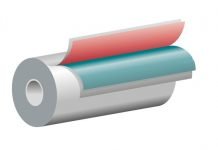

In the modern industrial landscape, where “just-in-time” manufacturing and lean production are the standard, the efficiency of a production facility is often determined by its narrowest bottleneck. For many sectors, that bottleneck has historically been the labeling stage, where the transition from a finished product to a retail-ready item occurs. However, the widespread adoption of pressure-sensitive labels high-speed packaging has turned this challenge into a distinct competitive advantage. These labels, which consist of a face stock, a specialized pressure-sensitive adhesive, and a release liner, are engineered to perform under the extreme mechanical and thermal stresses of fully automated lines. By eliminating the complexities of “wet” glue systems or heat-activated methods, they allow manufacturers to push their equipment to its physical limits while maintaining a high standard of quality and visual presentation that consumers expect.
The Engineering Behind High-Speed Labeling Performance
To truly understand why pressure-sensitive labels are so effective on high-speed packaging lines, one must look closely at the advanced material science involved in their multi-layered construction. High-speed application requires a delicate and precise balance between “tack” the immediate, aggressive stickiness of the label upon contact and “shear,” which is the adhesive’s internal resistance to sliding or “oozing” under pressure. On a line moving at hundreds or even thousands of units per minute, even a micro-second delay in adhesion can lead to misaligned labels, “flagging” edges, or catastrophic machine jams. Modern industrial labeling systems utilize specially formulated synthetic adhesives that can bond instantly to a wide variety of materials, including glass, plastic, metal, and corrugated cardboard, even in the presence of surface moisture or condensation common in the beverage industry. Furthermore, the development of ultra-thin, high-strength synthetic liners has allowed for significantly more labels to be wound onto a single roll, reducing the frequency of line changeovers and dramatically boosting packaging line efficiency.
Integrating Automated Labeling Solutions into the Production Flow
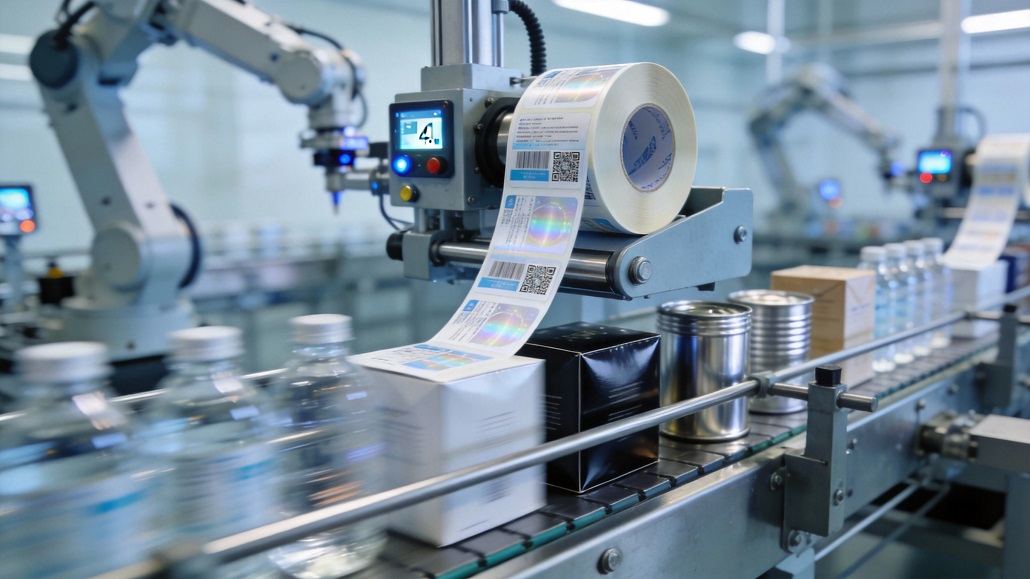
The true power of pressure-sensitive labels high-speed packaging lies in their native compatibility with modern robotics, high-speed vision systems, and advanced sensor technology. Unlike older, more traditional labeling methods that require precise temperature control, specific humidity levels, or significant drying time, pressure-sensitive systems are essentially “plug and play” in nature. They can be seamlessly integrated into modular labeling heads that use vacuum belts, “wipe-on” applicators, or even air-blow systems to place labels with sub-millimeter accuracy at blistering speeds. This level of precision is essential for modern products that require secondary labeling, such as promotional “instant win” stickers or mandatory regulatory information that must be placed in a specific, small area. By using advanced vision systems that scan each individual product as it approaches the labeling head, these automated labeling solutions can adjust the timing and physical position of the label in real-time, ensuring a perfect finish every time, regardless of the product’s orientation on the belt.
Case Study: The Beverage Industry and High-Speed Demand
The global beverage sector provides perhaps the most perfect and demanding illustration of the necessity for pressure-sensitive labels high-speed packaging. On a high-speed bottling line for water or soft drinks, machines can process upwards of 60,000 to 100,000 units per hour. In such an extreme environment, any interruption in the labeling process no matter how brief—results in thousands of lost units and significant financial waste in terms of both product and labor. Pressure-sensitive labels provide the extreme durability and “grab” needed to withstand the moisture, friction, and thermal changes of the bottling process, ensuring that the brand remains intact from the cold-fill cooler to the customer’s hands. Additionally, the ability to use “clear-on-clear” labels which give the sophisticated appearance of printing directly onto the bottle allows beverage brands to achieve a premium, high-end look without the prohibitive cost and slower speeds of screen-printed glass or plastic.
Driving Packaging Line Efficiency through Material Innovation
Beyond the mechanical speed of the applicators, the overall efficiency of the entire production line is being driven by continuous innovations in the labels themselves. We are currently seeing a significant move toward “linerless” labels, which completely eliminate the waste of the siliconized release liner and allow for up to twice as many labels to be stored on a single roll of the same diameter. This not only significantly reduces the environmental impact and waste disposal costs but also cuts the downtime required for roll changes in half, providing a direct boost to the bottom line. Furthermore, the development of “wash-off” adhesives is making it significantly easier for recycling facilities to remove labels from PET containers, supporting the global circular economy while maintaining the high-performance characteristics required for pressure-sensitive labels high-speed packaging. These material advancements ensure that industrial speed does not have to come at the expense of corporate sustainability goals.
Strategic Advantages in Supply Chain and Logistics
The benefits of pressure-sensitive labels high-speed packaging extend well beyond the factory floor and into the broader global logistics and e-commerce network. In the world of online retail, where thousands of unique and varying packages must be labeled and sorted every single hour, the reliability and readability of the label are paramount. A shipping label that peels off, smudges, or becomes unreadable in a high-speed automated sorter can lead to lost packages, shipping delays, and disgruntled customers. By using high-performance pressure-sensitive materials that can withstand the rigors of the “last mile” including extreme weather, rough handling, and friction logistics companies can ensure that their automated sorting systems remain operational and efficient at all times. This fundamental reliability is the hidden backbone of the modern global delivery network, facilitating the rapid and accurate movement of goods across international borders.
The Future of Industrial Labeling Systems and Industry 4.0
As we look toward the future, the role of pressure-sensitive labels high-speed packaging will only become more deeply integrated with the core principles of Industry 4.0 and the Smart Factory. We are moving toward “intelligent” labeling systems that can communicate directly with the facility’s central ERP (Enterprise Resource Planning) and MES (Manufacturing Execution Systems) in real-time. These advanced systems will be able to monitor the physical health of the labeling head, predict with high accuracy when a roll is about to run out, and even adjust label placement parameters based on the specific dimensions of a custom-sized or oddly shaped package detected by on-line sensors. By combining the physical speed of pressure-sensitive technology with the deep intelligence of modern data analytics, manufacturers will be able to achieve levels of throughput, flexibility, and mass-customization that were previously considered unimaginable. The era of the “uninterrupted, self-optimizing line” is finally within reach, with pressure-sensitive labels at its very heart.
The Role of UV-Cured Inks in High-Speed Labeling
Another technical factor contributing to the success of high-speed labeling is the use of UV-cured inks. In traditional printing, the time required for ink to dry can be a major limiting factor for speed. However, UV inks dry almost instantly when exposed to high-intensity ultraviolet light, allowing the labels to be printed, die-cut, and wound at incredible speeds without the risk of smearing or “set-off.” When these labels are then applied on the high-speed packaging line, their durability is already established. They are resistant to scratching, chemicals, and the scuffing that occurs as products are packed into secondary shipping cases. This synergy between ink technology and pressure-sensitive substrates ensures that the high-quality graphics required for brand impact are preserved, no matter how fast the production process moves.
Conclusion: Speed as a Strategic Asset
In conclusion, the transition to pressure-sensitive labels high-speed packaging is more than just a technical upgrade; it is a strategic repositioning of the packaging process as a driver of business growth. By enabling faster production, higher accuracy, and greater material flexibility, these labels allow brands to respond more quickly to market trends and consumer demands. As the global economy continues to demand more speed and more transparency, the importance of a reliable, high-performance labeling solution cannot be overstated. Manufacturers who embrace these automated labeling solutions will find themselves better equipped to handle the complexities of modern manufacturing, ensuring that their products move from the assembly line to the consumer’s doorstep with unmatched efficiency and style.