

























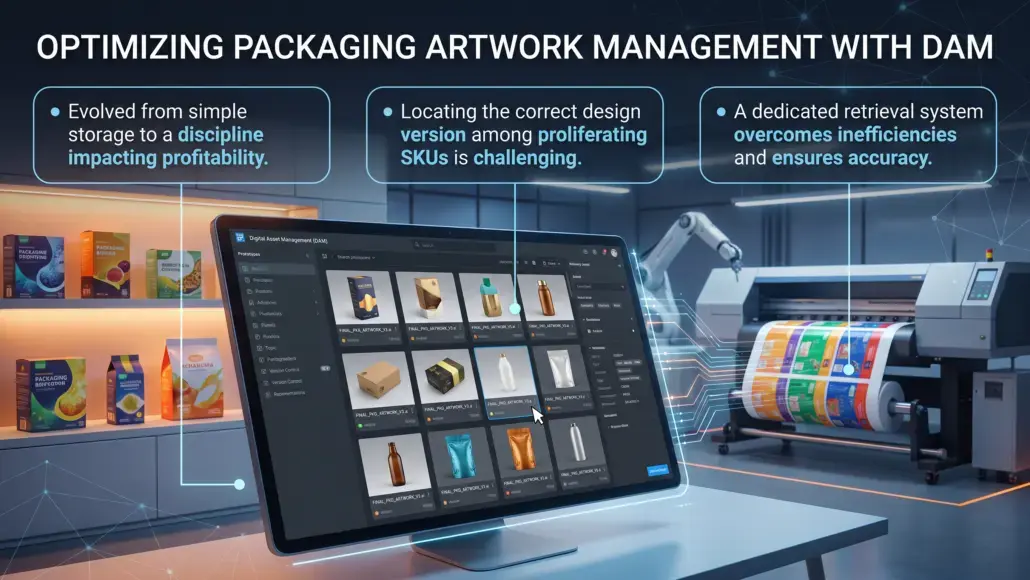

The management of complex graphic assets in the packaging industry has evolved from simple file storage into a sophisticated discipline that directly impacts the bottom line of brand owners. As the number of stock keeping units continues to proliferate, the challenge of locating the correct version of a design file becomes increasingly difficult without a structured approach. Implementing a dedicated system for packaging artwork retrieval allows organizations to overcome the inefficiencies of decentralized storage, where assets are often scattered across local drives, email attachments, and external servers. By centralizing these assets within a digital asset management platform, companies can ensure that their teams have immediate access to the high resolution files required for production, reducing the risk of using obsolete or incorrect designs.
The transition to a digital environment for asset management is driven by the need for greater agility and accuracy in the packaging workflow. In many organizations, the time spent searching for files is a significant hidden cost that erodes the productivity of designers and marketing managers. An efficient process for packaging artwork retrieval ensures that assets can be found in seconds rather than hours, allowing for faster response times to market opportunities and regulatory changes. This capability is particularly important in high volume sectors such as food and beverage or pharmaceuticals, where frequent updates to nutritional information or legal disclosures are required. A centralized system provides a secure and searchable environment where every asset is tagged with relevant metadata, making it easy to filter and retrieve the exact file needed for a specific project.
Centralizing Repositories for High Resolution Graphics
The consolidation of graphic assets into a single repository is the first step toward improving the efficiency of the packaging workflow. Historically, design agencies and brand owners operated in silos, leading to a fragmentation of assets that made it difficult to maintain a consistent brand identity. By centralizing all high resolution graphics, structural drawings, and brand guidelines, organizations can create a reliable source of truth that is accessible to all authorized stakeholders. This centralization eliminates the need for redundant file transfers and reduces the likelihood of data loss during the transition between creative and production stages. The ability to view and manage all assets from a single interface provides brand managers with a holistic view of their packaging portfolio, enabling better oversight of design consistency and brand standards.
Additionally, a centralized repository facilitates better collaboration between internal teams and external partners. Designers can upload their work directly to the platform, where it is immediately available for review and approval by marketing and legal teams. This real time access to assets reduces the friction in the approval process and ensures that everyone is working with the most recent version of a file. The security features of modern digital asset management systems also allow for precise control over who can view, edit, or download specific assets, protecting the brand’s intellectual property and ensuring compliance with internal data policies. By creating a secure and integrated environment for asset storage, companies can build a foundation for more advanced automation and intelligence in their packaging operations.
Impact of Metadata Standards on Search Efficiency
The effectiveness of any system for locating graphic assets is heavily dependent on the quality of the metadata associated with each asset. Metadata provides the context and descriptive information that makes an asset searchable, allowing users to find files based on criteria such as product name, SKU number, brand, market, or language. Without standardized metadata, the search process becomes reliant on inconsistent naming conventions and manual filing, which are prone to error. By implementing a reliable metadata schema, organizations can ensure that every asset is correctly categorized and easily discoverable. This involves the use of controlled vocabularies and mandatory fields that force users to provide the necessary information at the point of upload.
The application of metadata standards also enables more advanced search capabilities, such as the ability to find all assets that feature a specific logo or a particular environmental certification. This level of granularity is essential for managing large portfolios of packaging designs across multiple brands and regions. For instance, if a brand needs to update a specific legal disclaimer across all its products in a particular market, the metadata allows for the rapid identification of every relevant asset. The time saved through efficient searching can be redirected toward more strategic tasks, such as brand development and market analysis. As the volume of digital assets continues to grow, the importance of metadata as a tool for organization and retrieval will only increase, making it a critical component of a modern packaging workflow.
Role of Version Control in Production Accuracy
Maintaining control over the different versions of an artwork file is a major challenge in the packaging industry, where a single SKU may undergo numerous revisions during its lifecycle. Without a formal versioning system, there is a constant risk that an outdated version of a design will be sent to the printer, resulting in costly errors and wasted materials. A digital asset management system provides automated version control, where every change to a file is tracked and the previous versions are archived. This ensures that the current version for packaging artwork retrieval is always the one that reflects the most recent approvals and revisions. Users can easily compare different versions to see what has changed, providing an audit trail that is essential for regulatory compliance and quality assurance.
The ability to lock files during the production stage further enhances accuracy by preventing unauthorized changes once a design has been approved for printing. This safeguard ensures that the integrity of the artwork is maintained from the moment of approval until it reaches the press. In the event of an error, the version history allows for a quick investigation into where the mistake occurred, enabling the team to implement corrective actions and prevent future occurrences. The transparency provided by version control fosters accountability among designers and stakeholders, as every modification is attributed to a specific user and timestamp. This disciplined approach to file management is a prerequisite for high quality packaging production, where even a small error in text or graphics can have significant commercial and legal consequences.
Optimizing Design Reuse Across Multiple Stock Keeping Units
One of the most significant benefits of a centralized asset management system is the ability to easily reuse design elements across multiple products and formats. In the packaging industry, many designs share common elements, such as logos, icons, illustrations, and background textures. By storing these elements as individual assets, organizations can improve the speed of packaging artwork retrieval for new projects, as designers can quickly assemble new layouts using existing components. This modular approach to design not only saves time but also ensures consistency across the brand’s entire product range. A designer working on a new flavor variant, for example, can retrieve the core brand assets and apply them to the new layout, ensuring that the visual identity remains intact.
The optimization of design reuse also extends to structural assets, such as die lines and 3D models. By maintaining a library of approved structural designs, brands can reduce the time and cost associated with developing new packaging formats. This is particularly valuable for organizations that launch many new products or frequently run promotional campaigns. The ability to quickly adapt existing designs to new formats allows for greater agility in responding to market demands and consumer trends. Additionally, the systematic reuse of assets reduces the overhead associated with creating new graphics from scratch, leading to significant cost savings over the long term. A reliable retrieval system makes this process frictionless, ensuring that the best assets are always at the team’s fingertips.
Reducing Administrative Overhead in Prepress Operations
The administrative burden of managing packaging assets often falls on prepress teams, who must coordinate the flow of files between designers, brand owners, and converters. This involves a high volume of manual tasks, such as renaming files, organizing folders, and responding to requests for assets. By implementing an automated system for file recovery, organizations can significantly reduce this administrative overhead, allowing prepress professionals to focus on more technical aspects of production. The system can handle the automated routing of files through the approval chain, generate notifications for pending tasks, and provide real time visibility into the status of every asset. This automation eliminates the need for manual tracking and reduces the risk of files getting lost or delayed in the process.
The reduction in administrative tasks also improves the scalability of the packaging workflow, as the team can manage a larger volume of assets without a corresponding increase in headcount. This is a critical advantage for growing organizations that are expanding their product lines and entering new markets. By leveraging the power of a digital asset management platform, companies can build a more resilient and efficient operation that is capable of handling the complexities of modern packaging production. The shift away from manual file management toward a data driven approach represents a major step forward in the digital transformation of the industry, enabling brand owners to achieve higher levels of performance and competitiveness. The integration of retrieval capabilities into the broader prepress ecosystem ensures that the entire value chain is aligned and optimized for success.
Ultimately, the strategic implementation of a centralized system for asset management is essential for navigating the complexities of modern packaging production. By improving the speed and accuracy of artwork retrieval, organizations can reduce lead times, minimize errors, and enhance the overall quality of their output. The focus on metadata standards, version control, and design reuse provides a framework for continuous improvement, where data is used to drive efficiency and innovation. As the industry continues to evolve, the ability to manage and retrieve digital assets effectively will remain a key differentiator for brands that seek to excel in a crowded and fast moving market. The investment in these technologies is not just an operational necessity but a strategic advantage that supports the long term growth and sustainability of the brand. Maintaining this high level of control over the creative and production process ensures that the brand’s vision is accurately reflected in every package that reaches the consumer, reinforcing trust and loyalty in a competitive global economy.