















The foundation of high-quality film production lies in the design of the extrusion die. The primary objective is to achieve a perfectly uniform distribution of the polymer melt across the entire width of the die, ensuring consistent thickness and physical properties. In modern extrusion systems, the flow channels within the die are engineered using advanced computational fluid dynamics (CFD) to minimize residence time and prevent stagnant zones where the polymer could degrade. Spiral mandrel dies are the industry standard for blown film, as they effectively overlap the flow streams to eliminate weld lines, which are a common source of mechanical weakness. The internal geometry is carefully contoured to manage the high pressures and shear rates associated with processing high-viscosity resins.
The precision of the die lip adjustment is equally critical. Even minor variations in the gap can lead to significant gauge fluctuations in the final film. Automatic die lip control systems utilize thermal expansion bolts or piezo-actuated adjusters to make micro-adjustments in real-time. These systems receive feedback from thickness gauges located downstream, allowing for continuous correction of the profile. This level of control is essential for plastic extrusion technologies optimizing film packaging quality, as it reduces material waste and ensures that the film meets the tight tolerances required for high-speed automated packaging lines.
Advancements in materials science have also influenced die design. Specialized coatings, such as chrome plating or tungsten carbide, are applied to the internal surfaces to reduce friction and wear. This not only extends the life of the die but also prevents the buildup of “die drool” or oxidized material that can cause surface defects on the film. For multi-layer applications, the design of the feedblock or the multi-manifold die must be meticulously calculated to ensure that the layers remain distinct and uniform throughout the merging process. The ability to manage these complex flow dynamics is what allows manufacturers to produce sophisticated, high-performance films with minimal variations.
Advanced Cooling and Gauge Control in Blown Film Lines
In the blown film process, the cooling of the bubble is a major factor in determining both the optical clarity and the mechanical strength of the film. Rapid and uniform cooling is necessary to freeze the polymer chains in their oriented state, preventing the formation of large crystals that can lead to haze. Modern air rings feature dual-lip designs that provide a stable, high-velocity air stream to support the bubble while maximizing heat transfer. Internal bubble cooling (IBC) systems are also utilized to provide additional cooling from the inside, significantly increasing throughput and allowing for better control over the bubble diameter.
Gauge control in blown film is particularly challenging due to the dynamic nature of the bubble. Variations in air temperature, ambient conditions, and polymer melt temperature can all affect the final thickness. To address this, manufacturers use sophisticated thickness measurement sensors, such as capacitive or nuclear gauges, that rotate around the bubble to provide a complete profile. This data is fed into the control system, which adjusts the air ring or the internal cooling parameters to compensate for any deviations. The integration of these sensors with the primary extruder control ensures a highly stable production process that minimizes the occurrence of “thin spots” or gauge bands.
The orientation of the film during the blowing process is also carefully managed to achieve the desired balance of properties. By adjusting the blow-up ratio (BUR) and the draw-down ratio (DDR), operators can control the degree of molecular orientation in both the machine direction (MD) and the transverse direction (TD). This allows for the creation of films with high tensile strength, puncture resistance, and shrink characteristics tailored to specific applications. The precision with which these parameters can now be controlled is a testament to the role of plastic extrusion technologies optimizing film packaging quality in the modern B2B sector.
Multilayer Coextrusion for Enhanced Functional Performance
The demand for high-barrier packaging has led to the widespread adoption of multi-layer coextrusion. By combining different resins with specific functional properties, manufacturers can create films that provide superior protection against oxygen, moisture, and light. A typical high-barrier film might consist of five, seven, or even nine layers, including structural layers of polyethylene, barrier layers of EVOH or nylon, and adhesive tie-layers to bond them together. The ability to process these different materials simultaneously requires a high degree of technical sophistication in both the extruder design and the control systems.
One of the key challenges in coextrusion is managing the different rheological properties of the various resins. Materials with significantly different viscosities or melt temperatures can lead to flow instabilities, such as interfacial waves or layer encapsulation. To mitigate these issues, modern feedblocks are designed with adjustable vanes or inserts that allow for fine-tuning of the flow for each layer. This ensures that the layers remain stable and uniform across the entire width of the film. The use of plastic extrusion technologies optimizing film packaging quality in multi-layer formats allows for the creation of ultra-thin barrier structures that offer the same protection as much thicker mono-layer films.
Beyond barrier properties, coextrusion also allows for the integration of other functional features. For example, a film can be designed with a high-seal-strength inner layer, a stiff and printable outer layer, and a recycled content core. This functional zoning ensures that each part of the film is optimized for its specific role, resulting in a more efficient and cost-effective package. The ongoing development of new resin grades and compatibilizers continues to expand the possibilities for coextruded structures, enabling the industry to meet the increasingly complex demands of the global food and medical markets.
Automation and Real-Time Monitoring in High-Speed Extrusion
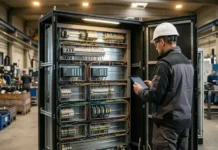
The modern extrusion hall is a highly automated environment where every parameter is monitored and controlled in real-time. Human-machine interfaces (HMIs) provide operators with a comprehensive view of the entire production line, from the material handling system to the final winder. Data from melt pressure transducers, thermocouples, and motor drives is continuously analyzed to ensure that the process remains within its optimal operating window. This data-driven approach allows for the early detection of potential issues, such as screw wear or heater failure, reducing the risk of unplanned downtime and ensuring a consistent quality of output.
Energy management is another area where automation is making a significant impact. Variable frequency drives (VFDs) and high-efficiency motors are used to optimize the power consumption of the extruders. Sophisticated control algorithms can adjust the screw speed and heating zones to minimize energy usage while maintaining the required throughput. In a high-volume industry where electricity costs are a major component of the manufacturing expense, these efficiency gains provide a significant competitive advantage. The role of plastic extrusion technologies optimizing film packaging quality extends to the overall economic and environmental efficiency of the production process.
The integration of Industry 4.0 technologies, such as the Internet of Things (IoT) and big data analytics, is the next frontier for the extrusion industry. By collecting and analyzing data from multiple production lines, manufacturers can gain deeper insights into the factors that influence film quality and process stability. Predictive maintenance models can forecast when a component is likely to fail, allowing for scheduled repairs that do not disrupt the production schedule. This level of digital integration ensures that the extrusion process remains highly reliable and responsive to the needs of the market.
Downstream Handling and Surface Treatment for Film Integrity
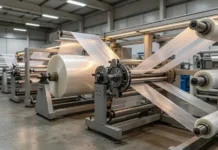
The quality of the film is not determined by the extrusion process alone; the downstream handling and surface treatment are equally important. As the film leaves the extruder, it must be carefully guided and cooled before being wound onto a roll. Tension control is critical at every stage to prevent stretching or wrinkling, which can cause issues during subsequent printing or laminating processes. Modern winding systems feature sophisticated taper-tension controls that adjust the winding force as the roll grows in diameter, ensuring a perfectly uniform roll profile without internal stresses.
Surface treatment is often required to improve the adhesion of inks, adhesives, and coatings. Corona treatment is the most common method, involving the use of a high-voltage discharge to increase the surface energy of the film. The precision of the corona treatment is essential; too little treatment will result in poor adhesion, while too much can cause surface degradation or “backside treatment” that leads to blocking. Automatic control systems monitor the watt-density and adjust the power levels to ensure consistent treatment levels across the entire width of the film.
Final inspection systems use high-speed cameras and laser scanners to detect defects such as gels, holes, or contaminants. These systems can identify and categorize defects in real-time, allowing operators to mark or remove the affected sections of the film. This quality assurance step is vital for ensuring that only perfect film reaches the customer. The combination of precision extrusion, advanced automation, and meticulous downstream handling ensures that plastic extrusion technologies optimizing film packaging quality continue to meet the highest standards of the global B2B packaging industry.