








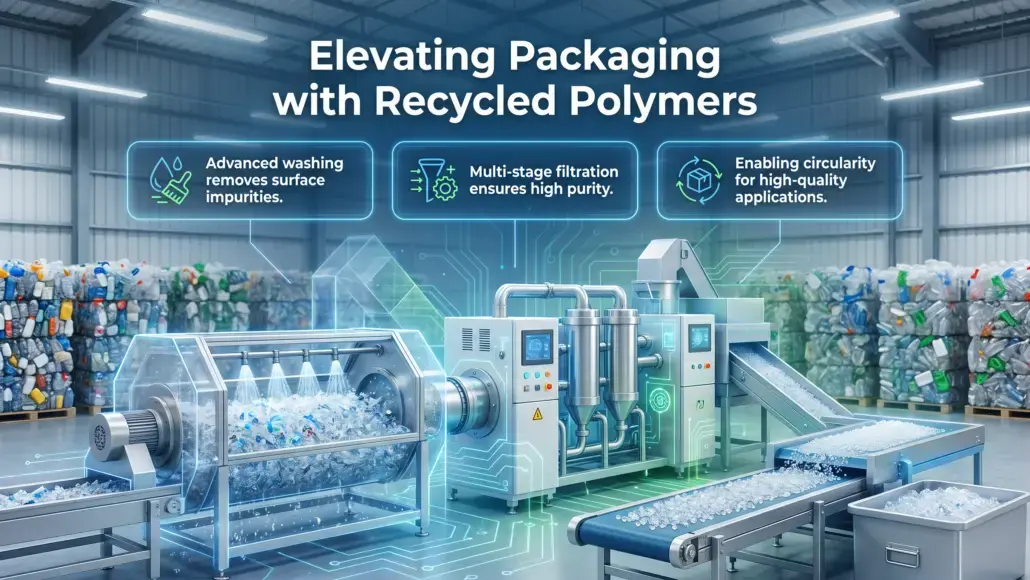

The transition toward a circular economy has made the effective processing of post-consumer resins (PCR) a priority for the packaging industry. Achieving the necessary purity levels for high-quality packaging requires a multi-stage approach to decontamination and filtration. The first stage often involves intensive washing and friction cleaning to remove surface contaminants such as adhesives, labels, and organic residues. However, for many packaging applications, especially those in the personal care and food sectors, surface cleaning is insufficient. Advanced vacuum decontamination systems are now integrated into the extrusion process to remove volatile organic compounds (VOCs) and odors that can migrate into the final product. By exposing the molten polymer to high vacuum levels, these systems extract deep-seated impurities, ensuring that the resulting recyclate meets stringent sensory requirements.
Mechanical filtration is another critical component of the processing chain. Modern melt filters utilize fine stainless steel meshes to capture non-plastic contaminants such as paper fibers, aluminum fragments, and unmelted polymer gels. The evolution of back-flush filtration technology allows for continuous operation without the need for frequent screen changes, which is essential for maintaining high throughput in large-scale recycling facilities. These systems can filter down to 20 or 30 microns, producing a melt that is virtually indistinguishable from virgin material in terms of physical cleanliness. The precision of these mechanical processes is a cornerstone of recycled polymer processing enhancing packaging material quality across the global supply chain.
In addition to physical filtration, the use of solid-state polymerization (SSP) is becoming increasingly common for high-performance recyclates like polyethylene terephthalate (PET). In the SSP process, the polymer pellets are heated in an inert atmosphere or under vacuum for an extended period. This not only further decontaminates the material but also increases the intrinsic viscosity (IV) of the resin. A higher IV is essential for maintaining the mechanical strength required for carbonated beverage bottles and thermoformed trays. By carefully controlling the time and temperature of the SSP phase, recyclers can produce a material that offers consistent performance, allowing packaging manufacturers to increase the percentage of recycled content in their products without sacrificing quality.
Chemical Recycling and the Return to Virgin-Grade Polymer Quality
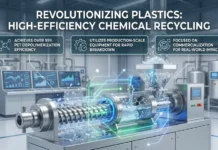
While mechanical recycling is efficient for clean waste streams, it has limitations when dealing with highly contaminated or multi-layer packaging. Chemical recycling, also known as advanced recycling or molecular recycling, provides a solution by breaking the polymer chains down into their original monomers or chemical feedstocks. This approach effectively resets the material, allowing for the removal of dyes, pigments, and complex additives that mechanical processes cannot address. Pyrolysis and gasification are the most common methods for polyolefins, converting mixed plastic waste into a synthetic oil or gas that can be used to produce new, virgin-grade resins.
The primary advantage of chemical recycling is that the resulting material is identical to traditional fossil-fuel-based plastics. This means it can be used in the most demanding food-contact applications without the regulatory and safety concerns often associated with mechanical recyclates. For the flexible packaging sector, which often relies on complex multi-material films, chemical recycling offers a pathway to true circularity. By returning the plastic to its molecular form, the industry can ensure a continuous supply of high-purity resin that maintains its properties through infinite recycling loops. The role of recycled polymer processing enhancing packaging material quality through chemical means is particularly significant for meeting future legislative mandates for recycled content in all packaging formats.
Several global chemical companies are now investing in large-scale facilities to process hundreds of thousands of tons of plastic waste annually. These facilities often utilize mass-balance accounting to track the flow of recycled feedstocks through the production process. This allows manufacturers to certify the recycled content of their resins even when they are co-processed with virgin feedstocks. As the technology scales and the cost of production decreases, chemical recycling is expected to play an increasingly prominent role in the packaging material sector, providing a high-quality alternative to virgin plastics for sensitive applications in the healthcare and premium food sectors.
Melt Stabilization and the Role of Additives in PCR Upcycling
One of the inherent challenges of mechanical recycling is the degradation of the polymer chains that occurs during each heat cycle. Both the original manufacturing process and the subsequent recycling steps involve high temperatures and mechanical shear, which can lead to chain scission or cross-linking. This degradation results in a loss of mechanical properties, such as impact strength and elongation at break, and can also lead to yellowing or the formation of gels. To counteract these effects, recyclers use specialized additive packages known as stabilizers or restabilizers. These chemicals, which include antioxidants and acid scavengers, protect the polymer from oxidative degradation during processing, ensuring that the recyclate retains its integrity.
Chain extenders are another category of additives that can significantly enhance the quality of recycled polymers. These reactive molecules bond with the ends of broken polymer chains, effectively rebuilding the molecular weight and restoring the rheological properties of the resin. This upcycling process is vital for materials like recycled polyamide or PET, where maintaining a specific melt strength is critical for downstream processes like blown film extrusion or blow molding. By tailoring the additive package to the specific needs of the recyclate, processors can produce a material that is not only functional but also highly competitive with virgin resin in terms of performance.
The incorporation of compatibilizers is also essential when dealing with mixed plastic streams. Even small amounts of contamination from a different polymer can lead to significant loss of properties due to interfacial tension. Compatibilizers act as a molecular bridge, improving the adhesion between dissimilar plastics and creating a more homogeneous blend. This allows for the successful recycling of materials that would otherwise be downgraded to low-value applications. The strategic use of additives is a fundamental part of recycled polymer processing enhancing packaging material quality, enabling the creation of high-value secondary raw materials from diverse waste streams.
Optical Sorting and Color Management for High-Aesthetic Recyclates
The visual appearance of a package is a key factor in consumer perception and brand identity. Traditionally, recycled plastics were limited to dark or opaque colors due to the presence of mixed pigments in the waste stream. However, advancements in optical sorting technology have revolutionized the ability to produce high-quality, clear, or light-colored recyclates. Modern sorting machines use high-resolution cameras and near-infrared (NIR) sensors to identify and separate different types of plastic and different colors at incredible speeds. Artificial intelligence and machine learning algorithms are now being integrated into these systems to improve the accuracy of the sorting process, even for complex items like black plastics or sleeved bottles.
Color management also involves the use of specialized pigments and masterbatches to mask the slight yellow or grey tints that can occur in recycled resins. Blue and violet toners are often added to clear recycled PET to neutralize yellowing, resulting in a product that appears bright and clean to the consumer. For colored packaging, recyclers can produce “natural” or “neutral” grades of PCR that serve as a consistent base for the addition of brand-specific colors. This capability allows brand owners to maintain their visual identity while incorporating high levels of recycled content, a crucial factor in the widespread adoption of circular packaging solutions.
The development of “de-inking” technologies is another area of active research. These processes involve the use of specialized solvents or surfactants to remove printing inks and coatings from the surface of plastic films and containers. By removing these visual contaminants before the material is melted, recyclers can produce a much higher quality of clear recyclate. This is particularly important for the flexible packaging market, where large areas of the film are often covered in high-density graphics. The combination of precision sorting, de-inking, and sophisticated color management ensures that recycled materials can meet the high aesthetic standards required for premium consumer packaging.
Regulatory Compliance and Safety Standards in Food-Grade Recycling
The use of recycled plastics in food-contact packaging is subject to some of the most rigorous regulatory standards in the world. Authorities such as the European Food Safety Authority (EFSA) and the U.S. Food and Drug Administration (FDA) require clear evidence that the recycling process effectively removes any potential contaminants that could migrate into food. This evidence is typically provided through “challenge tests,” where the recycling process is challenged with a known amount of surrogate contaminants. The process must demonstrate a high efficiency in removing these substances to be certified for food-grade production. The role of recycled polymer processing enhancing packaging material quality is therefore deeply tied to these safety certifications.
Traceability is another critical element of regulatory compliance. Recyclers must be able to document the source of their feedstock and provide a clear audit trail throughout the processing chain. This ensures that only suitable materials, such as those previously used for food packaging, are used to produce new food-grade recyclate. Digital technologies like blockchain and digital product passports are being explored as a means of enhancing this traceability, providing a secure and transparent record of the material’s history. These systems help to build trust between recyclers, packaging manufacturers, and brand owners, facilitating the wider use of recycled materials in sensitive applications.
The industry is also working to harmonize standards for recycled content and recyclability. Organizations like RecyClass and the Association of Plastic Recyclers (APR) provide guidelines and certification schemes that help manufacturers design packaging that is easier to recycle. By aligning design practices with the capabilities of modern recycling facilities, the industry can ensure a higher quality of feedstock and a more efficient recycling process. The commitment to safety and compliance ensures that recycled plastics can continue to provide a safe and sustainable choice for food packaging, supporting the global transition to a circular economy while protecting the health of consumers.