










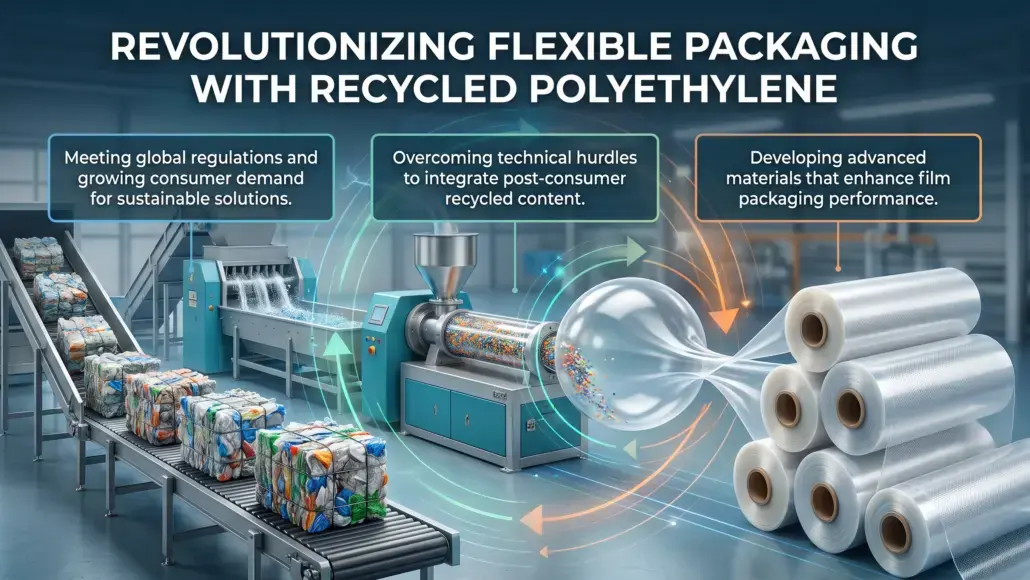
The integration of post-consumer recycled content into packaging films is no longer just a sustainability goal: it is a technical necessity driven by global regulations and consumer demand. Among the various polymers used in flexible formats, polyethylene remains the most widely utilized due to its versatility and cost-effectiveness. The development of recycled polyethylene materials improving film packaging performance has become a major focus for resin producers and converters alike. By addressing the historical challenges associated with recycled content (such as odor, impurities, and inconsistent mechanical properties) the industry is now producing films that meet high-performance standards while significantly reducing the reliance on virgin resins. This analysis examines the technical advancements that are making high-quality recycled polyethylene a reality in the film sector.
Advanced Decontamination and Filtration in Mechanical Recycling
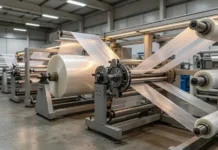
One of the primary obstacles to using recycled content in thin films is the presence of contaminants that can cause gels, pinholes, and visual defects. Conventional recycling processes often struggle to remove small particles of paper, adhesives, or other polymers, which can lead to high scrap rates during film extrusion. However, the implementation of recycled polyethylene materials improving film packaging performance is supported by new generations of melt filtration systems. These systems utilize laser-drilled screens and continuous cleaning mechanisms to remove contaminants down to the micron level. By ensuring a cleaner melt, manufacturers can produce recycled films with a surface quality that is virtually indistinguishable from virgin counterparts, even at high inclusion rates.
In addition to physical contaminants, volatile organic compounds often plague recycled resins, leading to undesirable odors that are particularly problematic in consumer-facing packaging. Modern recycling facilities are now incorporating sophisticated degassing and deodorization steps. By applying vacuum extraction and steam stripping during the extrusion of recycled pellets, processors can significantly reduce the concentration of these volatile compounds. The resulting materials are suitable for a much wider range of applications, including secondary packaging for hygiene products and household goods where odor neutrality is a key requirement. This level of purity is essential for moving recycled content out of low-grade applications and into the mainstream packaging market.
Consistency of the feedstock is being improved through better sorting technologies. Near-infrared and artificial intelligence-based sorting systems can now differentiate between various grades of polyethylene, such as low-density and linear low-density polyethylene, with high precision. This allows for the creation of more homogeneous recycled resins that exhibit predictable rheological behavior during processing. When these sorted streams are used to create recycled polyethylene materials improving film packaging performance, the converter can maintain stable production speeds and consistent film thickness. This predictability is the foundation of industrial-scale adoption, as it minimizes the risk of machine downtime and product failure.
Stabilization and Mechanical Property Optimization
Recycling a polymer inevitably leads to a degree of thermal and oxidative degradation, which can manifest as reduced molecular weight and a loss of mechanical toughness. To counter this, the formulation of these materials involves the use of high-performance additive packages. These include antioxidants, light stabilizers, and processing aids that are specifically designed to work with recycled molecules. By replenishing the stabilizer levels that were depleted during the polymer’s first life and subsequent recycling, manufacturers can restore the material’s resistance to tearing and puncturing. This restoration is vital for applications like stretch hood films and heavy-duty shipping bags that must withstand significant physical stress.
Mechanical performance can be further enhanced through the strategic blending of recycled content with high-performance virgin resins or through multi-layer extrusion techniques. Co-extrusion allows for the placement of recycled polyethylene materials improving film packaging performance in the core layer of a film, while virgin resin is used for the outer layers. This structure utilizes the cost and sustainability benefits of the recycled content while ensuring that the surface properties, such as heat-sealability and printability, remain optimal. This sandwich structure is a common strategy for achieving high levels of recycled content (often 50 percent or more) without compromising the overall integrity or functional performance of the package.
Another area of innovation is the use of chain extenders and reactive modifiers. These additives can chemically link shorter polymer chains together during the melt phase, increasing the molecular weight and improving the melt strength of the recycled resin. This technology is particularly beneficial for blown film extrusion, where a stable bubble is necessary for maintaining consistent film dimensions. The ability to use reactive additives to customize the properties of the material means that recycled content can now be used in more demanding, thin-gauge applications that were previously reserved for 100 percent virgin materials. This shift is a significant milestone in the evolution of circular packaging.
Performance in Heavy-Duty and Industrial Film Applications
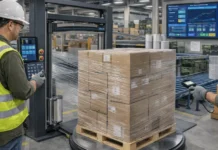
While consumer packaging often receives the most attention, the industrial and heavy-duty sectors have been early adopters of recycled polyethylene. Applications such as pallet stretch wrap, construction films, and agricultural covers are ideal candidates for high levels of recycled content. The use of advanced recycled resins in these sectors is driven by the need for cost-efficient solutions that still provide reliable containment and protection. Advanced rPE grades now offer the necessary puncture resistance and tensile strength to handle the heavy loads typical of industrial logistics. By optimizing the blend of post-consumer and post-industrial recyclate, manufacturers can achieve a balance of performance and price that is highly competitive.
In agricultural applications, the durability of recycled films under UV exposure is a critical factor. Traditional recycled PE often degraded quickly when exposed to sunlight, limiting its use in mulch films or greenhouse covers. However, the incorporation of specialized UV stabilizers into modern materials has extended their service life significantly. This allows farmers to utilize sustainable films that can withstand entire growing seasons, reducing the environmental impact of plastic-intensive farming practices. The ability to recycle these films again at the end of their life cycle further reinforces the circular nature of the system, creating a closed-loop model for industrial plastics.
Logistics sector also benefits from the improved performance of recycled stretch films. High-performance rPE resins can now be processed into films with high stretch ratios, which is essential for stabilizing loads on pallets during transport. By ensuring that the film maintains its “snap-back” force, the use of advanced recycled resins reduces the risk of load shifts and damage during transit. This reliability is crucial for large-scale distribution centers that process thousands of pallets daily. As the performance of these recycled materials continues to approach that of virgin resins, the distinction between “sustainable” and “high-performance” packaging is rapidly disappearing.
Regulatory Compliance and the Path to Food-Grade Recycled PE
One of the most significant challenges remaining for recycled polyethylene is the achievement of food-grade status. Unlike polyethylene terephthalate, which has well-established recycling processes for food contact, polyethylene’s porous nature makes it more difficult to decontaminate to the levels required by authorities. However, the development of advanced recycled materials is paving the way for breakthroughs in this area. Through a combination of super-clean mechanical recycling processes and chemical recycling technologies, the industry is moving closer to a future where recycled PE can be safely used in direct contact with food.
Super-clean mechanical recycling involves intense washing and high-temperature vacuum treatment to ensure that any potential contaminants are removed to a level that is safe for human health. While currently more expensive than standard recycling, these processes are producing materials that are already being used in non-direct food contact applications, such as the outer layers of laminated structures. As the technology scales and costs come down, the move toward direct contact applications is expected to accelerate. This will be a major driver for the circular economy, as food packaging represents a massive portion of the total polyethylene market.
Chemical recycling offers an alternative route by breaking down the plastic waste into its original monomers or chemical building blocks. This process effectively resets the material, allowing for the production of “virgin-quality” recycled polyethylene. When these chemically recycled materials are integrated into the supply chain, they can be used interchangeably with fossil-based resins in any application, including sensitive food and medical packaging. The combination of improved mechanical recycling for bulk applications and chemical recycling for high-purity requirements will create a comprehensive ecosystem for recycled polyethylene. This multi-pronged approach ensures that all types of PE waste can be diverted from landfills and returned to high-value use.
The advancements in recycled polyethylene are transforming the flexible packaging industry. By focusing on purity, consistency, and mechanical restoration, manufacturers have successfully developed solutions that meet the demands of modern commerce. The transition from virgin to recycled content is no longer a compromise but a strategic move toward a more resilient and sustainable future. As technology continues to advance and regulatory frameworks become more supportive, the role of recycled polyethylene in film packaging will continue to expand, driving innovation and efficiency across the entire global supply chain.

