











For decades, packaging was primarily designed to move products efficiently from manufacturers to consumers. Once a package fulfilled its purpose, it typically entered a waste stream or recycling system. However, changing consumer expectations, sustainability targets, and e-commerce growth are challenging this traditional linear model.
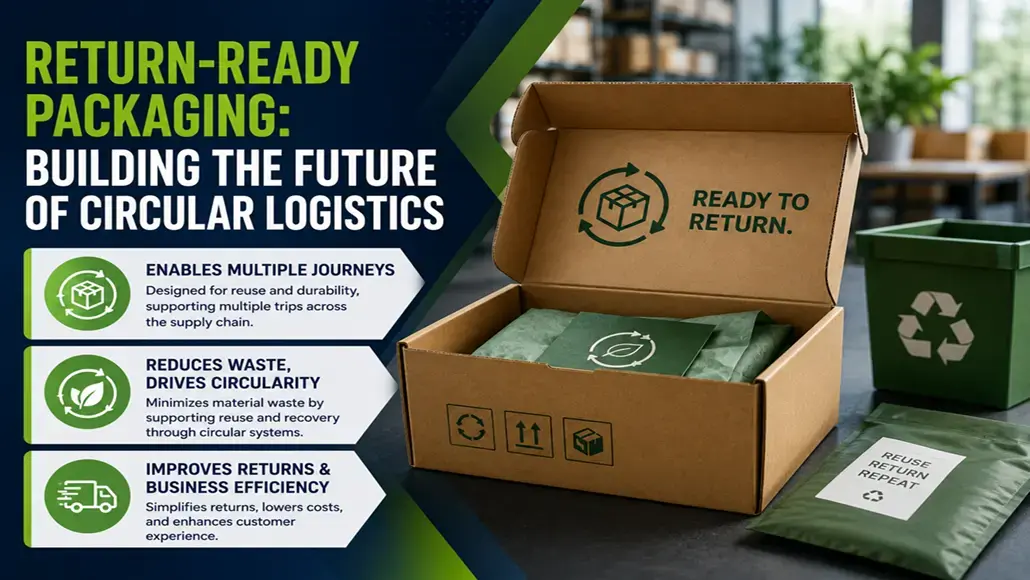
Today, businesses are increasingly exploring packaging solutions that support multiple journeys rather than a single use. This shift is placing greater emphasis on return-ready packaging, a concept designed to simplify product returns, enable reuse, and support circular logistics systems.
As reverse logistics becomes a growing component of modern supply chains, packaging is evolving from a disposable necessity into a strategic asset.
The Rise of Circular Logistics
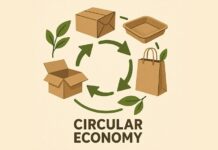
The growing interest in return-ready packaging is closely linked to the emergence of circular logistics. Unlike traditional supply chains that move products in a single direction, circular logistics incorporates the return, reuse, refurbishment, or recycling of products and materials.
This approach is becoming increasingly important as organizations seek to reduce waste, improve resource efficiency, and respond to sustainability commitments.
Packaging plays a critical role within this system. If products are expected to move back through the supply chain after delivery, packaging must be capable of supporting both outbound and return journeys without compromising performance.
As a result, packaging design is becoming an important factor in the success of circular business models.
Why E-Commerce Is Driving Packaging Innovation
The rapid growth of e-commerce has significantly increased the importance of product returns. In many product categories, returns have become a routine part of the customer experience.
Traditional packaging often creates friction within the return process. Consumers may struggle to reseal packages, locate original materials, or prepare items for return shipment. These challenges can increase costs and reduce customer satisfaction.
Return-ready packaging addresses these issues by incorporating features that simplify the return process from the outset. Designs may include resealable closures, dual-use shipping formats, integrated return instructions, or packaging structures capable of withstanding multiple transportation cycles.
For brands and retailers, improving return efficiency is becoming a competitive differentiator in increasingly crowded markets.
Designing Packaging for Multiple Lifecycles
One of the most significant changes associated with return-ready packaging is the shift from single-use thinking to lifecycle-oriented design.
Packaging engineers are increasingly evaluating how materials, structures, and closures perform across multiple touchpoints rather than a single delivery event.
This requires consideration of factors such as:
- Durability during repeated handling
- Ease of reuse
- Reverse logistics compatibility
- Material recovery potential
- Consumer convenience
By designing packaging for extended use, companies can improve both operational performance and sustainability outcomes.
Reducing Waste Through Smarter Packaging Systems
Waste reduction remains one of the primary drivers behind circular packaging initiatives.
Traditional packaging systems often generate significant material waste because they are optimized for one-way distribution. In contrast, return-ready packaging supports multiple usage cycles, reducing the need for replacement materials and minimizing waste generation.
This aligns with broader industry efforts to move beyond end-of-life recycling and focus more heavily on reuse and resource efficiency.
For organizations pursuing circular economy objectives, packaging design is increasingly viewed as a key enabler rather than a secondary consideration.
Operational Benefits Beyond Sustainability
While sustainability often dominates discussions around circular packaging, operational efficiency is becoming an equally important consideration.
Effective return-ready packaging can contribute to:
- Faster returns processing
- Reduced packaging replacement costs
- Improved inventory recovery
- Lower logistics complexity
- Enhanced customer experience
These benefits help explain why adoption is expanding beyond environmentally driven initiatives.
Businesses are increasingly recognizing that packaging designed for circular logistics can create measurable operational value while supporting sustainability goals.
The Economics of Reverse Logistics
The financial implications of returns have become increasingly significant as e-commerce volumes continue to grow.
Product returns create additional transportation, handling, inspection, and repackaging costs throughout the supply chain. In many sectors, these expenses can erode profitability if not managed effectively.
Return-ready packaging offers an opportunity to reduce some of these costs by improving the efficiency of reverse logistics operations.
Packaging that can be easily reused or reintroduced into the supply chain may reduce the need for additional materials and simplify returns processing. Over time, these efficiencies can contribute to stronger supply chain economics.
Consumer Expectations Are Changing
Consumer behavior is also influencing the adoption of circular packaging systems.
Customers increasingly expect convenient return experiences, particularly within e-commerce environments. Complicated return procedures can negatively affect brand perception and customer loyalty.
Return-ready packaging helps address these expectations by making the return process more intuitive and accessible.
At the same time, consumers are showing growing interest in packaging solutions that align with broader sustainability objectives, creating additional momentum for reusable and circular packaging models.
Challenges to Widespread Adoption
Despite its potential, implementing return-ready packaging presents several challenges.
Designing packaging for multiple uses often requires stronger materials, more sophisticated engineering, and additional upfront investment. Companies must also ensure that packaging remains cost-effective while meeting operational requirements.
Other challenges include:
- Reverse logistics infrastructure limitations
- Consumer participation and compliance
- Packaging collection and recovery systems
- Material durability considerations
- Scalability across different product categories
Addressing these barriers will be essential for broader industry adoption.
The Future of Packaging in Circular Supply Chains
As circular economy principles continue to influence business strategy, packaging is expected to play an increasingly active role in enabling resource-efficient supply chains.
The future of return-ready packaging is likely to be shaped by advances in materials, packaging design, digital tracking technologies, and reverse logistics infrastructure. These developments will help organizations better manage packaging assets throughout multiple usage cycles.
Rather than functioning solely as a protective layer around products, packaging will increasingly become an integrated component of supply chain strategy.
Conclusion
The packaging industry’s transition toward circularity is creating new expectations around performance, durability, and lifecycle value. As reverse logistics becomes more important, packaging must evolve to support multiple journeys rather than a single destination.
Return-ready packaging offers a practical pathway toward this goal by enabling reuse, improving returns efficiency, reducing waste, and supporting circular logistics systems. While challenges remain, the concept aligns closely with broader industry priorities focused on sustainability, operational efficiency, and customer experience.
As businesses continue to rethink how products and materials move through supply chains, return-ready packaging is poised to become a critical element of future packaging strategies.

