






















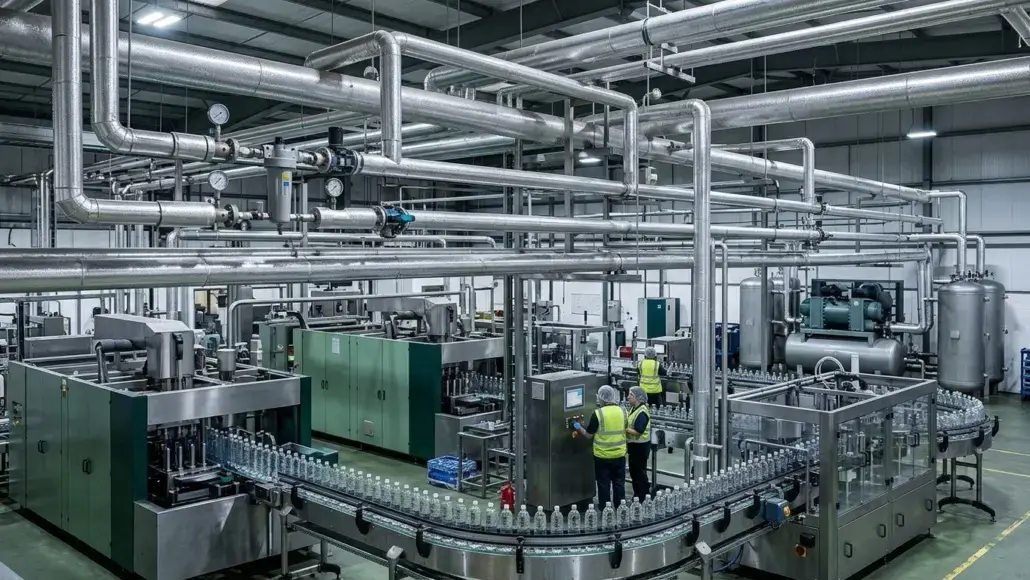
In the complex orchestration of a beverage manufacturing facility, compressed air is the silent partner that powers everything from pneumatic valves and actuators to blow-molding machines and product rinsers. While it is an essential resource, it is also one of the most misunderstood and poorly managed industrial utilities. Compressed air efficiency in beverage manufacturing is a major frontier for operational savings, as it is estimated that up to 30% of the energy consumed by a typical compressor is lost through leaks, pressure drops, and inappropriate use. In an era of rising energy costs and aggressive sustainability targets, the optimization of the compressed air system has moved from a maintenance task to a strategic priority for plant managers globally.
Identifying and Mitigating System Inefficiencies
The first step in achieving compressed air efficiency in beverage manufacturing is a comprehensive system audit to identify “waste.” The most common source of loss is air leaks, which often go unnoticed in the noisy environment of a packaging hall. A single 1/4-inch leak in a high-pressure line can cost thousands of dollars a year in wasted electricity. Modern facilities are now using ultrasonic leak detectors to pinpoint these “invisible” losses during production, allowing for immediate repair. This proactive approach to leak management can deliver significant returns on investment with minimal capital expenditure.
Another major area of inefficiency is “artificial demand,” caused by operating the entire system at a higher pressure than is actually required by the end-use applications. Many machines in a beverage plant only require 80 psi to function correctly, yet the central compressor might be set to 110 psi to account for pressure drops in the piping. By installing local pressure regulators and optimizing the piping layout to reduce friction, manufacturers can lower the system pressure and achieve substantial energy savings. Compressed air efficiency in beverage manufacturing is a game of millimeters and psi, where small adjustments across a large facility add up to massive gains.
The Role of Variable Speed Drives and Smart Control
The technology behind air compression has evolved significantly, offering new tools for efficiency. Traditional “fixed-speed” compressors run at full power regardless of the actual air demand, leading to significant waste during low-production periods. Compressed air efficiency in beverage manufacturing is now being driven by Variable Speed Drive (VSD) compressors, which adjust their motor speed in real-time to match the facility’s requirements. This “just-in-time” air production can reduce energy consumption by up to 35% compared to older, less flexible systems.
Furthermore, the integration of “Master Controllers” allows for the intelligent management of a multi-compressor system. These controllers ensure that the most efficient combination of machines is running at any given time, preventing “short-cycling” and ensuring that the system always operates at its peak efficiency. This digital layer provides real-time visibility into the system’s performance, allowing plant managers to track their “energy intensity” (kWh per cubic foot of air) and set targets for continuous improvement. Compressed air efficiency in beverage manufacturing is thus a hallmark of the “Smart Factory,” where every utility is managed with the same level of precision as the product itself.
Heat Recovery and the Circular Utility Model
One of the most exciting developments in compressed air efficiency in beverage manufacturing is the recovery of waste heat. Approximately 90% of the electrical energy consumed by a compressor is converted into heat. In the past, this heat was simply vented into the atmosphere or dissipated through cooling towers. Modern “energy recovery” modules allow manufacturers to capture this heat and use it to pre-heat water for boilers, space heating, or Clean-in-Place (CIP) cycles. By integrating the compressed air system into the facility’s thermal network, breweries and bottling plants can significantly reduce their natural gas consumption and their overall carbon footprint.
This “circular” approach to utility management is a key component of the sustainable manufacturing model. It proves that energy efficiency is not just about using less; it is about using what you have more wisely. By turning a “waste” product (heat) into a valuable resource, compressed air efficiency in beverage manufacturing becomes a powerful driver of both environmental and financial performance. This holistic view of the factory ecosystem is essential for achieving the long-term sustainability goals that are increasingly being demanded by consumers, regulators, and investors alike.
Ensuring Air Quality and Equipment Reliability
Beyond energy savings, compressed air efficiency in beverage manufacturing is also about ensuring the quality and reliability of the production process. Contaminants in the air stream such as oil, moisture, and particles can damage sensitive pneumatic components and compromise the safety of the beverage. High-efficiency filtration and drying systems are essential for maintaining the “food-grade” quality required for direct product contact applications. By ensuring that the air is clean and dry, manufacturers reduce the risk of downtime caused by gummed-up valves or corroded actuators.
Furthermore, an efficient air system is a stable air system. Pressure fluctuations can cause erratic behavior in labeling machines or fillers, leading to rejects and lost productivity. By maintaining a consistent and reliable supply of air, manufacturers can achieve higher levels of product consistency and operational “uptime.” Compressed air efficiency in beverage manufacturing is thus a fundamental requirement for maintaining the high speeds and tight tolerances of modern packaging lines. It is the “foundation” utility that supports every other stage of the production process.
The Importance of Employee Training and Cultural Shift
Finally, the success of any efficiency initiative depends on the people who operate the system. Compressed air efficiency in beverage manufacturing requires a cultural shift where every employee understands the value of this “invisible” resource. Training programs that teach operators how to identify leaks and encourage them to report inappropriate air use such as using high-pressure air to clean the floor are essential for long-term success. When the entire workforce is engaged in “air stewardship,” the results are far more sustainable and impactful.
In conclusion, the optimization of compressed air systems is one of the most effective and accessible ways for beverage manufacturers to improve their performance. By combining mechanical audits, advanced VSD technology, and heat recovery, facilities can achieve massive savings while protecting the planet. Compressed air efficiency in beverage manufacturing is a masterclass in industrial logic, proving that by paying attention to the invisible, we can deliver very visible results for the brand and the world. The future of beverage manufacturing is lighter, leaner, and more efficient than ever before.

