










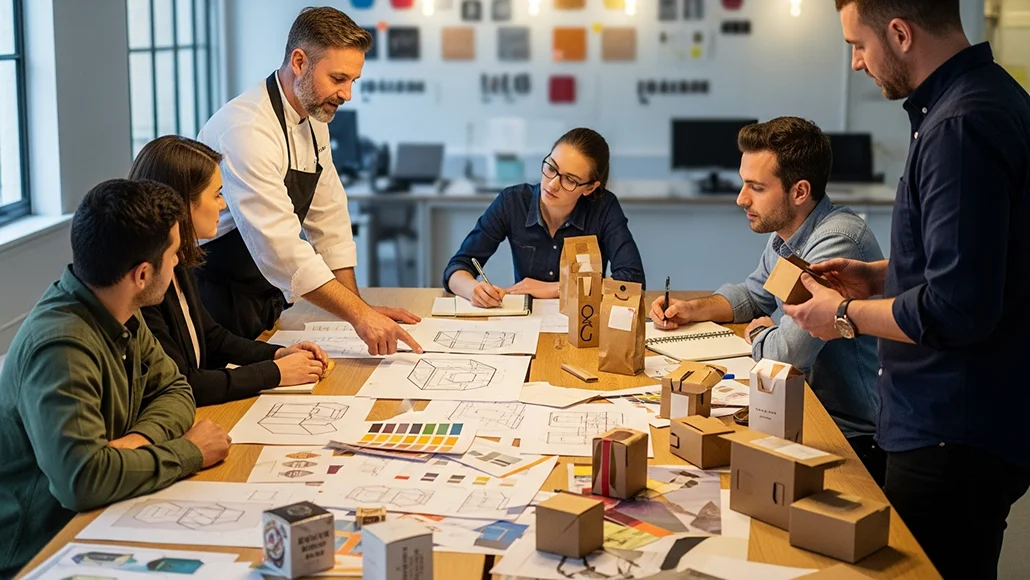

In the high-stakes world of food manufacturing, the path from a culinary concept to a retail reality is fraught with complexity. Historically, this path was linear: food scientists would develop a recipe, and only after the product was “finalized” would the packaging team be called in to find a suitable container. This siloed approach is increasingly being recognized as a major liability. Today, the most innovative companies have adopted a model of strategic food packaging development, where the packaging is treated as a fundamental ingredient of the product itself, integrated from the very first brainstorming session.
The Fallacy of Packaging as an Afterthought
When packaging is treated as a tactical necessity rather than a strategic asset, the results are often costly. We have all seen the headlines of promising product launches delayed because the chosen container couldn’t withstand the heat of the pasteurization process, or because the product’s shelf life was shorter than expected due to poor barrier selection.
The High Cost of Late-Stage Changes
In a traditional development cycle, a change made in the final weeks before launch can be ten times more expensive than a change made during the conceptual phase. Strategic food packaging development prevents these “emergency” redesigns. By involving packaging experts in early stage packaging design, brands can identify technical constraints such as machine compatibility or material limitations long before they become expensive bottlenecks. This foresight is the most effective way to protect a project’s budget and timeline.
Maximizing Packaging ROI
Return on Investment (ROI) in the packaging world is not just about the cost of the materials. It is about the efficiency of the entire system. Strategic food packaging development looks at the “Total Cost of Ownership.” This includes the speed of the filling line, the cube utilization in the shipping container, and the reduction of unsaleable goods due to damage. By optimizing these factors during the R&D phase, companies can unlock significant hidden margins that would otherwise be lost to inefficiency.
Driving Success through Packaging R&D Integration
The most successful products are the result of a “symphony” between the food and its container. This requires a deep level of packaging R&D integration.
Collaborative Innovation: The Food-Package Interface
Consider the challenge of moving to a more natural, preservative-free recipe. This change in the food’s chemistry often requires a much higher performance from the packaging barrier. If the food scientists and packaging engineers are not in constant communication, the project is destined for failure. Through strategic food packaging development, these two teams work in a “feedback loop.” The food’s requirements dictate the material choice, and the material’s capabilities may, in turn, influence the final formulation of the food.
Cross-Functional R&D for Consumer Success
Strategic food packaging development also bridges the gap between the technical and the commercial. When packaging R&D is integrated with marketing and consumer insights, the result is a product that is perfectly tuned to the user’s needs. This might mean designing a package that is specifically shaped for “digital shelf” visibility in e-commerce or developing a structure that enhances the “sensory experience” of opening the product. This holistic approach ensures that the product launch strategy is backed by a package that is both functional and emotionally resonant.
Optimizing for the Modern Supply Chain
The journey from the factory to the consumer’s table is more grueling than ever. The rise of multi-channel distribution means a single package must be able to survive a traditional grocery pallet, a meal-kit delivery box, and a direct-to-consumer shipping mailer.
Designing for Supply Chain Packaging Resilience
Strategic food packaging development takes these logistical stresses into account from day one. By using advanced simulation and testing during the design phase, engineers can ensure that the package is “fit for purpose” across all channels. This reduces the need for excessive secondary packaging, which not only lowers costs but also aligns with the brand’s sustainability goals. A package that is designed for the supply chain is a package that is designed for profit.
Reducing Time to Market
In a fast-moving consumer goods (FMCG) environment, being first to market is often a decisive advantage. Paradoxically, involving more people in the early stages of development actually speeds up the overall process. By eliminating the “back-and-forth” that occurs when packaging is an afterthought, strategic food packaging development creates a streamlined, parallel workflow. This synchronization is the key to maintaining a competitive edge in a market that waits for no one.
The Future of Integrated Innovation
As we look toward the future, the role of the packaging professional is evolving from a technical specialist to a strategic business partner. The most successful organizations will be those that elevate packaging to a C-suite priority.
Building an Innovation Culture
Implementing strategic food packaging development is not just about changing a process; it is about changing a culture. It requires breaking down the traditional hierarchies and encouraging a mindset of “systems thinking.” When everyone from the procurement officer to the brand manager understands the strategic value of the package, the entire organization becomes more agile and innovative.
The Package is the Strategy
In the final analysis, the package is the only part of a brand’s message that stays with the consumer until the moment of consumption. It is the protector of quality, the messenger of values, and the enabler of convenience. By embracing strategic food packaging development for early innovation, food companies can ensure that this critical touchpoint is optimized for success. In the modern food industry, the strategy is not complete until the packaging is integrated.