












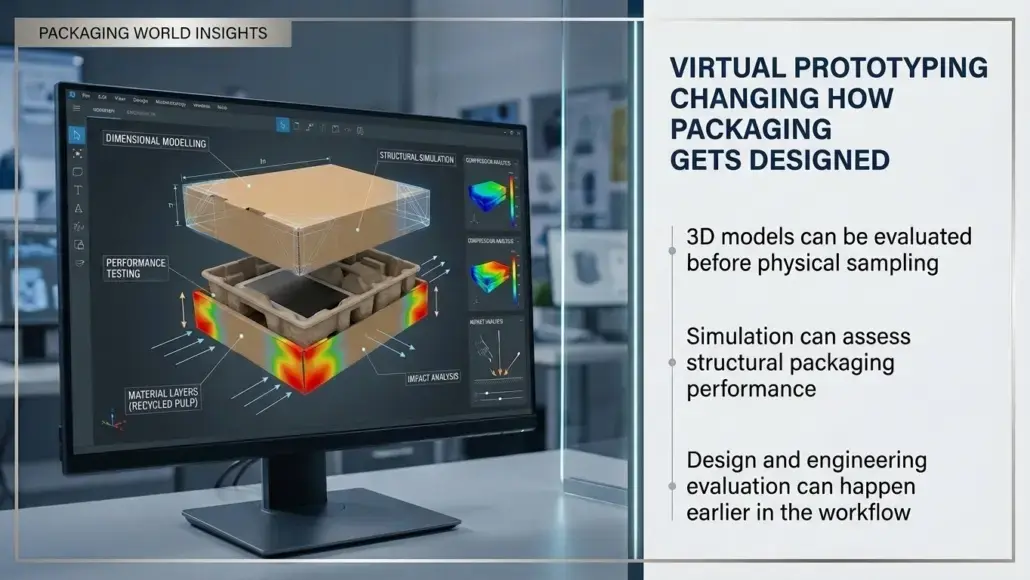

Packaging design has traditionally depended heavily on physical samples to determine whether a structure works, how it looks and whether it can withstand production and distribution. That approach remains necessary, but digital modelling is changing when some of those decisions are made. Virtual prototyping allows packaging teams to examine designs before committing to physical samples, bringing structural evaluation, visualisation and performance assessment further upstream in the development process.
The shift matters because a package is not judged on appearance alone. Its geometry, material behaviour, stacking strength and interaction with production processes can all affect whether a concept is viable. Research published in Food Packaging and Shelf Life demonstrated how virtual modelling could assess carton compression strength, airflow, cooling performance and energy use before major physical prototyping and manufacturing investment. For packaging teams, the practical value of virtual prototyping lies in evaluating design alternatives earlier, before physical sampling becomes the main mechanism for comparison.
- Compare different package structures without producing every version physically
- Identify potential weaknesses in compression and performance earlier
- Examine how changes in geometry or materials could affect downstream results
- Reduce dependence on repeated physical iterations during early-stage development
Digital Evaluation Across Packaging Design
The scope can extend beyond a three-dimensional representation of the pack. Depending on the application, designers and engineers can use simulation to examine structural integrity, compression behaviour, airflow, temperature distribution and material performance. Research on corrugated paperboard found that a virtually assisted design process significantly reduced product development time and supported material optimisation, while also producing consistent virtual test results for identical designs. The same study provides a measurable indication of the difference between the two approaches. 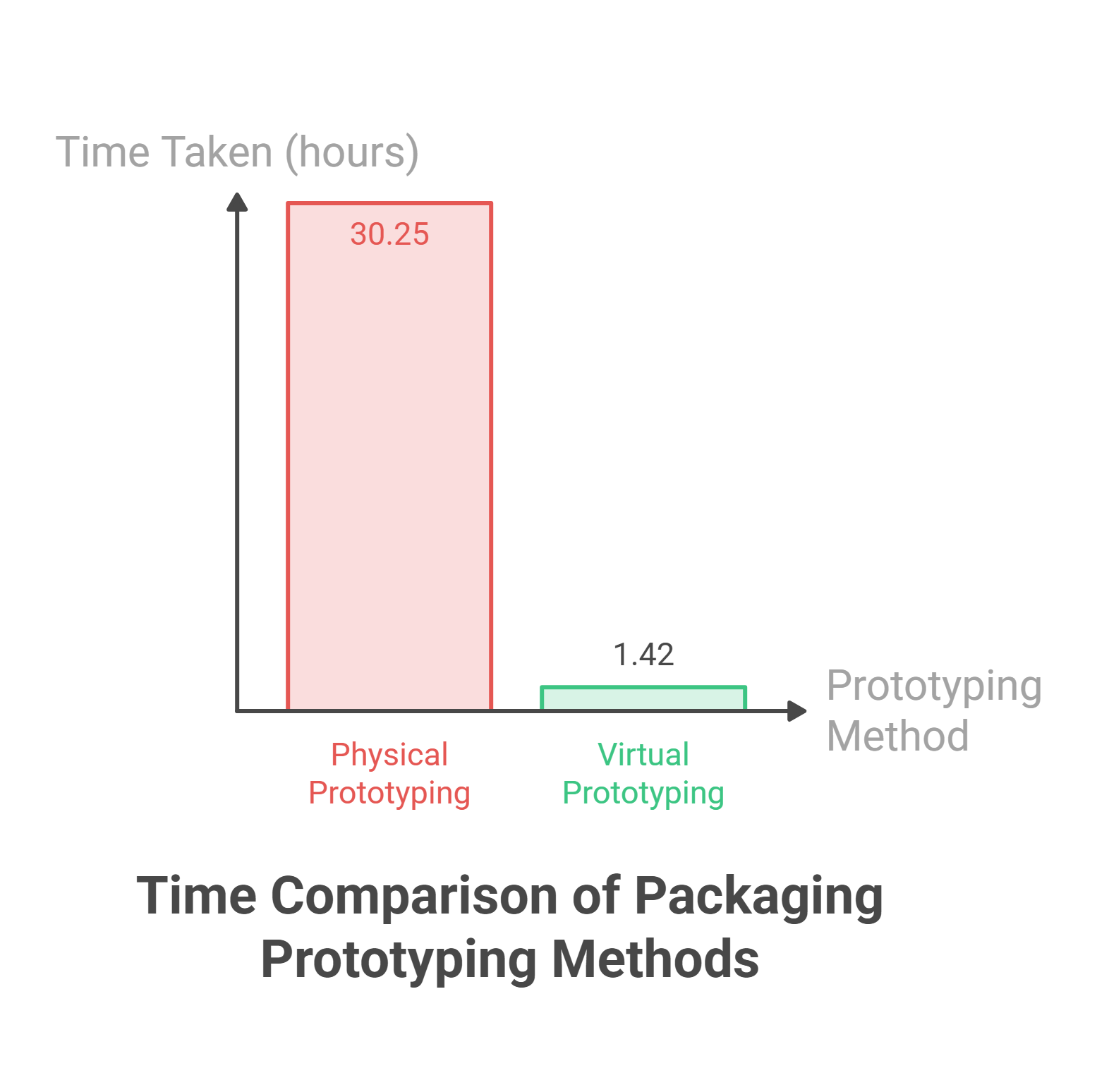
The comparison illustrates how moving part of the evaluation process into a digital environment can substantially reduce the time required for early packaging design assessment.
The Shift from Physical Mock-Ups to Digital Workflows
Commercial packaging platforms are also extending three-dimensional design into visual and production-related evaluation. Esko’s Studio, for example, supports digital packaging visualisation and the simulation of substrates, printing and finishing effects. This does not make physical prototypes obsolete. Instead, virtual prototyping changes their role, allowing more design decisions to be investigated digitally before physical validation begins. A growing range of packaging decisions can therefore be evaluated digitally before a physical sample is produced, while physical testing remains important for final validation.
Virtual Prototyping Expanding into Performance Evaluation
The usefulness of virtual prototyping increases when packaging design moves beyond appearance and into performance. A three-dimensional model can be connected to engineering simulations that examine how a package behaves under different conditions, giving designers and engineers evidence before a physical sample is manufactured. This is particularly relevant for packaging where structural strength, airflow, temperature and material efficiency influence product performance. Simulation can help teams:
- Compare structural configurations before tooling or sampling
- Evaluate compression and stacking behaviour
- Test airflow and cooling characteristics in temperature-sensitive applications
- Examine material use and potential lightweighting opportunities
A 2022 study in Food Packaging and Shelf Life demonstrates how these capabilities can work together. Researchers examined six fresh-fruit package designs using Computer Aided Graphics (CAG), Computational Structural Dynamics (CSD), Computational Fluid Dynamics (CFD) and Computational Heat Transfer (CHT). The virtual evaluations generated information on compression strength, airflow resistance, cooling performance and temperature distribution before manufacturing.
Performance Benefits from Digital Packaging Development
The study provides a useful example of how design decisions made digitally can have consequences beyond the package itself. The new carton design achieved a higher freight density, allowing an additional 1,720 kilograms of fruit per refrigerated container compared with the commercial counterpart. It also increased precooling throughput by 17% and reduced reported power use by 30% in the specific research application. 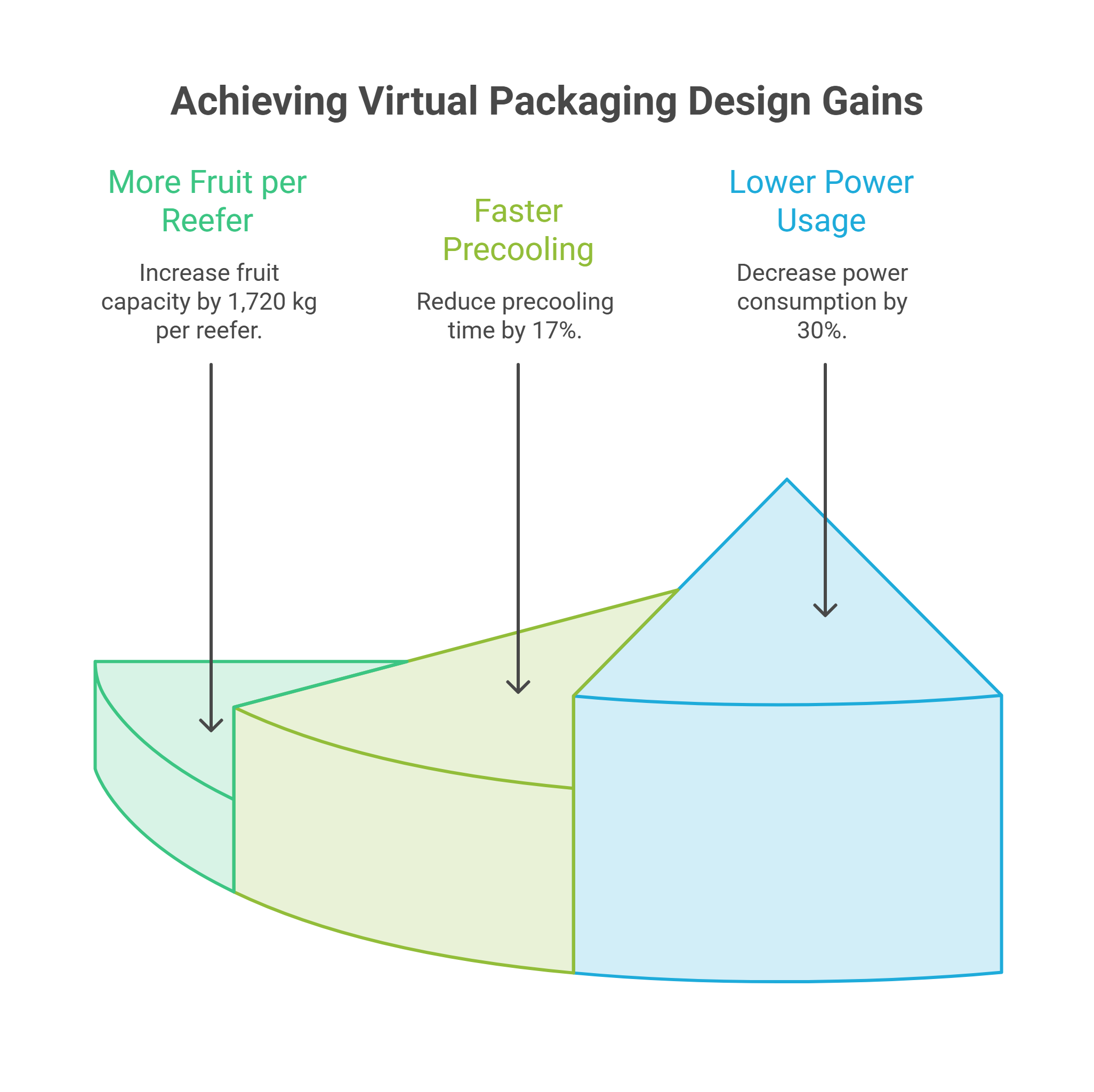
Digital Validation Strengthens Packaging Decisions
The growing role of virtual prototyping points to a broader change in packaging development. Digital models can help teams explore more design alternatives, identify performance risks earlier and reserve physical testing for the concepts most likely to succeed. The approach is particularly relevant where packaging structures must balance several requirements at once, including strength, material use, cooling and manufacturability. The evidence also suggests that digital evaluation works best as part of a hybrid development model rather than as a replacement for physical testing. Its value is strongest when it helps teams:
- Reduce unnecessary early-stage sampling
- Make design decisions using performance evidence
- Connect design and engineering reviews earlier
As these workflows become more integrated, visual and structural evaluation can increasingly happen within the same development cycle. That also creates a closer connection between digital package design and colour consistency across packaging, where accurate digital representation becomes important for maintaining brand appearance across different production environments.
References
- Food Packaging and Shelf Life – Fresh fruit packaging design verification through virtual prototyping technique – 2022
- Procedia CIRP – FEM as a Package Design Tool for Corrugated Paperboard – 2022
- NAFEMS – Measure, Digitise, Execute: Sustainable Packaging Development – 2025
- Esko – Studio – 2026