



























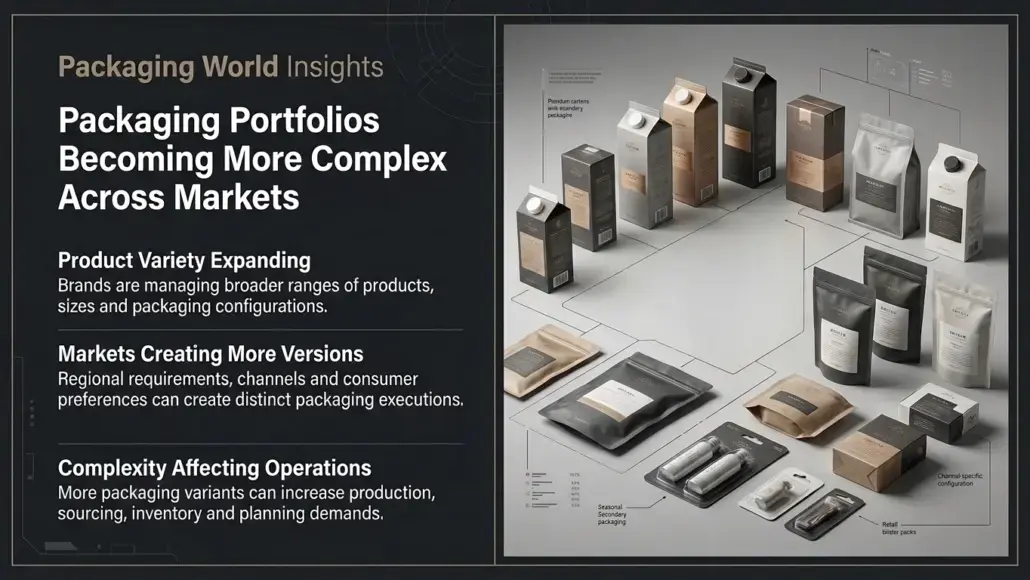

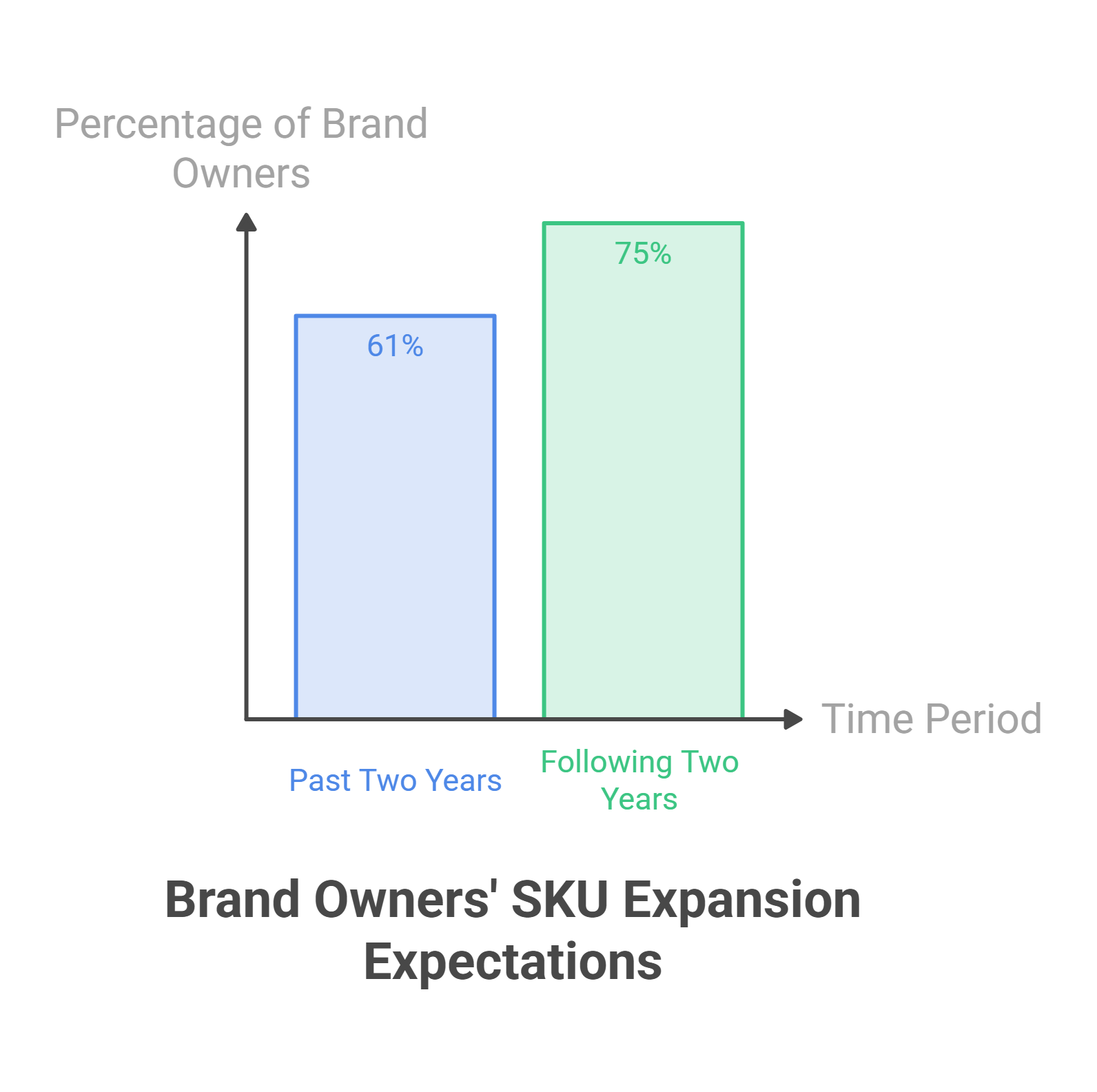
Across consumer markets, packaging portfolios are becoming harder to manage as brands expand product ranges, introduce new pack sizes and adapt products for different channels. The change is not limited to entirely new products. Existing ranges are also being extended through new formulations, seasonal editions, retailer-specific offers and market variants. Alliance Insights reported that 61% of surveyed brand owners had increased their stock-keeping unit (SKU) counts over the previous two years, while 75% expected those counts to increase over the following two years. The research identified consumer demand for variety, competition, limited editions and retailer demand for additional package sizes among the drivers.
Drivers Increasing Portfolio Variation
The expansion of packaging portfolios is therefore happening across several dimensions at once. A single product family may require multiple packaging configurations even when the underlying product remains closely related.
- Product extensions: New flavours, formulations and variants can require separate packaging specifications.
- Pack-size expansion: Different sizes can serve distinct consumer or retailer requirements.
- Channel-specific formats: Retail, foodservice and other channels can create different packaging needs.
- Limited editions: Seasonal and promotional designs can add temporary versions to established ranges.
Continued SKU Expansion
The survey evidence points to continued assortment growth rather than a one-time increase. That matters because each additional variant can create another combination of artwork, packaging specifications, production requirements and supply planning. L.E.K. Consulting’s 2026 U.S. packaging study also found that almost all surveyed brand owners expected to make packaging changes over the following three years, with sustainability, aesthetics and shelf-life among the major drivers. Portfolio complexity is also shaped by:
- Market variation: Different countries can require different packaging information, languages or formats.
- Commercial positioning: Premium, value and promotional products may require distinct packaging executions.
- Production requirements: Smaller runs and frequent changes can increase the number of manufacturing configurations.
- Supply considerations: Different packaging versions can require separate sourcing, inventory and planning decisions.
 The result is a broader management challenge is that packaging portfolios increasingly have to support commercial variety without allowing each additional version to create a disproportionate operational burden.
More Versions Increasing Operational Complexity
As product ranges expand, the challenge shifts from creating additional packages to managing the operational consequences of having more versions in circulation. Different sizes, market adaptations, seasonal designs and channel-specific formats can require separate production schedules, materials and approval processes. Research published by Packaging Impressions found that 32% of surveyed brand owners identified managing increased product versions as a top packaging challenge, while 38% cited improving supply-chain efficiency and responsiveness. Among converters, 48% identified changeover times between jobs as their leading efficiency challenge. The relationship becomes more complicated when several forms of variation occur together. A market-specific version may require different information or artwork, while a smaller pack size may create another production configuration. This means packaging portfolios can generate operational complexity even when the differences between individual versions appear relatively minor.
Variables Increasing Portfolio Complexity
Several factors can compound the management burden:
- Market versions: Different language, regulatory and consumer requirements can require separate packaging executions.
- Channel versions: Retail, foodservice and e-commerce channels can create different pack sizes, quantities or structural requirements.
- Production variation: Lower-volume versions can result in shorter production runs and more frequent changeovers.
- Supplier variation: Different materials, specifications or supplier capabilities can add coordination requirements.
The impact is not confined to converters. Brand owners also have to coordinate packaging requirements with demand forecasts, sourcing decisions and inventory planning. L.E.K. Consulting’s 2026 U.S. packaging study states that brand owners are actively optimising stock-keeping units (SKUs) to minimise supply-chain complexity, align supply with demand and manage costs.
Portfolio Decisions Becoming More Selective
Greater variety does not automatically mean that a portfolio should be reduced. Packaging remains an important commercial tool, and L.E.K. Consulting’s research shows that brands continue to make changes involving packaging design, formats and substrates. Its 2026 European research found that 39% of surveyed brand owners expected an increase in the share of sustainable packaging by 2030, while packaging format, functionality and pack-size changes were also identified among expected areas of development. The more relevant question is whether each additional version creates enough value to justify the complexity it introduces. This becomes especially important when companies manage virtual packaging design, since evaluating concepts before physical development can help teams assess different packaging options earlier.
Portfolio Decisions Requiring Clearer Trade-Offs
- Commercial value: Whether the variant addresses a meaningful customer, retailer or market requirement.
- Operational burden: The additional sourcing, production, inventory and approval activity it creates.
- Scale: Whether the format can be produced efficiently at its expected volume.
- Longevity: Whether the version is permanent, seasonal or likely to be replaced quickly.
As these trade-offs become more frequent, packaging portfolios increasingly require deliberate choices about which variations support growth and which add complexity without sufficient commercial return. The objective is not simply to maintain fewer packages, but to build a portfolio where the level of variation is proportionate to the value it creates.
Portfolio Complexity Requiring Selective Simplification
The expansion of packaging portfolios does not mean every additional variant creates unnecessary complexity. New sizes, market versions and channel-specific formats can serve clear commercial purposes, particularly when they respond to consumer demand or retailer requirements. The challenge is to distinguish those useful variations from versions that add production, inventory and planning demands without sufficient return.
Portfolio Decisions Requiring Clearer Trade-Offs
- Commercial value: Variants should address a defined market, customer or channel need.
- Operational impact: Additional production, sourcing and inventory requirements should be considered.
- Portfolio fit: New versions should support the wider product architecture rather than create isolated complexity.
As product and packaging variation continues across markets, companies will need to manage packaging portfolios with greater selectivity. The objective is not simply to reduce the number of packages, but to ensure that each variation has a clear purpose and remains manageable across the wider supply chain.
References
- Packaging Impressions – How Brand Owner Dynamics Are Changing the Packaging Opportunity – 2026
- L.E.K. Consulting – L.E.K. Consulting 2026 CPG and Foodservice Brand Owner Packaging Study – 2026
- Packaging Impressions – Packaging Impressions Parlor: Addressing Efficiency Among Converters and Brand Owners – 2025
- L.E.K. Consulting – European Brand Owner Packaging Survey 2026: Sustainability – Balancing Circularity, Cost and Commercial Realities – 2026
- McKinsey & Company – Simpler Is (Sometimes) Better: Managing Complexity in Consumer Goods – 2016