

















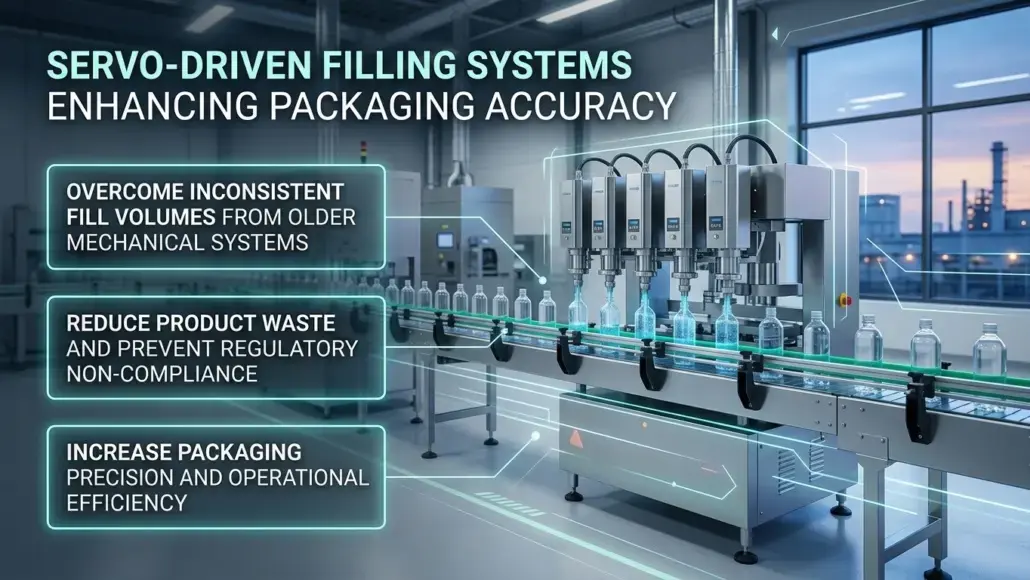
The requirement for absolute precision in the measurement and delivery of liquid and granular products has reached a level where traditional mechanical filling systems are increasingly seen as inadequate. In many industrial environments, the variation inherent in cam-driven or pneumatic mechanisms can lead to significant inconsistencies in fill volumes, resulting in product waste and potential regulatory non-compliance. To address these challenges, the industry is increasingly turning to advanced motion control technology. The implementation of servo-driven filling systems represents a fundamental shift in how packaging accuracy is achieved, providing a level of control and repeatability that was previously unattainable in high-speed production environments.
A servo motor is a rotary or linear actuator that allows for the precise control of angular or linear position, velocity, and acceleration. When integrated into a filling system, these motors allow for the exact modulation of the filling cycle for every unit. This means that the system can adjust the speed of the fill, the position of the nozzle, and the timing of the closure with microscopic precision. By moving away from rigid mechanical linkages in favor of flexible, software-driven control, manufacturers can ensure that every container is filled to the exact specification, regardless of the speed of the line or the viscosity of the product.
Precision Filling and Motion Control Standards
The primary benefit of utilizing servo-driven technology is the achievement of unparalleled precision filling. In many sectors, such as pharmaceuticals, cosmetics, and fine chemicals, even a small deviation from the specified volume can have serious implications for product safety and cost. Servo-driven filling systems utilise high-resolution encoders and closed-loop feedback systems to monitor the position of the actuator in real-time. If a variation is detected, the system can make an immediate correction, ensuring that the final unit meets the required standard. This level of accuracy is a cornerstone of modern manufacturing excellence and is essential for maintaining a strong brand reputation.
The role of motion control in these systems extends beyond the simple delivery of the product. Servo motors can be programmed to perform complex filling profiles, such as slow-start and slow-stop sequences, which are vital for preventing splashing and foaming in high-speed lines. This is particularly important for liquid packaging applications involving volatile or sensitive materials. By controlling every millisecond of the filling cycle, these systems provide a level of operational stability that reduces the risk of mess and equipment downtime. The precision offered by this technology is therefore a key part of the overall packaging efficiency of the facility.
Manufacturing Repeatability and Volumetric Accuracy
The ability to maintain a consistent fill volume over thousands of units is known as manufacturing repeatability, and it is a critical metric for any high-performance packaging line. Traditional volumetric filling systems often struggle with repeatability as the machinery wears or as environmental conditions change. Servo-driven filling systems are inherently more stable, as their performance is controlled by software rather than physical cams or valves. This ensures that the system provides the same result on the first unit of the day as it does on the last, supporting both the quality of the product and the financial health of the organization.
Volumetric filling using servo technology also allows for the easy storage and retrieval of recipes for different products. Instead of a technician having to manually adjust the mechanical stops or cams, they can simply select the appropriate recipe from a touch-screen interface. The servo motors then automatically adjust to the pre-defined positions and speeds required for that specific product and container size. This not only improves the accuracy of the process but also significantly reduces the time required for changeovers, providing the flexibility needed to manage a diverse and rapidly changing product lineup.
Industrial Machinery and Liquid Packaging Optimization
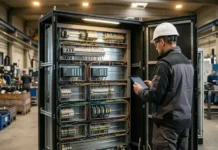
The integration of servo motors into industrial machinery has also led to a reduction in the physical complexity and maintenance requirements of the system. Traditional mechanical fillers contain hundreds of moving parts, such as linkages, cam followers, and gears, all of which require regular lubrication and adjustment. In contrast, servo-driven systems have fewer mechanical components, leading to a more reliable and durable operation. This reduction in complexity simplifies the task of equipment maintenance and reduces the total cost of ownership for the facility. The move toward “electronic camming” is a major trend that is redefining the design of modern packaging machinery.
In the liquid packaging sector, the ability to manage products with varying viscosities is a significant challenge. A system that works perfectly for a thin, water-like liquid may struggle with a thick, viscous paste. Servo-driven filling systems can be easily re-programmed to handle different flow characteristics, ensuring that the product is delivered with the same level of precision regardless of its physical properties. This adaptability is essential for manufacturers that process a wide range of products on a single line. The use of advanced motion control is therefore a vital tool for optimizing the entire packaging workflow and ensuring that the facility can meet the needs of its customers with ease.
Productivity and Quality Assurance Standards
The ultimate impact of adopting advanced motion control is an improvement in both the productivity and the quality of the packaging operation. By eliminating the inaccuracies and the downtime associated with older technology, firms can achieve much higher rates of throughput while maintaining the highest possible standards of quality. The data generated by servo-driven filling systems also provide a wealth of information for continuous improvement initiatives. By analyzing the performance of every fill cycle, production managers can identify subtle trends that may indicate a need for adjustment or maintenance, allowing for a more proactive approach to quality management.
Quality assurance is also strengthened through the integration of inspection systems that can verify the accuracy of the fill in real-time. Checkweighers and level sensors can provide feedback to the servo controller, allowing for even more precise adjustments as the line is running. This integrated approach ensures that every unit is perfect before it leaves the filling station, reducing the waste of raw materials and secondary packaging. The use of servo-driven filling systems is therefore a key part of a modern, data-driven strategy for excellence in the packaging sector, providing the precision and the reliability needed to succeed in a competitive global market.
Conclusion
The transition toward more precise and flexible filling operations is a defining feature of the modern industrial landscape. By replacing older mechanical systems with intelligent, software-driven technology, firms can achieve a level of operational precision that supports their long-term growth and success. The benefits of servo-driven filling systems extend across every aspect of the manufacturing line, from improved accuracy and reduced waste to enhanced reliability and lower maintenance costs.
In the coming years, the focus will likely remain on the integration of even more sophisticated motion control and data analytics features within the filling process. The ability to manage increasing complexity with a single, flexible system will remain a key characteristic of successful manufacturing firms. The ongoing commitment to servo technology and intelligent design will continue to provide the foundation for a more efficient, responsive, and high-quality packaging sector for decades to come.

