






















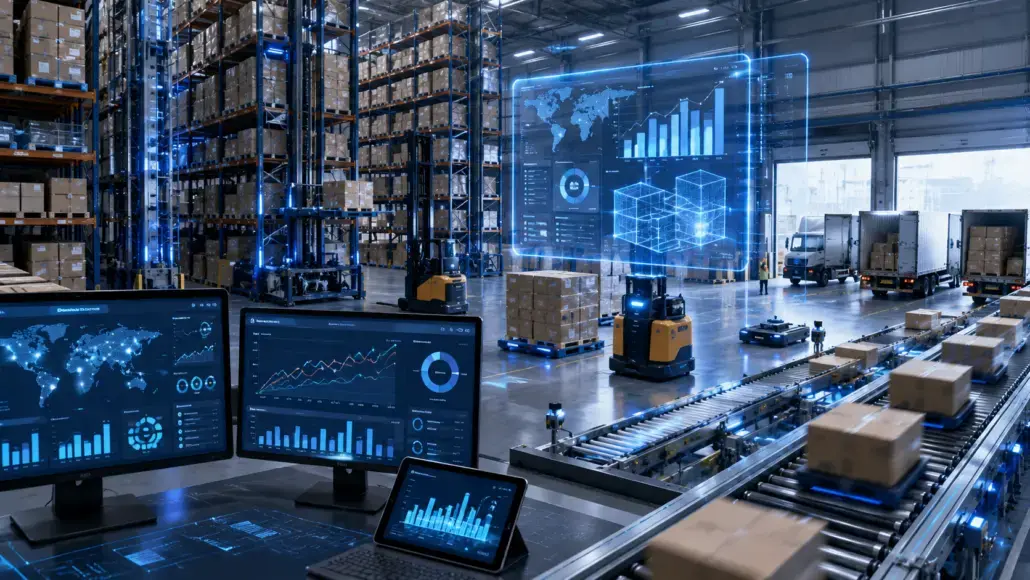

Inventory forecasting determines whether a business thrives or struggles under excess stock and missed sales. Overstocking ties up capital that could be used to fund hiring or expansion, while understocking means lost customers who won’t wait for a restock.
Modern third-party logistics providers store inventory and provide the data, flexibility and operational insights that help businesses make better forecasting decisions.
The High Cost of Inaccurate Inventory Forecasting
Poor forecasting creates a financial impact that goes well beyond the cost of excess or insufficient stock. When inventory levels miss the mark, businesses face consequences across multiple departments. Both overstocking and understocking create problems that need the same strategic fixes.
Overstocked inventory ties up working capital that growing companies need for other investments. Capital that could fund new hires, product development or market expansion instead sits in warehouse space, racking up fees and risking obsolescence. Understocking creates equally serious problems. Out-of-stock incidents amount to roughly 8% and result in about 4% revenue loss for typical retailers.
Inaccurate forecasts affect every part of operations. Purchasing teams scramble to place rush orders at premium prices, while production schedules fall apart when materials arrive late or in the wrong quantities.
Transportation departments pay expedited shipping fees to meet delivery commitments. By the time customer service starts fielding complaints, the forecasting mistake has already spread throughout the business.
How Modern 3PLs Evolve Beyond Basic Warehousing
Today’s third-party logistics providers (3PLs) offer far more than physical space. Many businesses initially outsource warehousing to free up space or simplify shipping.
What often surprises them is how much operational data comes from that relationship. Real-time data replaces spreadsheet guesswork, giving businesses a clearer picture of what’s happening across the supply chain.
1. Solve Chronic Space Shortages and Seasonality
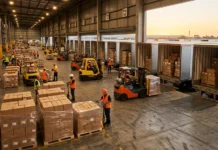
Flexible warehousing solutions let businesses scale their physical footprint up or down to match seasonal patterns. A retailer ramping up for Q4 holiday sales or a beverage company preparing for summer can temporarily expand capacity instead of paying for warehouse space that sits half-empty during quieter months.
Scalable warehousing also makes it easier to respond when demand shifts faster than expected, helping businesses maintain product availability without committing to permanent infrastructure.
2. Gain Strategic Proximity to New Markets
Working with a 3PL gives businesses access to a national or international network of distribution centers. Placing products closer to where customers live means shorter shipping distances and lower transportation costs. Spreading inventory across regions beats keeping everything in one location, resulting in faster fulfillment without relying heavily on expensive expedited shipping when forecasts miss.
3. Improve Day-to-Day Stock Release and Replenishment
Strong forecasting depends on accurate inventory records. Warehouse management systems and vendor-managed programs keep goods moving efficiently through the supply chain. Automated monitoring reduces manual counting and ordering errors that can throw off accuracy.
Continuous replenishment prevents disruptions for manufacturers and retailers by keeping stock levels steady. When inventory information stays up to date, planners spend less time correcting errors and more time making informed purchasing decisions.
4. Overcome Inefficient and Costly Yard Operations
Yard management often gets overlooked, but it’s a key part of supply chain efficiency. A well-run warehouse can still experience delays if trailers pile up outside the loading dock. Manual yard processes cause costly logistics delays, while automated processes like RFID scanning boost efficiency by 8% to 15%, improving performance.
The problem worsens when yards lack coordination. Trailers can sit idle for up to 80% of a standard shipment cycle, creating significant losses and delays that ripple through operations. An efficient 3PL solves these problems and keeps stock moving on schedule through:
- Appointment scheduling that minimizes congestion at loading docks.
- Real-time trailer location tracking to reduce wait time.
- Improved visibility that allows warehouse staff, carriers and transportation planners to coordinate more effectively.
Studying the 3PL Perspective and Proactive Yard Management
Jonathan Wolfrum, President of Keller Trucking, explains the company’s view on yard management technology. Wolfrum says, “We needed a tool that mirrors how our partners’ yards actually run, integrates with systems our customers need to have visibility, and lets us improve weekly based on operator feedback.” The goal is to “give our customers better visibility and boost efficiency in their yard operations.”
That philosophy extends beyond software. Keller Logistics’s YardLink system and vendor-managed programs are constantly refined based on what customers actually need. Better visibility enables more effective forecasting by eliminating inefficient yard operations.
Keller Logistics takes this collaborative approach further through its annual Logistics Summit, where customers work together on supply chain planning rather than simply placing orders.
Building a More Resilient and Data-Driven Supply Chain
Real optimization happens when businesses partner with 3PLs that combine technology and real-time information. Forecasting works best when it’s treated as an ongoing process instead of a quarterly planning exercise. Mixing historical sales, market trends and real-time operational data provides a much stronger foundation for inventory decisions than any sole dataset.
Using AI-powered forecasting models in supply chain management effectively reduces overstock and understock incidents, cuts inefficiencies by 20% to 50%, and minimizes lost sales and unnecessary warehouse expenses.
Even small improvements add up. Research shows that 1% better inventory management can translate into 7% better counting, which is critical for retail and fresh produce stock, where accuracy directly impacts profitability.
Strong supply chains depend on businesses and logistics partners working together with the right technology. Companies like Keller Logistics prove this by combining forecasting tools with operational know-how and a commitment to continuous improvement.
Frequently Asked Questions About 3PLs and Inventory
Companies exploring 3PL partnerships often have similar questions about implementation and outcomes.
Q: What is vendor-managed inventory (VMI)?
A: VMI is an arrangement where the 3PL monitors levels and manages replenishment on behalf of the customer. Manufacturing, retail and food distribution industries commonly use VMI to maintain optimal stock without requiring constant oversight. VMI works best when both parties share accurate information through integrated systems.
Q: How does a 3PL improve forecast accuracy?
A: 3PLs improve accuracy by providing access to larger datasets spanning multiple customers, regions and product categories. This broader perspective helps identify seasonal and regional trends that individual businesses might miss. Ongoing reporting allows companies to refine predictions over time based on actual performance.
Q: What kind of data is needed for good inventory forecasting?
A: Effective predictions require historical sales performance that shows patterns over time, current stock levels and supplier lead times, and seasonal patterns, promotional activities and external factors that influence purchasing behavior. These provide context that prevents reliance on past performance alone.
The Strategic Advantage of Partnership
Accurate inventory forecasting means the difference between companies that grow and companies that struggle. Modern 3PLs bring the infrastructure, expertise and real-time data that turn guesswork into solid business decisions.
Companies that view logistics providers as long-term partners rather than mere service vendors are often better positioned to respond to market shifts.