
























When you request an international ocean freight shipping quote, you might expect a single price. Instead, you receive an itemized invoice with surcharges that seem confusing. Ocean freight pricing isn’t one fixed rate — it’s built from independent cost components.
Understanding these elements helps you compare quotes accurately rather than simply choosing the lowest number.
Deconstruct the Freight Invoice Beyond the Base Rate
The base rate is the space your container occupies on board the ship, covering transport between ports. Almost every quote also includes variable surcharges that respond to changing market conditions, and each additional charge exists in addition to the base rate.
Some of these charges include the bunker adjustment factor, which compensates for fluctuating marine fuel prices. Terminal handling charges are separate fees that cover container movement and loading at the port. The general rate increase reflects carrier-imposed adjustments in response to market demand. The peak season surcharge applies when capacity constraints occur during holiday inventory surges.
Decide Volume With FCL and LCL
Choosing between full container load (FCL) and less-than-container load (LCL) affects price, transit time, cargo handling and damage risk. When you need an international ocean freight shipping quote, understanding this distinction helps you select the right option.
FCL has a flat rate per container regardless of how you fill it. Pricing is simpler because it’s based on container size, and fewer handling events reduce opportunities for delays. LCL means multiple loads share container space, with pricing calculated based on weight or measurements, and additional warehouse handling applies, increasing transit time.
As shipment volume grows, LCL costs increase while FCL remains constant. The flat rate on FCL may give logistics professionals wiggle room once cargo reaches a certain threshold.
Win the Freight Cost Game With Cube vs. Weight
LCL ocean freight uses cubic meters as the standard measurement. Volume frequently matters more than weight because lightweight products can occupy valuable container space despite weighing little. Dense products, such as machinery, often reach weight thresholds before filling the container.
Carriers compare cargo volume with cargo weight and bill whichever uses more capacity. Some optimization strategies to lower costs include stackable cartons, collapsible packaging and improved pallet configuration.
“Right-Size” and the Power of Packaging Design
Downsizing packaging too aggressively may reduce your initial freight costs but increase product damage and replacement costs, while right-sizing balances efficiency with protection. You should consider primary packaging that protects the product, secondary packaging to group products together and tertiary packaging to stabilize shipments during transport.
As much as 65% of damaged cargo is due to poor packaging, leading to substantial annual losses globally. Companies can lower shipping and operational expenses across the supply chain through appropriate packaging.
Congestion and Demurrage Costs
Demurrage applies when containers remain at the port beyond the free storage period, while detention applies when containers are returned to the terminal late. Port congestion, labor shortages, customs inspections and incomplete documentation create delays beyond your control with additional charges that apply.
Avoid these expenses by choosing a logistics partner who can prepare customs paperwork early, schedule drayage before vessel arrival and maintain communication between carriers and warehouses. Predictive logistics technology alerts you to delays before fees accumulate.
Method for Selecting the Best Freight Shipping Partners
These providers offer publicly available service information, international ocean freight shipping capabilities, digital shipping tools, customer support resources and overall value rather than lowest advertised pricing. Freight costs vary significantly based on shipment characteristics, so you should consider operational capabilities, as these provide better long-term value than comparing quotes alone.
Evaluation criteria included:
- Specialized services and international freight expertise.
- Technology platforms and customer experience tools.
- Pricing transparency and overall value proposition.
3 Top Companies Offering International Freight Shipping Quotes
Get an international ocean freight shipping quote to explore how various providers’ expertise supports your supply chain.
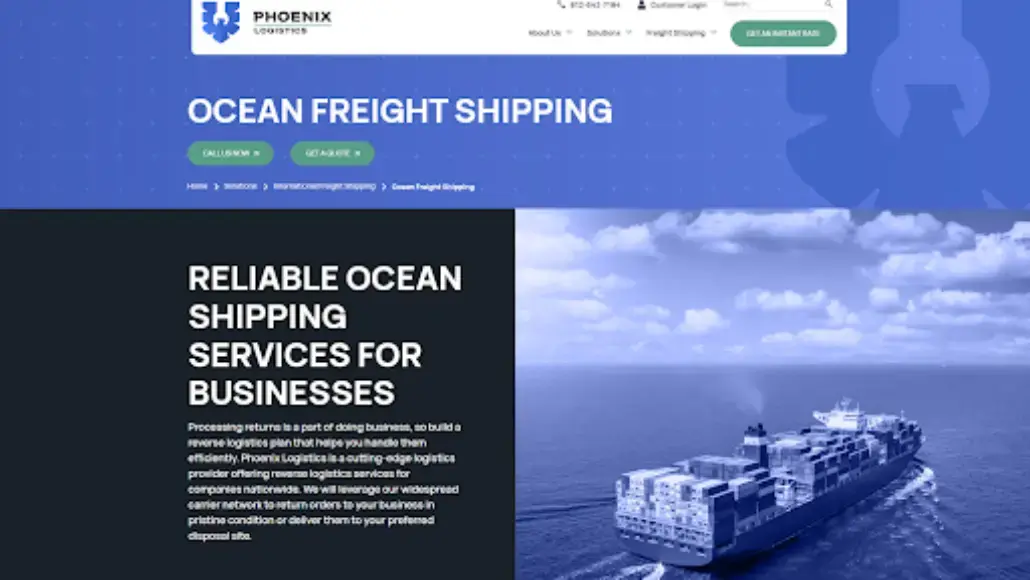
1. Phoenix Logistics
Phoenix Logistics operates as a relationship-driven freight brokerage, providing customers with access to logistics expertise, packaging and materials management. It offers personalized service combined with advanced logistics technology, emphasizing individual attention and tailored coordination. It also offers LTL dry goods, heavy haul and overdimensional, international shipping, and van, flatbed and refrigerated freight.
Key Features
- Specialized services: Phoenix Logistics offers cross-border shipping compliance expertise. It also handles complex reverse logistics for returns, warranty repairs and end-to-end freight brokerage.
- Technology and customer experience: The platform includes real-time tracking, automated document processing, API rating integrations and dedicated account managers.
- Pricing and value: Customers gain access to an extensive multimodal carrier network for optimized routing.
2. FedEx
FedEx Logistics provides global freight forwarding through ocean, air and multimodal transportation. The company’s scale and standardized processes make it attractive if you are moving freight across international markets. The company has extensive networks and freight lanes with guidance on international processes.
Key Features
- Specialized services: FedEx operates a global network with international air and ocean capabilities, door-to-door ocean freight forwarding and dedicated solutions for FCL and LCL shipments.
- Technology and customer experience: The platform features proprietary tracking systems, enterprise visibility tools and centralized shipment tracking.
- Pricing and value: FedEx offers standardized global pricing with flexible service combinations.
3. Geodis
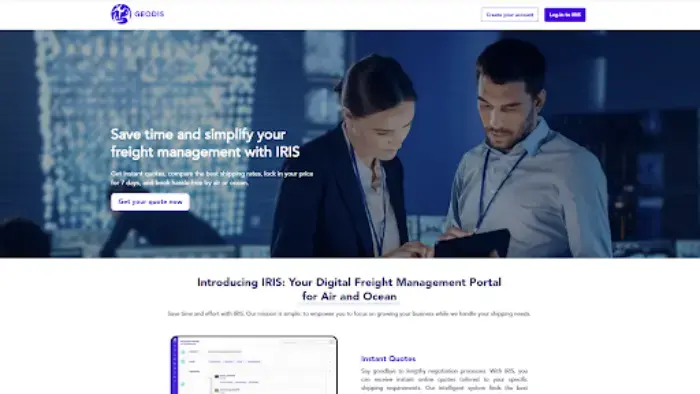
Geodis’s IRIS platform functions as a digital freight management portal. Businesses can request quotes, book shipments and manage documentation from one interface. Connectivity streamlines the process, and the online quote tool is helpful to manage rush shipments.
Key Features
- Specialized services: Geodis provides comprehensive freight forwarding and contract logistics with air and ocean freight forwarding.
- Technology and customer experience: The IRIS platform supports quote, booking, tracking and document management with centralized dashboards.
- Pricing and value: Geodis delivers global reach with industry-specific solutions and digital self-service capability.
Comparative Summary of Ocean Freight Shipping Partners
Key differences emerge across business models, customization and support styles.
| Factor | Phoenix Logistics | FedEx | Geodis |
| Best suited for | Manufacturers needing personalized logistics support | Large multinational businesses | Companies managing frequent international freight |
| Business model | Relationship-driven freight brokerage | Integrated global transportation network | Digital freight forwarder |
| Customization level | High-touch, tailored logistics planning | Standardized enterprise solutions | Highly configurable digital workflows |
| Ideal shipment frequency | Regular or project-based freight | High-volume recurring freight | Frequent international shipping |
| Customer support style | Dedicated account management | Structured enterprise support | Digital self-service supported by logistics specialists |
Frequently Asked Questions About International Ocean Shipping
Here are answers to common questions about international ocean freight pricing.
Q: What is the difference between an all-in rate and an itemized quote?
A: An all-in rate combines multiple transportation costs into a single simplified price. This makes budgeting easier but offers less transparency. However, itemized quotes separate individual charges such as freight, fuel, terminal handling and documentation fees, making it easier to compare providers and understand what you are paying for.
Q: How can sustainable packaging reduce ocean freight expenses?
A: Smaller packaging dimensions improve container utilization, while lighter materials reduce costs. Better-designed packaging also minimizes product damage, returns and disposal costs. Using sustainable packaging aligns with freight optimization because both eliminate unnecessary material and unused space.
Q: Why do ocean freight quotes change so frequently?
A: While the base freight rate may remain stable, variable costs such as fuel prices, port congestion, equipment availability and seasonal demand fluctuate regularly. Quotes are typically valid for a limited time, so you should confirm pricing before booking.
Navigate Freight Volatility With a Reliable Partner
International shipping costs fluctuate because fuel markets, global demand and port congestion remain unpredictable. Your most effective strategy is to focus on the variables you can control, such as packaging efficiency, documentation accuracy and carrier relationships. These provide stability when markets shift.