


























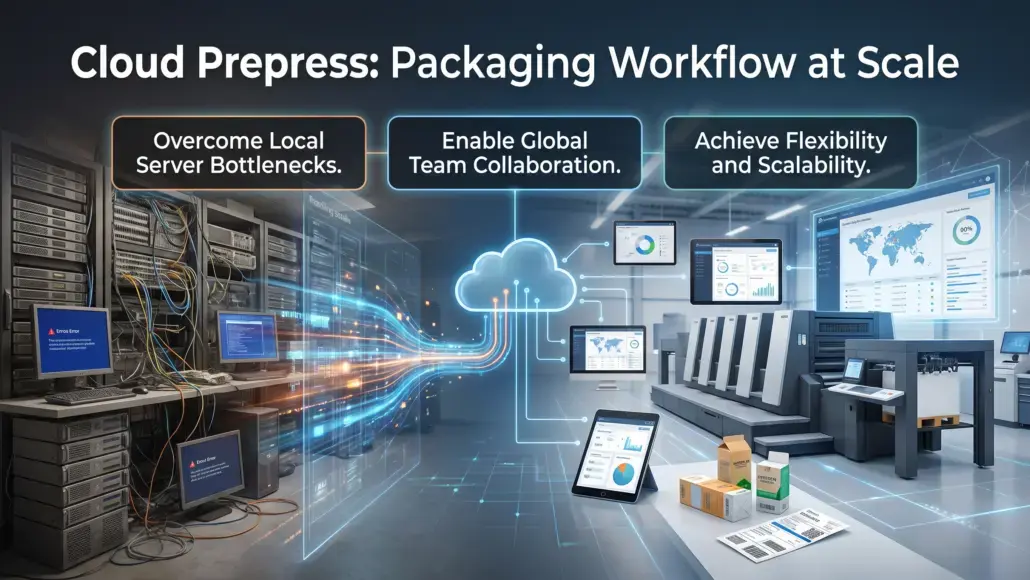

The transition of prepress operations to the cloud represents a fundamental shift in how packaging graphics are managed and produced. Historically, prepress workflows were tethered to local servers and specific geographic locations, creating significant bottlenecks as production volumes increased and teams became more globally distributed. By adopting cloud prepress platforms, organizations can overcome these limitations, providing their teams with the flexibility and scalability required to handle the complexities of modern packaging production. This transition allows for the centralization of assets and processes in a secure, web based environment, where stakeholders can collaborate in real time regardless of their physical location. The move to the cloud is not just about technology; it is about building a more agile and responsive operation that can adapt to the rapidly changing demands of the retail market.
In the contemporary packaging environment, the ability to scale operations quickly is a critical factor in maintaining a competitive edge. Traditional on premise systems often require significant capital investment in hardware and software to handle peak production periods, leading to underutilized capacity during quieter times. Cloud prepress platforms address this inefficiency by providing on demand access to computing resources and software tools, allowing organizations to scale their workflows up or down as needed. This elasticity ensures that the prepress team can handle large volumes of work during busy periods, such as seasonal launches or major brand refreshes, without the need for additional infrastructure. The resulting improvements in efficiency and cost management provide a solid foundation for sustainable growth and innovation in the packaging sector.
Architecture of Scalable Preproduction Environments
The architecture of a cloud based prepress environment is designed to support high volume production while maintaining a high degree of security and reliability. Unlike local systems that are limited by the physical capacity of their servers, the cloud offers virtually unlimited storage and processing power. This allows for the management of thousands of high resolution files and complex graphic assets without any degradation in performance. By hosting these assets in a central cloud repository, organizations can ensure that every member of the team, from designers to production artists and brand managers, is working from the same source of truth. This centralized approach eliminates the risks associated with manual file transfers and ensures that the integrity of the artwork is maintained throughout the entire preproduction cycle.
Additionally, the architecture of cloud prepress platforms facilitates the integration of various specialized tools and services, creating a unified ecosystem for packaging production. This includes automated preflighting, color management, and structural design tools that can be accessed through a single web interface. The use of application programming interfaces allows for the seamless exchange of data between the prepress platform and other enterprise systems, such as enterprise resource planning and digital asset management. This high degree of connectivity ensures that the prepress workflow is fully aligned with the broader business processes, enabling better coordination and more effective decision making. The move toward a service oriented architecture provides the flexibility to add or remove features as the needs of the business evolve, ensuring that the platform remains relevant and effective over the long term.
Collaborative Tools for Distributed Design Teams
Collaboration is a key driver of efficiency in the packaging workflow, but it can be difficult to manage when teams are spread across different regions and time zones. Cloud prepress platforms provide a suite of collaborative tools that allow for real time communication and feedback, reducing the friction in the design and approval process. Designers can share their work with colleagues and stakeholders through secure links, enabling them to review and annotate designs directly within their web browser. This eliminates the need for large email attachments and multiple rounds of revisions, as all feedback is captured in a single, centralized location. The ability to see who is working on what and track the status of every task provides project managers with the visibility they need to ensure that the production schedule remains on track.
These collaborative tools also enhance the relationship between brand owners and their external partners, such as design agencies and converters. By providing these partners with access to the cloud platform, organizations can foster a more transparent and efficient working environment. Converters, for example, can access the approved artwork files and technical specifications directly from the cloud, ensuring that they have everything they need to proceed with production. The use of digital proofing tools within the platform allows for the rapid review and approval of technical proofs, further reducing the lead time from design to print. This collaborative approach, supported by the power of the cloud, ensures that every stakeholder is aligned and working toward the same goal, resulting in higher quality packaging and a faster time to market.
Elastic Computing Power for Complex Graphics Tasks
Packaging prepress involves a range of computationally intensive tasks, such as high resolution image processing, complex transparency flattening, and 3D structural modeling. These tasks can put a significant strain on local hardware, leading to slow processing times and production delays. These remote systems utilize the elastic computing power of the cloud to perform these tasks quickly and efficiently, regardless of the size or complexity of the file. By offloading these processes to the cloud, organizations can free up local resources and ensure that their designers can work without interruption. This capability is particularly valuable for large scale projects that involve hundreds of SKU variants, where the cumulative time saved through faster processing can be substantial.
The elasticity of the cloud also means that organizations only pay for the computing resources they actually use. This move toward a variable cost model provides significant financial benefits, as it eliminates the need for large capital investments in high performance workstations and servers. During periods of high demand, the platform can automatically allocate additional resources to handle the increased workload, ensuring that production deadlines are met. When demand decreases, the resources are scaled back, reducing costs and improving overall operational efficiency. This ability to manage peak loads through elastic computing is a hallmark of a modern and scalable prepress operation, providing the agility and resilience needed to thrive in a competitive market.
Managing Peak Production Demands in Seasonal Packaging
The packaging industry is characterized by significant fluctuations in demand, driven by seasonal events, promotional campaigns, and new product launches. Managing these peaks can be a major challenge for prepress teams, who must handle a sudden influx of work without compromising on quality or speed. Advanced cloud solutions provide the perfect solution for managing these demands, offering the scalability and flexibility needed to adapt to changing volumes. By using automated workflows and cloud based resources, organizations can process a large number of artwork revisions and approvals in a short period of time, ensuring that the packaging is ready for production when it is needed.
The ability to scale up the prepress operation during busy periods also allows brands to be more responsive to market opportunities. For instance, if a brand needs to launch a limited edition promotional package in response to a sudden market trend, the cloud platform provides the agility to design and approve the artwork in a matter of days rather than weeks. This speed to market is a major competitive advantage in sectors such as fast moving consumer goods and fashion, where timing is everything. The use of standardized templates and automated processes within the cloud environment further enhances efficiency, ensuring that even high volume projects are executed with a high degree of accuracy and consistency. By building a scalable and responsive prepress workflow, organizations can better meet the needs of their customers and drive commercial success.
Cost Efficiency Models for Modern Prepress Infrastructure
The move to the cloud also offers significant opportunities to improve the cost efficiency of prepress operations. By shifting from an on premise infrastructure to a cloud based model, organizations can reduce the costs associated with hardware maintenance, software updates, and IT support. The cloud provider handles all the technical aspects of the platform, including security patches and performance optimizations, allowing the prepress team to focus on their core tasks. This reduction in administrative overhead leads to lower total cost of ownership and provides a more predictable and manageable budget for prepress operations. The use of a subscription based pricing model further enhances financial flexibility, as organizations can scale their usage based on their needs and budget.
Additionally, the increased efficiency and speed of cloud based workflows lead to direct savings in terms of reduced lead times and lower error rates. By shortening the time from design to production, brands can reduce the amount of capital tied up in the prepress cycle and improve their overall cash flow. The reduction in manual tasks and the elimination of redundant processes also lead to lower labor costs, as the team can manage a larger volume of work with fewer resources. These cost savings can be reinvested in other areas of the business, such as brand development and innovation, driving long term growth and value. The strategic adoption of these digital platforms is not just a technical upgrade; it is a smart business decision that supports the ongoing digital transformation of the packaging industry. Maintaining this focus on efficiency and scalability ensures that the organization is well positioned for success in a rapidly evolving global market.
Ultimately, the adoption of cloud based solutions is a key driver of scalability and innovation in the packaging prepress workflow. By providing distributed teams with shared access to powerful tools and centralized data, organizations can overcome the limitations of traditional systems and build a more agile and efficient operation. The focus on scalable architecture, collaborative tools, and elastic computing provides a framework for excellence that supports both high quality production and strategic business goals. As the global packaging sector continues to mature, the ability to manage and scale workflows effectively in the cloud will remain a critical differentiator for brands that seek to lead in a crowded and competitive market. This commitment to digital transformation and cloud based excellence is the hallmark of a successful and forward thinking packaging operation, ensuring that the brand’s vision is accurately and effectively delivered to the consumer, every time.