


















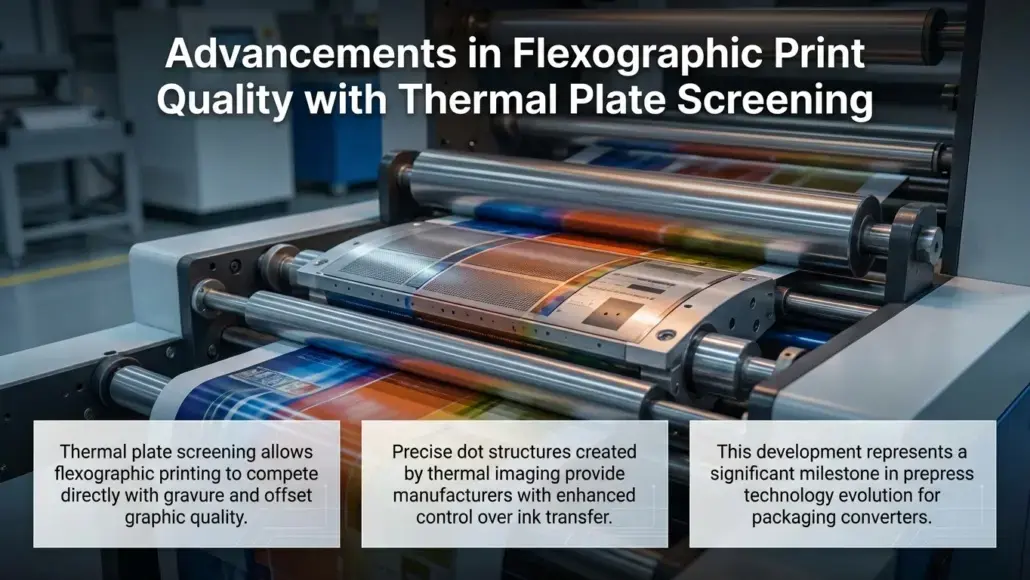

Achieving high-fidelity graphics in the flexographic sector requires a sophisticated approach to how light and ink interact on the surface of the photopolymer. The development of thermal plate screening represents a significant milestone in the evolution of prepress technology, providing converters with the tools to compete directly with gravure and offset quality. By utilizing thermal imaging to create precise dot structures on the plate, manufacturers can control the ink transfer process with unprecedented accuracy. This technology addresses the traditional limitations of flexography, such as harsh highlight transitions and inconsistent mid-tone behavior. When the screening process is optimized for the specific thermal characteristics of the plate material, the result is a print surface that can hold extremely fine detail while maintaining the structural integrity required for long production runs.
The physics of ink transfer in flexography are inherently challenging due to the pressure-sensitive nature of the process. Traditional analog or standard digital screening often results in dot gain that can distort the intended image, particularly in the highlights and shadows. The implementation of thermal plate screening mitigates these issues by creating flat-top dots or other engineered shapes that resist deformation under pressure. These specialized dot structures provide a more stable platform for the ink, ensuring that the volume transferred to the substrate remains constant throughout the run. This stability is crucial for brand owners who demand consistent color reproduction across different packaging formats and geographic regions. As the packaging market continues to shift toward more complex and visually demanding designs, the role of advanced screening technology becomes even more central to the production workflow.
Integration of these screening techniques into the broader prepress workflow requires a deep understanding of the relationship between the plate, the ink, and the substrate. Each variable must be carefully calibrated to ensure that the thermal imaging process delivers the desired results on the final package. For instance, the choice of screening pattern must be aligned with the anilox roll selection and the viscosity of the ink. Through the application of thermal plate screening, converters can achieve a wider color gamut and smoother vignettes, enhancing the shelf appeal of the finished product. This technical precision also contributes to a reduction in waste, as fewer adjustments are needed on the press to achieve the target quality. The ability to produce high-quality results predictably and repeatedly is the primary driver for the adoption of thermal screening across the global packaging industry.
Engineered Dot Structures and Highlight Stability
The primary advantage of advanced thermal imaging lies in the ability to manipulate the geometry of the printing dot at a microscopic level. In conventional flexography, the “oxygen inhibition” effect during UV exposure often leads to rounded dot tops, which are prone to excessive gain and instability. Thermal plate screening technology overcomes this by creating a physical barrier or using specific laser frequencies to ensure that the dots have a flat top and a reliable shoulder. This geometric stability allows for the reproduction of highlights down to zero percent, creating seamless transitions that were previously only possible with gravure. By maintaining a consistent contact area between the plate and the substrate, these engineered dots ensure that the visual impact of the packaging is never compromised by mechanical variations.
Additionally, the introduction of micro-surface texturing within the screening process has revolutionized how ink is distributed across solid areas. By creating microscopic patterns on the surface of the dots and solids, thermal plate screening improves the ink laydown, resulting in higher solid ink densities (SID) and a reduction in pinholing. This is particularly beneficial when printing on non-porous substrates like films and foils, where ink wetting can be problematic. The combination of highlight stability and superior solid coverage creates a dynamic range that brings packaging designs to life. Converters who master these techniques can offer their clients a level of visual depth that distinguishes their products in a competitive retail environment, while also benefiting from the increased production speeds allowed by more efficient ink transfer.
Precision in dot placement and shape also has a direct impact on the longevity of the printing plates. Because the dots are structurally sound, they are less likely to break down or wear out during extended runs. This durability means fewer plate changes and less downtime, contributing to the overall efficiency of the plant. When thermal plate screening is combined with rigorous plate-making standards, the result is a printing tool that performs consistently from the first impression to the last. This reliability is a cornerstone of modern packaging production, where tight margins and demanding schedules leave little room for error. The investment in thermal technology is thus justified not only by the quality of the output but also by the operational benefits it brings to the shop floor.
Color Consistency and Gamut Expansion
Brand owners are increasingly focused on the consistency of their corporate colors across a diverse range of packaging materials. Achieving this consistency is a complex task that involves the synchronization of multiple technical variables. Thermal plate screening provides the foundational accuracy needed to manage these variables effectively. By ensuring that the mechanical dot gain is predictable, the technology allows for more accurate color profiling and characterization. This predictability means that the colors seen on the proof are much more likely to match the final printed product. When converters can guarantee color fidelity, they build trust with their clients and reduce the risk of costly rejections or reprints.
The ability to expand the achievable color gamut is another significant benefit of thermal technology. By producing smaller, more stable dots, converters can use higher screen rulings without the risk of bridging or plugging. This allows for the reproduction of finer details and a broader range of colors within the standard CMYK set, or even when using extended gamut printing (EC G). Through the use of thermal plate screening, the transition between colors becomes more fluid, and the overall vibrancy of the package is enhanced. This is especially important for food and beverage packaging, where the visual representation of the product must be as appetizing as possible. The technical capability to deliver these high-end results is what separates leading converters from the rest of the market.
Effective management of the print process also requires careful oversight of the ink consumption. By optimizing the way ink is transferred from the plate to the substrate, thermal screening can lead to more efficient ink usage. For example, maintaining ink limit control improving packaging print quality across substrates is essential for ensuring that the dots do not become overloaded with ink, which would otherwise lead to muddiness and loss of detail. When the screening and ink limits are perfectly aligned, the result is a crisp, clean image that reflects the high standards of the brand. This synergy between different technical controls is what defines a high-performance packaging workflow. The data generated by these processes provides a clear roadmap for continuous improvement and quality assurance.
Integration with Modern Press Workflows
The implementation of thermal plate screening is not an isolated event but a part of a larger digital transformation within the packaging industry. Modern flexographic presses are equipped with sophisticated control systems that can take full advantage of the precision offered by thermal plates. The alignment between the prepress and the pressroom is enhanced by the use of digital job tickets and automated setup routines. When the press knows exactly what to expect from the plate, the time required to reach color is significantly reduced. This integration of thermal plate screening into the automated workflow allows for a more agile production environment, capable of handling a high volume of small orders with the same efficiency as large runs.
Environmental considerations also play a role in the adoption of these technologies. Thermal imaging processes are often more sustainable than older analog methods, as they typically use fewer chemicals and generate less waste. The precision of the screening also means that less material is wasted during the setup phase of the print run. As brand owners increasingly prioritize sustainability in their supply chains, converters who use advanced thermal screening can highlight these benefits as part of their value proposition. The reduction in energy consumption and waste is not only good for the planet but also improves the profitability of the operation. This alignment of economic and environmental goals is a powerful driver for technological change in the packaging sector.
Training and skill development are crucial for maximizing the return on investment in thermal technology. Operators and prepress technicians must understand the nuances of the thermal imaging process and how to troubleshoot issues as they arise. The transition to advanced screening requires a commitment to ongoing education and a culture of technical excellence. By investing in their people, converters ensure that they have the expertise to fully exploit the capabilities of thermal plate screening. The resulting increase in quality and efficiency provides a strong foundation for future growth and innovation. As the industry moves toward even higher levels of automation, the human element remains the key to enableing the full potential of advanced technology.
Future Developments in Screening Technology
Looking ahead, the evolution of screening technology will likely focus on even greater levels of automation and intelligence. The integration of artificial intelligence and machine learning into the screening process could allow for real-time adjustments based on the specific characteristics of the substrate and the ink. For example, a system could automatically adjust the dot shape to compensate for variations in substrate porosity or surface tension. These developments will further refine the capabilities of thermal plate screening, pushing the boundaries of what is possible in flexographic printing. The goal is a completely self-optimizing system that delivers perfect results every time, regardless of the complexity of the job.
The rise of digital-flexo hybrids is also influencing the development of new screening techniques. As converters seek to combine the speed and cost-effectiveness of flexo with the flexibility of digital, the need for compatible screening becomes paramount. Thermal screening technology is well-positioned to bridge this gap, providing a consistent visual language across different printing methods. This allows brands to maintain a unified look across their entire product line, even when different parts of the package are printed using different technologies. The ability to manage this complexity is a significant advantage for modern packaging providers. The continued investment in research and development will ensure that screening technology keeps pace with the changing needs of the market.
In the final analysis, the adoption of thermal plate screening represents a commitment to quality and innovation that is essential for success in the global packaging industry. By mastering the technical details of dot formation and ink transfer, converters can deliver superior products that meet the highest standards of brand owners. The benefits of this technology extend across the entire production cycle, from the prepress department to the retail shelf. As the market continues to demand more complex and sustainable packaging solutions, the precision and reliability of thermal screening will remain a vital asset. The journey toward print perfection is ongoing, and advanced screening technology is the map that guides the way.