























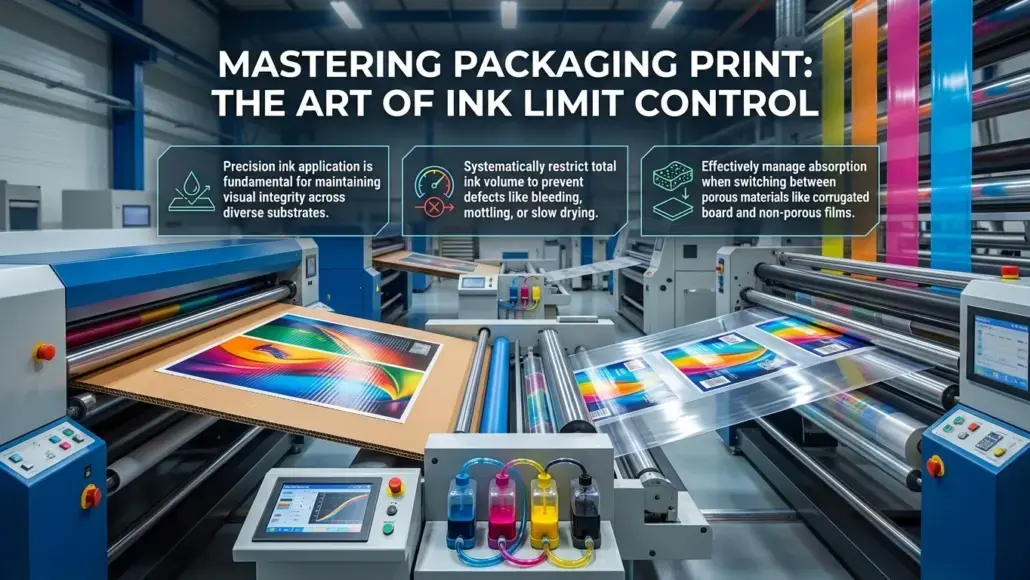

Precision in ink application is a fundamental requirement for maintaining the visual integrity of packaging designs across the vast array of substrates used in the industry today. The process of ink limit control involves the systematic restriction of total ink volume to ensure that the substrate can effectively absorb and hold the pigments without causing defects such as bleeding, mottling, or slow drying times. As converters move between porous materials like corrugated board and non-porous films or foils, the physical behavior of the ink changes dramatically. Managing these transitions requires a data-driven approach that balances the need for vibrant color with the physical constraints of the material. By establishing precise limits for each ink set and substrate combination, packaging professionals can ensure a consistent high-quality finish that meets the exacting standards of global brands. The technical challenge of managing ink volume is compounded by the increasing complexity of multi-color printing and the use of extended gamut sets. When multiple layers of ink are applied to a single point on the substrate, the total area coverage (TAC) can quickly exceed the material’s saturation point. This leads to a loss of detail in the shadows and a muddy appearance in the mid-tones. The implementation of ink limit control at the prepress stage allows for the intelligent reduction of ink volumes without compromising the perceived color intensity. Through advanced color management software, converters can calculate the optimal ink levels that provide the highest density while maintaining the necessary drying and adhesion properties. This level of control is essential for preventing production bottlenecks and reducing the amount of waste generated during the printing process. Substrate variability remains one of the most significant hurdles in achieving universal print quality. Even within the same category of material, variations in surface tension, smoothness, and chemical composition can affect how ink is received. A reliable ink limit control strategy accounts for these variations by incorporating regular testing and calibration cycles. By using spectrophotometers and densitometers to measure the actual ink laydown on the production floor, converters can refine their profiles in real-time. This continuous feedback loop ensures that the print remains within the specified tolerances throughout the entire run. As the packaging market continues to evolve toward more specialized and sustainable materials, the ability to adapt ink levels to new substrates will be a critical competitive advantage for converters worldwide.
Optimizing Saturation for Diverse Materials
The relationship between ink volume and substrate performance is a delicate balance that directly influences the final appearance of the package. On highly absorbent materials like uncoated paper or recycled board, excessive ink can lead to “wicking,” where the pigments spread along the fibers, resulting in blurry text and soft images. Conversely, on smooth, non-porous surfaces like PET or metallic foils, too much ink can result in “beading” or poor trap performance, where subsequent ink layers fail to adhere properly to the previous ones. Effective ink limit control addresses these issues by tailoring the ink delivery to the specific absorption and surface energy characteristics of the substrate. This ensures that every dot of ink is placed with precision and stays where it is intended, resulting in sharp, high-contrast graphics. Technical advancements in ink formulation, including the development of high-pigment-load inks, have provided converters with more flexibility in managing their ink limits. These inks allow for the achievement of deep, saturated colors with a lower overall volume of fluid, which simplifies the drying process and reduces the risk of set-off or blocking in the finished rolls. When these advanced inks are combined with sophisticated ink limit control techniques, the results are both visually stunning and operationally efficient. The reduction in total ink volume also has a positive impact on the cost of production, as ink represents a significant portion of the variable expenses in a print run. By using only as much ink as is necessary to achieve the target color, converters can improve their margins while delivering a superior product to their clients. The role of the anilox roll in this process cannot be overstated, particularly in flexographic environments. The cell volume and geometry of the anilox determine the initial amount of ink delivered to the plate, but the final control happens through the digital screening and profiling. By coordinating the selection of the anilox with the ink limit control settings in the prepress software, converters can achieve a level of precision that was previously unattainable. This integrated approach ensures that the entire ink delivery system is optimized for the specific job at hand. The result is a more stable printing process that is less sensitive to minor fluctuations in environmental conditions or press speed, providing a more reliable foundation for high-quality packaging production.
Color Accuracy and Tonal Reproduction
Maintaining the intended color balance across a range of different packaging formats is a primary goal for any brand-focused converter. The implementation of ink limit control is a vital component of this effort, as it prevents the color shifts that occur when one or more inks reach their saturation point prematurely. When the ink limits are correctly set, the tonal reproduction curve remains linear, allowing for predictable and repeatable color matching. This is especially important for skin tones, food images, and brand-critical spot colors, where even a slight deviation can be jarring to the consumer. By controlling the ink volume at every step of the process, converters can guarantee that the final product will match the approved proof, regardless of the substrate used. Sophisticated structural dieline verification improving packaging conversion accuracy is another critical step in the workflow that relies on the precision of the print. If the ink is not properly controlled, it can interfere with the creasing and folding processes during conversion. For example, excessive ink coverage along a fold line can lead to cracking or delamination, compromising the structural integrity and aesthetic appeal of the package. By ensuring that the ink limits are respected, especially in areas adjacent to scores and cut lines, converters can ensure that the final package is both beautiful and functional. This synergy between print quality and conversion accuracy is a hallmark of a well-managed packaging operation that understands the holistic nature of the production cycle. Additionally, the use of gray balance as a control metric is enhanced by effective ink management. By stabilizing the neutral tones, converters can more easily detect and correct for color casts in the rest of the image. This stability is only possible when the ink limits for cyan, magenta, and yellow are perfectly balanced against the substrate’s white point. Through the application of ink limit control, the entire color gamut is managed more effectively, providing the press operator with a wider “window” of operation. This means that small variations in the press run are less likely to result in unsalable products, leading to a significant reduction in waste and an increase in overall profitability for the conversion facility.
Drying Efficiency and Post-Press Performance
The speed at which a press can run is often limited by the capacity of the drying system to remove the carrier fluid from the ink. If the ink volume exceeds the drying capacity, the result is “smearing” or “blocking,” where the ink transfers to the back of the web or causes the layers to stick together. Ink limit control plays a crucial role in optimizing press speeds by ensuring that the ink volume is kept to the minimum required for color density. This allows the dryers to work more effectively, enabling faster production runs without the risk of quality defects. For converters working with solvent-based or water-based inks, this control is essential for managing the energy consumption of the drying systems and meeting environmental regulations regarding VOC emissions. In the case of UV-curable inks, the challenge is ensuring that the UV light can penetrate the entire ink film to achieve a full cure. Excessive ink thickness can block the light, leading to an uncured layer at the substrate interface, which results in poor adhesion and potential migration issues. By implementing rigorous ink limit control, converters can ensure that the ink films are thin enough for complete curing while still providing the necessary color and opacity. This is particularly important for food packaging, where the safety and integrity of the ink film are non-negotiable. The ability to demonstrate precise control over the ink application process is a key requirement for complying with global food safety standards and building confidence with brand owners. The impact of ink volume also extends to the finishing and lamination processes. If the ink is too thick or poorly cured, it can act as a barrier to the adhesive, leading to delamination or “tunneling” in the finished laminate. By maintaining strict ink limit control, converters ensure that the surface of the print is receptive to subsequent coatings or films. This ensures a durable and high-quality bond that can withstand the rigors of the supply chain. The integration of ink management into the broader quality control system ensures that each stage of the process supports the next, leading to a finished package that meets all functional and aesthetic requirements. This technical discipline is what allows modern packaging providers to deliver complex, multi-layered solutions with total confidence.
Sustainability and Waste Reduction
As the packaging industry faces increasing pressure to reduce its environmental footprint, the efficient use of materials has become a top priority. Ink limit control is a powerful tool for sustainability, as it directly reduces the amount of ink consumed in every job. While the savings on a single package may seem small, the cumulative effect across millions of impressions is substantial. By using less ink, converters also reduce the amount of energy required for drying and curing, leading to a lower overall carbon footprint for the production process. This alignment of economic and environmental goals is a driving force behind the adoption of advanced ink management technologies across the global packaging supply chain. The reduction in waste is not limited to the ink itself. By improving the stability and predictability of the print run, ink limit control reduces the amount of substrate wasted during the setup and make-ready phases. When the press operator knows that the ink levels are correctly calibrated for the material, they can reach the target color more quickly and with fewer adjustments. This results in less scrap material and a more efficient use of the press’s time. For converters working with expensive specialty substrates, these savings can have a major impact on the profitability of the business. The ability to produce high-quality results with minimal waste is a key indicator of a mature and socially responsible packaging operation. Finally, the mastery of ink limit control is a fundamental requirement for any packaging converter seeking to deliver high-quality results across a diverse range of substrates. By balancing the technical requirements of the ink, the substrate, and the drying system, converters can achieve a level of precision and consistency that meets the highest standards of the industry. The benefits of this control extend from the visual appeal of the package on the retail shelf to the operational efficiency and sustainability of the production floor. As the industry continues to innovate with new materials and printing technologies, the importance of precise ink management will only continue to grow. Those who invest in the tools and expertise to master this process will be well-positioned to lead the next generation of packaging excellence.