


















The packaging industry is currently navigating a period of intense pressure, characterized by skyrocketing material costs, a persistent labor shortage, and a consumer demand for near-instant delivery. In this challenging environment, the traditional manual methods of print production are no longer sustainable. To survive and thrive, manufacturers are turning toward packaging print automation a comprehensive suite of technologies that link software, robotics, and data to create a seamless, high-efficiency manufacturing ecosystem. This shift is not merely about replacing human labor; it is about elevating the entire production process to achieve a level of consistency and speed that human operators alone cannot provide.
The Digital Foundation of an Automated Print Workflow
The journey toward full automation begins long before the first drop of ink hits the substrate. The pre-press stage is historically one of the most labor-intensive and error-prone parts of the printing process. It involves checking customer files for errors, managing color profiles, and arranging designs on a layout to minimize material waste a process known as imposition. In a traditional shop, this could take hours of manual work by skilled technicians.
Modern packaging print automation has transformed this bottleneck through intelligent software. Automated “pre-flighting” tools can instantly scan incoming files, identify missing fonts or low-resolution images, and even fix common errors without human intervention. Sophisticated algorithms can now handle imposition in seconds, calculating the most efficient way to fit dozens of unique boxes onto a single sheet of paper. By creating a digital workflow where data flows uninterrupted from the initial order to the production floor, manufacturers can drastically reduce the “touch points” that lead to delays and costly mistakes.
Precision and Speed on the Modern Production Floor
Once the digital files are prepared, the focus shifts to the pressroom. In the past, “makeready” the process of setting up a press for a new job was a time-consuming ritual involving physical adjustments, trial-and-error color matching, and hundreds of sheets of wasted material. Today, smart printing systems have automated nearly every aspect of this setup. High-end presses can now automatically load plates, adjust ink fountains, and synchronize registration with the push of a button.
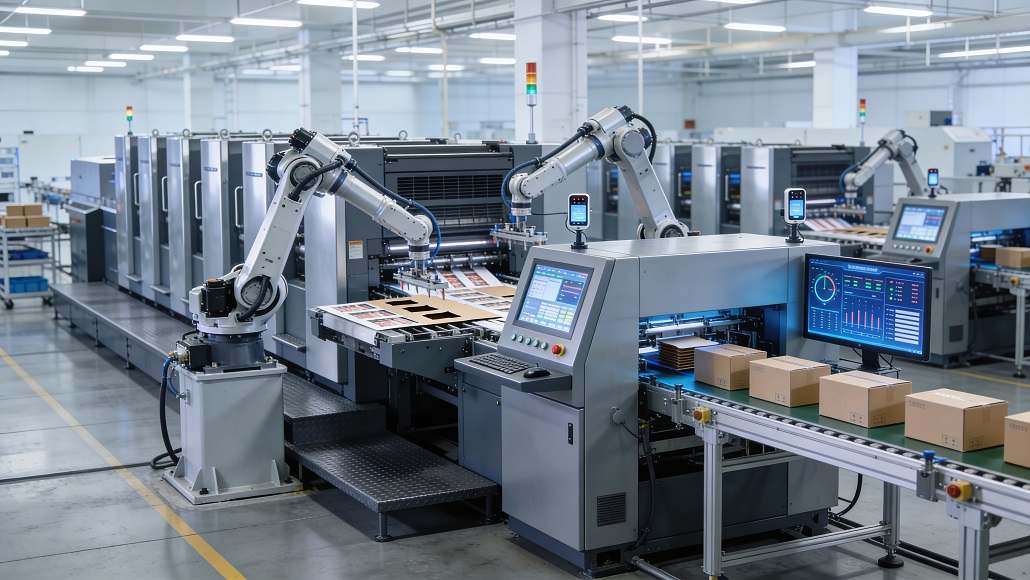
The real power of packaging print automation in the pressroom lies in real-time monitoring and adjustment. Inline sensors and high-speed cameras can inspect every single sheet as it flies through the press at hundreds of feet per minute. If the color drifts even slightly or a tiny speck appears on the plate, the system can detect it instantly. In many cases, the press can make micro-adjustments on the fly to correct the issue without stopping production. This level of “closed-loop” control ensures that the first box in a run looks exactly like the ten-thousandth, providing the brand consistency that global companies demand.
Beyond the Press: Automating the Finishing and Logistics Stages
The production of a package does not end with printing. The printed sheets must be die-cut, folded, glued, and palletized processes that have traditionally required large teams of manual workers. However, packaging production automation is now making significant inroads into these “post-press” stages. Automated die-cutting machines can now set their own parameters based on digital job files, while robotic arms can handle the heavy lifting of moving materials between different machines.
One of the most significant innovations in finishing is the rise of the “all-in-one” production line. These systems can take a roll of raw material at one end and produce finished, glued, and stacked boxes at the other, with virtually no human contact in between. This not only speeds up the production cycle but also reduces the risk of damage that occurs when materials are moved manually around a factory floor. Furthermore, integrated sensors can track the exact location of every order, providing customers with real-time updates on their production status.
The Strategic Impact on Sustainability and Waste Reduction
While automation is often discussed in terms of productivity, its impact on sustainability is equally profound. In a manual printing environment, waste is an accepted part of the process the “startup waste” generated while trying to get the color right. By automating the setup and color management phases, packaging print automation can reduce this waste by as much as 50% or more.
Furthermore, the precision of automated systems means fewer rejected jobs. When every sheet is inspected and corrected in real-time, the likelihood of an entire batch being discarded due to a quality error is virtually eliminated. This efficiency translates directly into a smaller carbon footprint, as fewer raw materials are consumed and less energy is wasted on defective production. For manufacturers, this is a rare “win-win” scenario where operational efficiency and environmental responsibility go hand in hand.
Empowering the Workforce through Advanced Technology
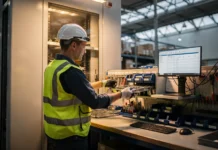
A common misconception about automation is that it aims to eliminate jobs. In reality, the goal of packaging print automation is to solve the problem of a shrinking workforce and to free up human employees for more valuable tasks. The packaging industry is facing a significant “skills gap,” as many veteran press operators retire and fewer young people enter the trade. Automation allows a single skilled operator to manage multiple machines simultaneously, leveraging their expertise to oversee the process rather than performing repetitive physical tasks.
This shift changes the nature of work in the packaging plant. Instead of manual labor, the modern worker needs skills in data analysis, software management, and mechanical troubleshooting. Manufacturers are increasingly investing in training programs to help their teams transition to these new roles. By creating a more high-tech, intellectually stimulating work environment, the industry can attract a new generation of talent that might have otherwise overlooked a career in manufacturing.
Navigating the Roadmap to Fully Automated Operations
Transitioning to a highly automated environment is a journey, not an overnight event. It requires a significant capital investment and a willingness to rethink long-standing business processes. The first step for many manufacturers is the implementation of a Management Information System (MIS) or Enterprise Resource Planning (ERP) tool that can serve as the “brain” of the operation. These systems collect data from every department from sales and estimating to production and shipping providing the visibility needed to identify bottlenecks and prioritize automation projects.
Integration is the key to success. For packaging print automation to be truly effective, the different pieces of hardware and software must be able to communicate seamlessly. This has led to the adoption of industry-wide communication standards, such as JDF (Job Definition Format), which allow a design file from one vendor to “talk” to a press from another and a folder-gluer from a third. As these ecosystems become more interconnected, the vision of the “lights-out” factory where production continues autonomously even when the staff has gone home is becoming a tangible reality.
The Future of the Packaging Print Landscape
The transformation of packaging print production through automation is a fundamental evolution that is setting the stage for the next decade of industry growth. As technology continues to advance, we will see even deeper integration of artificial intelligence and machine learning, allowing systems to predict maintenance needs before a breakdown occurs and to optimize schedules for maximum energy efficiency.
For brands and retailers, this means a packaging supply chain that is faster, more reliable, and more sustainable than ever before. The ability to move from a design concept to a finished product in a matter of days will become the standard expectation. The manufacturers who embrace packaging print automation today are not just improving their bottom line; they are building the agile foundations necessary to lead the market in a rapidly changing world. The era of manual, disconnected production is over the future is automated, integrated, and incredibly efficient.