
















Key Takeaways
- Digital pouch printing eliminates plate engraving delays and setup costs, reducing time-to-market from 4-6 weeks to 5-10 days for new designs
- Variable data printing enables unique personalization on each pouch serial numbers, QR codes, individual names supporting loyalty programs and anti-counterfeiting
- Automated finishing systems including laser scoring, perforation, and thermal lamination compress multi-day finishing operations into single integrated production cycles
- Color iteration flexibility enables rapid design testing and optimization without plate replacement changing designs requires PDF file updates rather than expensive new printing plates
- Setup waste reduction through optimized print profiles and preflighted artwork reduces material waste by 15-25% compared to conventional flexographic production
- Multi-SKU rapid production enables seasonal releases, limited editions, and market-responsive product variations impossible within conventional long-run production economics
- Digital workflow integration connects design systems directly to production equipment, eliminating manual file transfer and reducing operator error through automated pre flighting
The Transformation of Flexible Packaging Production
The flexible packaging industry has historically operated within constraints inherited from conventional printing technologies. Long production runs reducing per-unit costs, extensive setup procedures requiring multiple-hour changeover times, and fixed production schedules determined months in advance created rigid operational models incompatible with contemporary market dynamics. Brands increasingly demand rapid market response, product personalization, limited-edition releases, and sustainable production approaches minimizing waste. These evolving requirements fundamentally conflict with conventional production paradigms.
Digital pouch production represents a comprehensive restructuring of production workflows addressing these market pressures. Rather than optimizing for maximum volume per run, digital systems optimize for flexibility, speed, and minimal waste often producing superior economic outcomes for reduced-volume applications despite lower per-unit production speeds. This architectural shift enables entirely new business models, market segmentation approaches, and brand engagement strategies previously impossible within conventional production frameworks.
Digital Print Engine Architecture and Flexible Pouch Capabilities
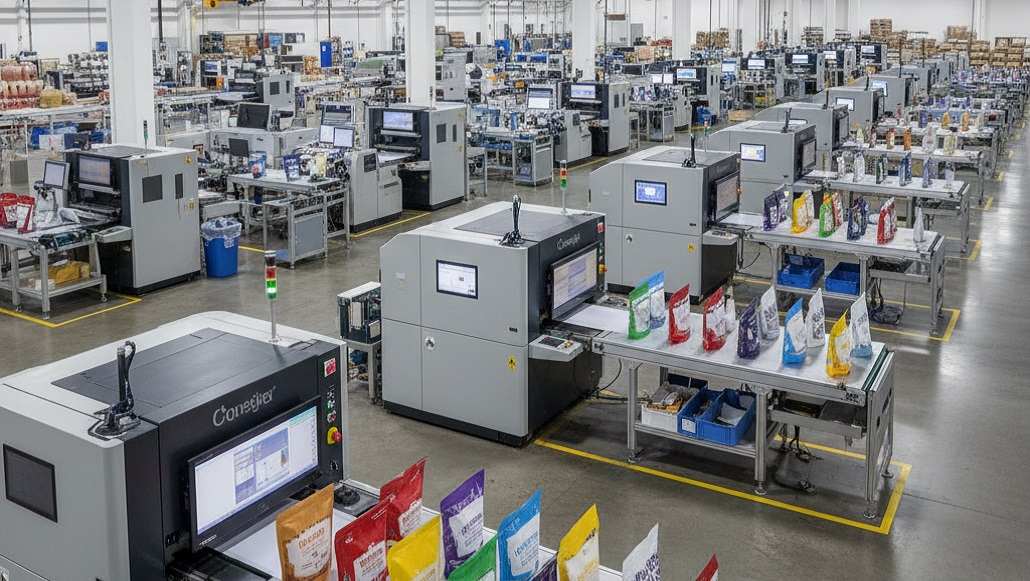
Contemporary digital press technology employs multiple printing approaches, each offering distinct advantages for flexible pouch applications. Electrophotographic systems using liquid toner technology deliver exceptional registration precision and superior fine-text reproduction critical for nutritional labels, regulatory information, and detailed product photography. UV and water-based inkjet systems provide excellent white ink opacity on transparent films and rapid color iteration capabilities valuable for design prototyping and short-run applications.
The architecture of digital systems enables production of diverse pouch formats: stand-up pouches, flat pouches, resealable formats, spout pouches, and pillow packs. Each format carries distinct production considerations spout pouches require reinforced sealing areas and specific film structures; lidding films demand precise peel-strength control; flow-wrap applications need consistent coefficient-of-friction properties. Modern digital systems accommodate these varying requirements through modular design and customizable finishing options.
Digital printing presses achieve production speeds ranging 50-200 meters per minute depending on resolution requirements and technology platform. While trailing conventional flexographic presses achieving 500+ meters per minute, digital speeds prove fully competitive for short-to-medium volume applications. The economic crossover point where digital economics become advantageous versus conventional methods typically occurs around 500-5,000 unit quantities, depending on complexity and substrate specifications.
Workflow Integration and File-to-Production Processes
Modern digital workflows streamline the entire production pipeline from design through finished product. Cloud-based prepress systems automatically prepare digital artwork for production optimizing halftone patterns, managing color spaces across substrate variations, and generating production-ready files without manual operator intervention. Artificial intelligence systems analyze artwork, predicting production outcomes and suggesting modifications addressing potential quality issues before production begins.
File transmission protocols have evolved from manual USB transfers prone to error toward secure cloud-based systems maintaining version control and automated backups. Production operators access production files through web-based interfaces displaying high-resolution previews and complete production parameters. This digital pipeline eliminates manual data entry errors while providing comprehensive documentation of production specifications.
Print profile libraries capture production parameters optimized for specific substrate types, ink formulations, and equipment configurations. When operators select profiles matching job requirements, digital systems automatically configure equipment settings, eliminating manual setup and reducing operator error. The profile approach provides consistent results across production shifts and facilities critical for multi-facility operations requiring brand consistency across dispersed manufacturing locations.
Variable Data Printing and Personalization Capabilities
Variable data printing represents perhaps the most commercially significant digital capability, enabling unique personalization on each printed unit. Stand-up pouches can incorporate individual customer names, creating direct engagement otherwise impossible at scale. Loyalty program codes can be uniquely generated per unit, enabling targeted consumer engagement through digital platforms. Product serialization implements unique identifiers supporting product authentication, supply chain traceability, and supply chain security.
QR code variable data combines dynamic content generation with physical product authentication. Each pouch carries unique QR code linking to individualized content whether product information, promotional offers, or authentication verification. This personalization transforms packaging from static communication vehicle into dynamic engagement platform supporting direct consumer interaction and data collection.
For specialty applications, variable data enables product-level customization supporting personalized e-commerce experiences. Subscription boxes can feature recipient names prominently on packaging. Corporate gifting applications can incorporate recipient information supporting executive gift differentiation. These personalization capabilities expand addressable markets for digital production, enabling applications impossible within conventional production frameworks.
Rapid Prototyping and Design Iteration
The elimination of plate costs and setup delays fundamentally changes product development workflows. Brands can produce sample quantities for consumer testing or retail evaluation within days, dramatically accelerating product development cycles. Design iterations testing different color combinations, label placement, or messaging variations can be evaluated in production quantities 5,000-unit test runs now feasible within single-week timelines.
This rapid iteration capability enables data-driven design optimization. Rather than committing to design decisions based on historical experience or limited prototyping, brands test designs with target consumers, measure purchase behavior, and refine designs based on quantified results. Design modifications previously requiring months and substantial investment can now be implemented within days, enabling continuous optimization based on market feedback.
Short-Run Production Economics and Market Response Agility
Short-run pouch manufacturing enables brands to respond dynamically to market opportunities previously requiring months of advance planning. Seasonal product launches, promotional packaging, limited-edition releases, and region-specific variants can be produced with minimal inventory risk. Rather than committing large inventory quantities to seasonal products months in advance, digital production enables manufacture-to-demand approaches minimizing obsolescence while ensuring product availability.
E-commerce retailers particularly benefit from short-run capabilities. Direct-to-consumer brands can optimize packaging designs based on rapid customer feedback rather than locking packaging specifications months before production. Test and learn approaches evaluate different packaging messages, designs, or sustainability claims measuring impact on customer perception through feedback loops informing subsequent production runs.
Multi-SKU Production and Simplified Changeovers
Traditional flexographic changeovers require replacement of complete plate cylinders, ink systems calibration, and extensive testing consuming 2-4 hours before production resumes. Automated finishing systems within digital workflows reduce changeover times to 5-15 minutes. Production operators simply select new design files, equipment automatically reconfigures, and production proceeds. This dramatic changeover efficiency enables economical multi-SKU production runs producing 5,000 units each of 10 different pouches within single production shift.
This multi-SKU agility transforms production economics for brands managing diverse product portfolios. Rather than running large quantities of single SKUs across week-long production schedules, digital systems enable efficient production of smaller quantities across broader SKU ranges. The operational flexibility supports rapid market segmentation, enables portfolio expansion, and supports retailer-specific packaging variations without proportional cost increases.
Finishing Automation and Integrated Operations
Automated finishing systems compress traditionally multi-day finishing operations into single integrated cycles. Laser scoring creates precise fold lines and tear notches enabling easy-open sachets or optimal fold geometry. Perforation systems create perforations enabling controlled tear-along lines without damaging package contents. Thermal lamination applies protective coatings immediately following printing, eliminating intermediate handling and reducing contamination risk.
Variable data integration enables serial number imposition directly alongside decorative graphics no separate labeling or post-production serialization operations. Adhesive application systems enable integrated label affixing or structural component bonding without requiring manual assembly operations. These integrated approaches eliminate intermediate handling steps, reduce quality risk from manual operations, and compress production timelines substantially.
Sustainability and Waste Reduction
Digital production workflows deliver inherent sustainability advantages compared to conventional alternatives. Setup waste reduction printing only required quantities rather than minimum economic runs minimizes material waste. Color iteration flexibility enables design optimization without plate replacement, reducing resource consumption and environmental impact.
Substrate selection optimization becomes more feasible within digital frameworks. Rather than standardizing on universal substrates compatible with existing flexographic equipment, digital systems accommodate diverse specialized materials. Recyclable mono-material films, compostable substrates, and high-recycled-content materials become economically viable even for short runs, enabling sustainability alignment without prohibitive cost premiums.
Ink formulation optimization accelerates adoption of water-based and eco-friendly inks. Digital systems integrate seamlessly with sustainable ink formulations previously considered incompatible with conventional printing. The flexibility to rapidly trial different ink systems enables manufacturers to identify optimal environmental performance without substantial risk or capital commitment.
Integration with Distributed Manufacturing Networks
Large brand organizations increasingly establish distributed manufacturing networks employing multiple contract manufacturers and co-packers. Digital workflow standardization enables design files to transfer seamlessly across facilities without requiring plant-specific modifications or re-engineering. Global brands can maintain brand consistency across geographically dispersed production while enabling local manufacturing supporting just-in-time delivery.
Cloud-based production platforms provide centralized management of distributed production, enabling comprehensive visibility into production status across multiple facilities. Production scheduling optimization allocates orders to facilities minimizing transport costs and lead times. Quality monitoring systems aggregate data across facilities, enabling identification of performance trends and optimization opportunities.
Implementation Considerations and Success Factors
Successful digital pouch production implementation requires substantial planning and appropriate expectation management. While digital systems excel at flexibility and short-run economics, high-volume long-run applications may achieve lower per-unit costs through conventional approaches. Optimal implementations employ hybrid strategies: digital systems for variable or seasonal SKUs, short runs, and personalized applications; conventional systems for high-volume core products where speed and cost optimization prove paramount.
Operator training represents critical implementation success factor. Digital systems require different skill sets than conventional equipment operators must understand file management, color management, and digital troubleshooting alongside traditional production operation skills. Organizations investing in comprehensive operator training and development realize superior performance and faster proficiency development.
Future Evolution and Emerging Capabilities
Advanced digital systems increasingly incorporate artificial intelligence and real-time quality monitoring. Machine learning algorithms analyze production data, identifying optimization opportunities and predicting quality issues before they manifest. Automated quality feedback systems continuously adjust production parameters maintaining consistency throughout production runs without operator intervention.
Three-dimensional pouch production represents emerging frontier technology, enabling pouches with structural complexity and tactile differentiation impossible with conventional approaches. Embossed patterns, variable thickness structures, and integrated structural elements create premium packaging supporting brand differentiation and enhanced consumer experience.
Conclusion
Digital pouch production workflows fundamentally restructure flexible packaging production economics, enabling business models and market strategies previously impossible within conventional production frameworks. The flexibility to rapidly produce diverse designs, implement personalization, and respond to market opportunities enables brand agility and consumer engagement capabilities matching contemporary market expectations. As digital technology matures, implementation costs decline, and best practices accumulate, adoption will accelerate, establishing digital production as preferred approach for flexible packaging applications requiring flexibility, rapid response, and product personalization. Organizations embracing digital production early position themselves advantageously for markets where agility and customization increasingly determine competitive success.