

















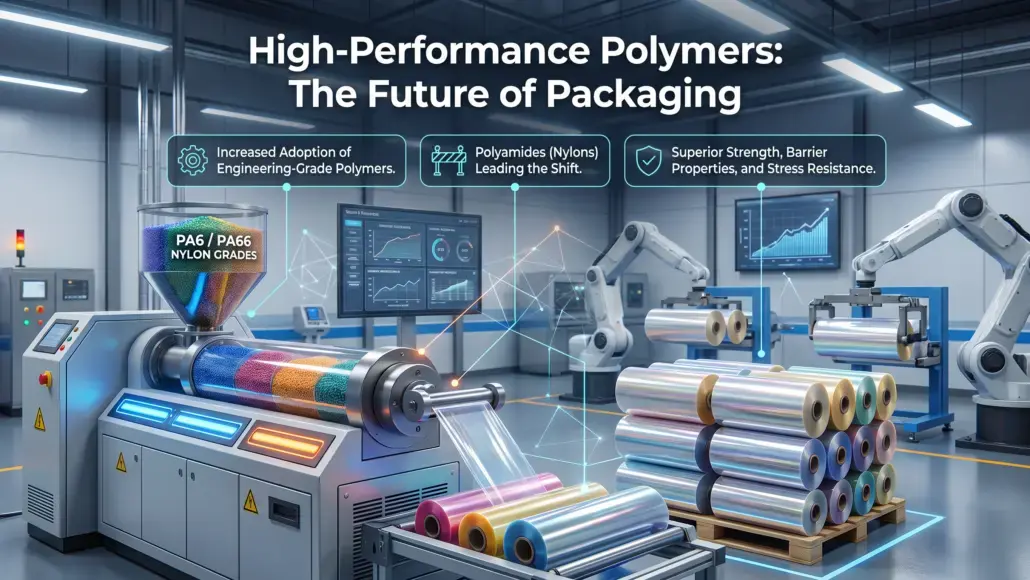

The demand for specialized materials in the packaging industry has led to the increased adoption of engineering-grade polymers. Polyamides, commonly known as nylons, are at the forefront of this shift due to their exceptional mechanical strength and barrier properties. Unlike standard commodity plastics, high-performance polyamides like PA6, PA66, and amorphous grades offer a unique combination of toughness and resistance to environmental stress. These materials are essential in technical barrier systems where the contents must be protected from oxygen ingress and moisture loss over extended periods. The crystalline structure of nylon provides an inherent barrier to gases, which is often enhanced through the use of multi-layer coextrusion techniques.
One of the significant advantages of using polyamides is their ability to maintain structural integrity under mechanical load. In industrial settings, where packaging must withstand vibration, abrasion, and compression, nylons provide a level of security that standard polyethylene or polypropylene cannot provide. This durability is particularly important for the transport of chemicals or sensitive electronic components that require a rigid yet lightweight protective housing. The versatility of engineering plastics expanding high-performance packaging applications is evident in the development of nylon-based films that can be oriented to further improve their tensile strength and puncture resistance. These oriented films are often used as a core layer in high-strength laminates, providing a reliable foundation for complex packaging structures.
Recent advancements in polyamide chemistry have also focused on improving the processability of these materials. New grades with lower melt temperatures and improved flow characteristics allow for easier integration into standard extrusion and molding lines. This reduced processing difficulty makes it more cost-effective for manufacturers to adopt high-performance materials in their production workflows. Additionally, the development of bio-based polyamides derived from castor oil or other renewable sources is providing a more sustainable pathway for technical packaging. These bio-nylons offer the same high performance as their petroleum-based counterparts, ensuring that sustainability goals can be met without compromising the protection of the goods.
Thermal Stability and Sterilization Compatibility in Medical Packaging
The medical and pharmaceutical industries place some of the most stringent requirements on packaging materials. Reliability and safety are non-negotiable, especially when it comes to maintaining sterility for surgical instruments or drug delivery devices. Engineering plastics are uniquely suited for these applications because they can withstand the intense heat and chemical exposure involved in sterilization processes. Materials such as polyetheretherketone (PEEK) and polyphenylsulfone (PPSU) offer exceptional thermal stability, allowing them to remain stable at temperatures exceeding 130 degrees Celsius during autoclave cycles. This heat resistance ensures that the package does not deform or lose its barrier properties during the critical sterilization phase.
Beyond thermal stability, medical-grade engineering plastics must also exhibit high chemical resistance. Many sterilization methods involve the use of harsh chemicals or gamma radiation, which can cause traditional plastics to become brittle or undergo yellowing. Advanced polyesters and specialized cyclic olefin copolymers (COC) are engineered to resist these effects, maintaining their clarity and mechanical properties even after multiple sterilization cycles. The use of engineering plastics expanding high-performance packaging applications in the medical sector ensures that sensitive healthcare products are delivered to the point of use in a safe and effective condition. The inherent purity of these resins also minimizes the risk of extractables or leachables migrating into the medical device, providing an additional layer of patient safety.
Additionally, the design flexibility of engineering plastics allows for the creation of complex, ergonomic packaging formats. Transparent polycarbonates are often used for rigid trays and housings because they combine high impact resistance with glass-like clarity. This allows healthcare professionals to easily inspect the contents of a package before opening it, reducing the risk of using damaged or incorrect items. The ability to mold these materials into precise, tight-tolerance components also facilitates the development of integrated packaging solutions, such as pre-filled syringes or inhaler housings, where the package itself serves as a functional part of the device.
Polycarbonate and Polyester Advancements for Industrial Container Durability
Industrial packaging often involves the transport of heavy, high-value, or hazardous materials that require maximum container durability. Polycarbonate (PC) is a preferred material for these applications due to its legendary toughness and impact resistance. Large-capacity carboys, water bottles, and industrial drums made from PC can withstand significant drops and impacts without cracking or leaking. This mechanical performance is crucial for reducing the risk of environmental contamination or product loss during logistics operations. The transparency of polycarbonate is also a functional advantage, allowing for easy visual monitoring of liquid levels in large storage containers.
Recent innovations in polyester technology have also expanded the range of high-performance options for industrial use. Glycol-modified polyethylene terephthalate (PETG) and other specialty polyesters offer improved toughness and chemical resistance compared to standard PET. These materials are frequently used in the production of heavy-duty blister packs and shipping trays for the automotive and electronics industries. The ability of PETG to be thermoformed into deep-draw shapes without whitening or cracking makes it an ideal choice for protecting complex industrial components. The expansion of engineering plastics expanding high-performance packaging applications into these heavy-duty sectors highlights the industry-wide move toward materials that offer a superior strength-to-weight ratio.
To further enhance the durability of industrial containers, manufacturers are increasingly using reinforced engineering plastics. Incorporating glass fibers or mineral fillers into the polymer matrix can significantly increase the stiffness and load-bearing capacity of the material. These reinforced plastics can replace metal or wooden components in many industrial packaging systems, offering reduced weight and improved resistance to corrosion and rot. The long-term durability of these materials also supports the use of returnable and reusable packaging systems, which can provide significant cost savings and environmental benefits over many years of service.
Fluoropolymers and High-Performance Resins in Chemical and Hazardous Storage
When it comes to the storage and transport of aggressive chemicals, solvents, and hazardous waste, the choice of packaging material is a matter of critical safety. Fluoropolymers, such as polytetrafluoroethylene (PTFE) and fluorinated ethylene propylene (FEP), offer a level of chemical inertness that is unmatched by any other class of plastics. These materials are virtually unaffected by strong acids, bases, and organic solvents, making them the gold standard for high-purity chemical storage in the semiconductor and laboratory industries. The non-stick properties of fluoropolymers also ensure that containers can be easily and completely emptied, reducing waste and minimizing the risk of cross-contamination.
The use of high-performance resins in hazardous storage also extends to materials like high-density cross-linked polyethylene (XLPE). By creating a three-dimensional network of chemical bonds within the polymer structure, XLPE offers superior resistance to environmental stress cracking and long-term creep. This makes it an ideal material for large-scale storage tanks and intermediate bulk containers (IBCs) used for the transport of flammable or toxic liquids. The structural integrity provided by these advanced resins ensures that even in the event of an accident, the package remains intact, preventing a catastrophic release of the contents.
The ongoing expansion of engineering plastics expanding high-performance packaging applications includes the development of conductive and antistatic grades for the storage of explosive or electronic materials. By incorporating carbon black or metallic additives, manufacturers can create packaging that safely dissipates static electricity, preventing sparks that could ignite flammable vapors or damage sensitive microcircuits. These technical solutions demonstrate the critical role that advanced polymer science plays in managing risk and ensuring safety across the global industrial supply chain.
Mechanical Reinforcement and Impact Resistance in Precision Engineering Formats
The final frontier for engineering plastics in packaging is the development of precision formats for high-tech components. In sectors such as aerospace and precision optics, the package must do more than just contain the product; it must provide a stable, vibration-free environment that prevents even microscopic damage. High-modulus engineering plastics are used to create custom-molded inserts and dunnage that cradle delicate items with extreme precision. These materials offer the dimensional stability required to maintain tight tolerances over a wide range of temperatures and humidity levels, ensuring that the part remains securely positioned throughout its journey.
Impact resistance is often further enhanced through the use of toughened polymer blends. By incorporating elastomeric phases into a rigid engineering plastic matrix, manufacturers can create materials that absorb and dissipate energy more effectively. This “rubber-toughening” approach is widely used in the production of protective cases and enclosures for high-end instruments. The ability to customize the mechanical properties of the plastic allows for the creation of packaging that is specifically tuned to the fragility of the contents. This level of technical optimization is a hallmark of engineering plastics expanding high-performance packaging applications in the modern B2B market.
As the industry continues to push the boundaries of what is possible, the integration of smart materials into engineering plastic packaging is an emerging trend. Shape-memory polymers and materials with self-healing properties could eventually provide even greater levels of protection and durability. While these technologies are currently in the research phase, the foundation provided by today’s high-performance engineering plastics ensures that the packaging industry is well-positioned to adopt future innovations. The commitment to engineering excellence and material performance ensures that these advanced plastics will continue to play a vital role in protecting the world’s most valuable and sensitive products.